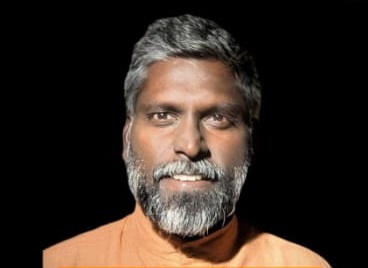
MESSAGES FROM FR DORATHICK RAJAN
(Prior of Saccidananda Ashram Shantivanam from 9th April 2018)
Messages from Fr. Dorathick shared on his blog page - please 20click on link below:-
Latest message below and please scroll down for previous messages:-
Jesus taught the Lord's Prayer; he did not offer a prayer for people to recite mechanically. When we recite it with attention, it becomes a prayer of transformation. "Our Father" is itself a revolution. The ego says, "I, me, mine," but Jesus says "Our." He takes us from where we have made our ego-self, from the me as defined by our achievements, wounds, possessions, opinions and identities, out into the bigger Mystery of which we are part. The Indian seeker asks, Who am I? The Christian mystic asks, Who am I in God? Both questions take us beyond the persona and into the hidden ground of our being. When I truly say "Our Father", it is as if I realize that I am not an island trying to wrestle my way through the universe. I am part of a bigger mystery, and Divine Love holds my life.In the Upanishadic vision, the deepest Self is described as a sacred enigma, while the Bhagavad Gita encourages individuals to explore a life that is devoid of ego, fear, and attachment. Christianity describes Christ as Emmanuel, or God with us, and the Kingdom of God as a transformation of the human heart, rather than a mere external kingdom. In the Christian mystical traditions, the spirit is said to enter the silence and realise that it is held by Divine love. The heart is meant to serve as a reflection of the Beloved in Sufism. Buddhism demands that humanity transform its ignorance into compassionate awareness. In Sikhism, the One Reality is proclaimed to be beyond all divisions. Each tradition possesses its own sacred identity and wisdom, and it is imperative that they not be reduced to being "the same." However, upon attentive listening, we may discern a shared yearning: the human spirit yearns to transition from fragmentation to unity, from ego to love, and from separation to communion.
It is possible that the most profound celebration of Krishna Jayanthi is not merely the decoration of the exterior of our homes, but the preparation of the inner temple of the heart. Allow the mind to descend into silence. Allow the respiration to become more gentle. Permit the heart to attend. A profound human yearning for communion with the Eternal lies beneath the noise of thought, beneath our identities, accomplishments, wounded, fears, and religious labels. Interreligious spirituality is rendered particularly beautiful in this context. Our faith does not necessitate abandonment in order to respect another faith. We can remain steadfast in our own tradition while simultaneously allowing the sacredness of another tradition to broaden our capacity for admiration. Krishna can be regarded with reverence by a Christian, who can allow the grandeur of his narrative to arouse a more profound yearning for God. A Hindu can meet Christ and find another way that God loves us by giving us ourselves. Rather than erasing their differences, Muslims, Buddhists, Sikhs, Jains, and individuals of all spiritual paths can unite by allowing compassion, humility, truth, and love to serve as a bridge between their souls.
— Fr. Dorathick OSB Cam
A moment in this Gospel feels almost painfully human. Jesus tells his disciples that he must suffer, be rejected, and die. Peter can't bear to hear it. He pulls Jesus aside and says, “God forbid it Lord! This must never happen to you.” Peter is not speaking from bad intentions. He speaks from love, but also from fear. Maybe he can't imagine a God whose love doesn't always protect us from pain. And perhaps we're not so different. How many times have we prayed “Lord please don't let this happen. Please change this situation. Please take away this pain.” We want God to remove the cross while Jesus sometimes meets us precisely in the place where we're learning to carry it. The Gospel is not telling us to look for suffering. It is telling us that when suffering comes, we do not have to run away from ourselves or from God. There are moments in life when something we desperately wanted doesn't happen, someone we loved walks away, a future we imagined disappears, or a prayer seems to go unanswered. In those moments, something inside us breaks. Yet sometimes, strangely, that broken place becomes the place where a deeper life begins.
When Jesus says, “Deny yourself, take up your cross and follow me,” we can easily misunderstand him. He is not saying, “You are worthless. Punish yourself. Forget your needs. Never enjoy life.” No. Jesus is inviting us to put down the heavy burden of the false self, the self that is always trying to prove something. We spend so much of life trying to be accepted, admired, understood, remembered, successful, or loved in a particular way. We carry invisible questions everywhere: Do they like me? Am I important? Why did they ignore me? Why didn't they appreciate me? What if I fail? What if I am forgotten? Slowly, these questions become chains. Psychologically, the ego protects the image we have created of ourselves; spiritually, that same attachment can prevent us from experiencing the freedom of simply being. This is why silence and meditation can be so powerful. When we sit quietly and stop feeding every thought, we begin to see that our thoughts are not our whole selves. A painful memory may arise, but we do not have to become the memory. Fear may arise, but we do not have to obey it. Sadness may visit us, but it does not have to become our identity. Beneath these changing experiences, a quiet depth remains within us. Jesus seems to say: Let the false you become quiet, so that the deeper you can breathe.
The wisdom of the Bhagavad Gita speaks beautifully into this struggle. Krishna tells Arjuna to act without clinging to the fruits of his action: “You have a right to action, but not to the fruits of action” (Bhagavad Gita 2:47). This is not indifference. It is a different way of living. We love, but we cannot demand how another person should love us back. We serve, but we cannot demand recognition. We pray, but we cannot dictate how God must answer. We do what is ours to do and then place the rest into a larger mystery. The heart becomes lighter when it no longer needs to stand at the center. This is what humility really means: not thinking badly about ourselves, but becoming less obsessed with ourselves. When I no longer need everything to revolve around me, there is room for God, room for another person, room for silence, and even room for my own wounded heart.
This is also very close to the vision of Lumen Gentium, which reminds us that every Christian is called to “the fullness of the Christian life and to the perfection of charity.” Lumen Gentium — Vatican text That fullness is not some distant spiritual achievement. It can begin in the smallest moments of our day. It can happen when we choose not to answer anger with anger. When we forgive someone who never apologized. When we stop judging another person because we finally understand that they too are carrying invisible wounds. When we sit beside someone who is suffering and do not try to give them easy answers. When we quietly say, “Lord, I don't understand this, but I place it in your hands.” These moments may look insignificant to the world, but they are enormous movements of the soul. Every time we release resentment, something becomes lighter. Every time we surrender control, something becomes freer. Every time we choose love over ego, Christ becomes more visible in us. The cross is often not dramatic. Sometimes the cross is simply letting go of the sentence we have been repeating in our mind for ten years.
This is why Jesus asks, “What will it profit anyone to gain the whole world but forfeit their life?” Some people have gained much and still feel empty. Some people are surrounded by others and still feel alone. Some people appear strong while quietly carrying enormous sadness. We can spend our entire life trying to build a beautiful life outside while neglecting the wounded person inside. Jesus gently turns us around and asks: “What is happening to your heart?” Maybe salvation begins there. Not when we become perfect, but when we become honest. Not when all our questions are answered, but when we stop running from the questions. Not when suffering disappears, but when suffering no longer separates us from love. The cross finally leads toward resurrection because love is stronger than death. Peter wanted to protect Jesus from the cross; Jesus knew that the cross would become a passage into something deeper. Our own lives are like that. Some things we desperately want to preserve may need to be surrendered. Some identities may need to fall away. Some fears may need to die. Some old stories about ourselves may need to be released. And beneath all of this, we may discover something we had almost forgotten: we are still here, we are still loved, and God has never stopped breathing within us. To lose the life built by fear is to begin finding the life that love has been quietly waiting to reveal.
Fr. Dorathick OSB Cam
The recent tragedy in Nepal invites us to stop for a moment and listen not only to the cries of those who have lost their homes, loved ones, and livelihoods but also to the deeper cry of the Earth. Floods, landslides, extreme heat, melting glaciers, and violent weather events are becoming increasingly familiar across our planet. We shouldn't simplistically say that every disaster is caused by climate change; each event has many natural and human factors. Yet science makes one reality increasingly difficult to ignore: human activity is warming the atmosphere and changing the delicate conditions upon which life depends. Possibly so, the question is not simply “Why is nature becoming violent?” but also “How have we become violent toward nature?” The Earth has cared for us from the beginning. The forest gives us breath; the soil gives us food; rivers give us water, and the sun gives us warmth and light. Creation gives without constantly asking what it will receive in return. But our relationship with this sacred gift has slowly changed. We have moved from belonging to possessing, from receiving to consuming, from gratitude to entitlement. We have begun to treat the Earth as though she were an endless storehouse created for our comfort. Perhaps the suffering of Nepal is therefore not merely a tragedy happening somewhere else. It is a mirror held before humanity, asking us to look honestly at the way we live.
One of the most hidden forms of this ecological violence is our attachment to convenience. We rarely think of convenience as violence because violence usually looks dramatic. But ecological violence can be almost invisible. It can look like starting a car for a journey that could have been walked, leaving lights on in an empty room, wasting water, throwing away usable food, replacing things simply because something newer has appeared, or consuming far beyond what we actually need. A vehicle itself is not the enemy. It can serve life by carrying the sick to hospitals, transporting food, connecting families, and supporting human work. The question is what happens when genuine need becomes endless convenience. A fuel-powered vehicle converts only a portion of the energy in its fuel into movement; much of the rest is lost as heat through the engine, exhaust, cooling system, friction, and other processes. Yet the larger climate problem is the enormous accumulation of greenhouse gases released when billions of vehicles and other human activities burn fossil fuels. One unnecessary journey may seem meaningless, but billions of unnecessary journeys become a planetary burden. Perhaps before starting the engine, we need to recover a forgotten spiritual question: “Do I really need this?” Could I walk? Could I share the journey? Could I use public transportation? Could I wait? These questions lead us to an important spiritual discovery: conceivably, the answer to our ecological crisis is not to reject comfort but to return to simplicity.
Simplicity doesn't mean returning to a life without technology, rejecting everything modern, or romanticising poverty. It means rediscovering the difference between what we need and what we merely desire. There is nothing wrong with comfort when comfort serves life. The problem begins when comfort becomes our master: we want faster transportation, larger houses, more devices, more electricity, more consumption, more convenience, and gradually we become unable to live without them. The more we possess the more we fear losing; the more comfortable we become the more uncomfortable simplicity feels. Humanity needs a new understanding of comfort. True comfort is not having everything immediately available. True comfort may be having enough, being grateful for enough, and being free from the endless hunger for more. A simple meal eaten with gratitude can nourish more deeply than an extravagant meal consumed without awareness. Walking beneath trees can give a peace that technology can't manufacture. Sitting silently with another person can be more healing than endless digital entertainment. Simplicity is not the opposite of comfort; simplicity can become a deeper form of comfort a comfort that doesn't require the Earth to suffer for our happiness. Returning to simplicity is therefore not a step backwards. It may be a step forward in consciousness.
Global warming is therefore more than a scientific crisis; it's also a crisis of human desire. Science can measure atmospheric carbon dioxide, rising temperatures, melting glaciers, changing rainfall patterns, sea-level rise, and increasing climate risks. But spirituality asks a deeper question: Why do we continue consuming as though the Earth were limitless? We have become extraordinarily advanced technologically, yet our inner wisdom has not always grown at the same speed. We can create artificial intelligence and explore distant planets, yet we sometimes can't sit quietly beneath a tree for ten minutes without reaching for a phone. We have created a psychological boundary between ourselves and “the environment", as though nature were something outside us. But one conscious breath destroys that illusion. The oxygen entering our lungs comes from the living Earth; the carbon dioxide leaving our bodies becomes part of another cycle of life. The water within us has travelled through oceans, clouds, rivers, plants, animals, and generations. We are not strangers living on Earth; we're Earth participating in consciousness. This is why returning to simplicity can become a spiritual practice. When we consume less we begin to notice more. When we slow down we begin to see. When we become silent we begin to hear. When we stop asking “What else can I have?” we may finally hear the deeper question: “What is already here?”
This is where the mystical vision of creation becomes essential. A forest is not merely timber. A river is not merely water. A mountain is not merely minerals. A bird is not merely an object of usefulness. Creation carries a mystery that can't be reduced to its economic value. Christian spirituality understands creation as gift and calls humanity toward stewardship rather than domination. St. Francis of Assisi could look upon the sun, moon, water earth and creatures with a language of kinship because he recognised a sacred relationship within creation. The wisdom of the Upanishads likewise points toward the profound interconnectedness of existence. Modern ecology, using another language, reveals the same fundamental reality: life exists through relationship and interdependence. Meditation and silence can help us recover this forgotten perception. When we sit quietly beneath a tree, listen to rain, watch clouds moving across the sky, or become attentive to our breathing, nature slowly stops being an object and becomes a presence. Silence becomes a doorway back to simplicity. We discover that we do not always need to consume something to experience happiness. Sometimes the greatest richness is simply being alive, breathing, seeing, listening and belonging. Perhaps this is the comfort humanity has forgotten: the comfort of enough, the comfort of silence, the comfort of nature, the comfort of communion.
And so we arrive at the deepest question: Where are we going as humanity? We have become faster, but are we becoming wiser? We have become more comfortable, but are we becoming more grateful? We possess more, but are we becoming more alive? Perhaps the future requires us to return not backwards but inward; not to reject civilisation but to rediscover simplicity within civilisation. We can use technology without becoming enslaved by it. We can use vehicles without allowing convenience to govern every journey. We can enjoy comfort without turning excess into a way of life. We can develop without destroying. We can progress without forgetting the Earth. The tragedy of Nepal shouldn't disappear from our consciousness when the news cycle moves forward. Let it become an invitation to conversion from domination to communion, from excess to enough, from convenience to consciousness, from possession to gratitude. Maybe the next stage of human evolution is not learning how to consume more but learning how to need less. The Earth has been caring for us silently since the beginning. I believe that now we're being invited to care for her through the simplicity of our lives. Walk when we can. Share when we can. Waste less. Consume consciously. Sit in silence. Listen to nature. Give thanks. Let our comfort become gentle rather than destructive. Because simplicity is not poverty and less is not necessarily loss. Sometimes when we return to simplicity, we discover that we were never lacking what truly matters. Nature was never merely around us. Nature was carrying us. And perhaps our deepest ecological and spiritual vocation is simply to learn how to carry one another and the Earth with the same
Fr. Dorathick OSB Cam

A Reflection on Matthew 16:13–20
Fr. Dorathick OSB Cam
On the feast of St. Bernard of Clairvaux, we're invited into one of Christianity’s deepest mysteries: love is not simply something we do for God; it is how we come to know God. Bernard, the great Cistercian monk, abbot, mystic, and Doctor of the Church, understood spirituality not primarily as accumulating religious knowledge but as transforming the heart through divine love. In his Treatise on the Love of God, Bernard asks a radical question: Why should we love God? His answer is beautifully simple: because God is God and because God has loved us first. Our spiritual journey, therefore, doesn't begin with our search for God but with the awakening to a Love that was already searching for us. Before we prayed, God was present; before we understood — God was loving; before we became worthy, we were already received.
Bernard describes the maturation of love as a gradual movement from self-centeredness toward self-giving. At first, we love ourselves for our own sake. Then we may love God because we need something from Him: peace, healing, protection, forgiveness, meaning. Bernard doesn't despise this beginning; it's often where authentic spirituality starts. But love can't remain there. Gradually the soul discovers that God is not merely the solution to our problems but the Beloved Himself. We begin to love God not simply for what God gives but for who God is. This is a profound mystical transition: God moves from being the object of our religious desires to becoming the centre of our existence. Prayer then changes. We stop approaching God with only a list of requests and begin to sit silently in the presence of the One we love.
For Bernard, this movement leads toward the deepest knowledge of God. There is a difference between knowing about God and knowing God. Theology can tell us that God is love; Scripture can speak of divine mercy; and spiritual practices can prepare the heart, but mystical knowledge happens when these truths become lived experience. The mind understands, but the heart begins to taste. Bernard's spirituality is therefore profoundly experiential. The soul gradually discovers that God's love is not an idea but a living reality. The more deeply we receive that love, the less we need to possess control, judge, or defend ourselves. The ego begins to loosen its grip. We become inwardly free. In this sense, contemplation is not escaping life but discovering the Divine Presence at its deepest centre. To know God is ultimately to become capable of loving as God loves.
Bernard's final movement is especially mystical: the soul learns to love itself in God. This doesn't mean losing our humanity or becoming God by nature. Rather, the fragmented self discovers its true identity in divine love. We no longer need to construct our worth through achievements, possessions, recognition, or comparison. We become free to receive ourselves as a gift. This resonates deeply with the Christian mystical vision of participation in divine life: the human person remains human yet becomes increasingly transparent to God's love. Bernard's Christ-centred spirituality sees Jesus as the meeting place between divine love and human longing. In Christ, God's infinite love becomes approachable, tangible, and personal. The soul doesn't climb toward an unreachable God; it discovers that God has already come near.
Perhaps then, on the feast of St. Bernard, the deepest question is not “How much do I know about God?” but “What has the love of God made of me?” For Bernard, the final evidence of mystical knowledge is not extraordinary visions, emotions or spiritual experiences, but a heart gradually emptied of the need to possess, control, condemn and separate. When divine love becomes the centre, the boundaries of the ego begin to soften: the other is no longer merely "other", creation is no longer merely an object, and even the wounded parts of ourselves are no longer rejected. We begin to perceive everything within the horizon of divine love. This is why contemplation must eventually become compassion. If I truly enter the mystery of God, I can't remain indifferent to what God loves. The person who kneels before God must eventually learn to recognise God’s presence in the person before whom he stands. The Eucharistic Christ: the stranger, the poor, the enemy, the wounded, the beautiful, and the ordinary all become invitations to move beyond the small world of the isolated self. Bernard's mystical journey therefore leads from possessing God to belonging to God, from seeking love to surrendering to Love, and from surrendering to Love to becoming its instrument. At the summit the soul doesn't say, "I have found God,” as though God were an object that could be possessed. Rather, it discovers something far more astonishing: I have been found by Love. The One whom I was seeking was already breathing within my existence, sustaining my being, calling me beyond myself, and loving me into freedom. And when the soul finally consents to this Love, spirituality becomes less about becoming someone extraordinary and more about allowing God to shine through an ordinary human life. Then our words can become mercy, our silence can become peace, our presence can become healing, and our very existence can become a quiet sacrament of God's tenderness. Perhaps this is the deepest meaning of knowing God: not that I can say “I possess God,” but that my life has become so surrendered to divine Love that others can encounter something of God simply by encountering me. In the end the mystical life is the disappearance of everything that prevents love from flowing freely through us. The soul becomes transparent, not empty of identity but full of God. And perhaps the final prayer of St. Bernard's spirituality is therefore this: 'Lord, do not merely teach me about Love. Love me so deeply that I become love; and through the little life entrusted to me, let someone else discover that You are here.” To know God is to be so transformed by Love that our very presence becomes a reflection of His tenderness. The soul reaches its deepest prayer when it no longer says, “I have found God,” but "I have been found by Love.”
Fr. Dorathick OSB Cam
A reflection on Matthew 15:21–28
The woman’s greatest miracle is not immediately the healing of her daughter; it's the transformation happening within herself. She enters the scene as someone who could easily be defined as foreign, unworthy, and excluded. Yet she doesn't internalise exclusion. She stands before Jesus with radical honesty. This matters psychologically: healing begins when we stop running from our deepest pain and bring it into the presence of God. Her daughter’s suffering becomes her prayer, and her prayer becomes a doorway into deeper consciousness. She doesn't pray from entitlement; she prays from trust. Her persistence is not stubbornness but a refusal to believe that divine love has borders. There are moments in our own lives when God seems silent, when prayer appears unanswered, and when we feel like outsiders even before God. The Canaanite woman teaches us to remain present in that painful space. Faith is sometimes not the absence of struggle; it's the courage to keep standing before Love while everything inside us is tempted to walk away.
Her words “Even the dogs eat the crumbs that fall from their masters’ table,” reveal extraordinary spiritual intelligence. She transforms an apparent insult into a mystical opening. She doesn't fight Jesus; she enters deeper into the mystery. Her humility is not self-hatred. True humility doesn't say “I am worthless.” It says “I do not need to prove my worth to receive love.” This distinction is psychologically liberating. Many people live wounded by rejection because they constantly seek confirmation of their value from others. The Canaanite woman has discovered something deeper: grace is not earned by status. She simply trusts that even the smallest opening of divine compassion is enough. Her faith therefore becomes expansive rather than defensive. She doesn't demand that God fit her expectations; she remains open to God’s mystery. The Catechism describes prayer as a “personal and living relationship” with God and emphasizes that prayer involves the whole heart.
This Gospel also speaks powerfully to an inclusive spirituality. The Canaanite woman stands at the boundary of religion, ethnicity, gender, and social identity. Yet Jesus allows the encounter to reveal that divine compassion is greater than every boundary human beings construct. Her presence challenges every community that says, consciously or unconsciously, “You do not belong here.” The ancient Tamil wisdom of Purananuru 192 echoes this universal vision: “Every place is our town; everyone is our kin.” Humanity's spiritual maturity begins when the stranger becomes neighbour, when the outsider becomes family, and when difference ceases to be a threat. The Canaanite woman therefore becomes more than a mother seeking healing; she becomes a teacher of communion. Her faith asks us: Who are the people I still keep outside the circle of my compassion? Which identities have I allowed to become walls between human hearts?
The Isha Upanishad gives us another profound understanding: “He who sees all beings in the Self and the Self in all beings doesn't hate anyone.” (Isha Upanishad 6). This closely mirrors the Gospel's mystical movement: from separation toward communion. The Canaanite woman’s faith breaks the illusion of “us” and "them". She encounters not merely a miracle-worker but the divine mystery, where compassion can't ultimately be restricted by human categories. Mystically, the deepest healing is therefore the dissolution of the inner walls that separate us from God, from ourselves, and from others. Hatred, prejudice, superiority, and exclusion are symptoms of fragmented consciousness. Love begins when we recognize that another person’s suffering is not entirely “their problem.” Their pain touches our shared humanity. The woman comes asking for healing for her daughter but her encounter becomes a revelation of a wider human family.
Ultimately Jesus says “Great is your faith!” Her faith has crossed silence, rejection, cultural boundaries, and apparent impossibility. This is the invitation for us today: do not allow silence to convince you that God is absent; do not allow rejection to define your worth; and do not allow boundaries to imprison your heart. Bring your deepest wound into prayer and remain there until prayer becomes communion. The Catechism reminds us that the desire for God is written in the human heart and that human dignity rests in being called to communion with God (CCC 27). The Canaanite woman teaches us that authentic spirituality is not about possessing God but becoming spacious enough to receive divine love and spacious enough to let that love embrace everyone. Her final miracle is therefore not only that her daughter is healed but also that the boundaries of the human heart are enlarged. Faith becomes truly great when it refuses to make God small.
On August 15, two journeys meet in a beautiful mystery. The Church celebrates the Assumption of Mary while India celebrates Independence Day. One speaks of a woman taken into the fullness of life; the other remembers a nation awakening to freedom. At first, these celebrations seem to belong to different worlds. Yet beneath them is one profound question: What does it truly mean to be free? Political independence frees a people from external domination. Spiritual freedom frees the human heart from whatever prevents it from becoming fully alive. Mary’s Assumption invites us to see freedom not simply as the right to choose but as the freedom to become completely who we're created to be.
Mary’s journey begins not with power, wealth, or authority but with surrender. At the Annunciation, she says, “Let it be to me according to your word.” Her freedom isn't lost in submission; it's discovered through it. She doesn't become smaller by saying yes to God. She becomes expansive enough for divine life to enter the world. This is a different kind of freedom: not freedom from responsibility, but freedom for love; not freedom to possess everything, but freedom to give oneself without fear. India’s independence also carries a deeper spiritual invitation. A nation may become politically free and yet remain inwardly imprisoned by hatred, discrimination, greed, violence, prejudice, fear, or division. The freedom celebrated on Independence Day, therefore, can't end with the lowering of one flag and the raising of another. The unfinished freedom is within us. Can we become free from the walls we build between “us” and “them”? Can freedom become compassion? Can patriotism become service rather than superiority?
Mary stands at the heart of this mystery as a symbol of humanity opening itself to the Divine. Her Assumption is not merely about leaving the earth behind. It is a proclamation that matters, the body matters, human life matters and creation has a vocation in God. The God who receives Mary into fullness doesn't despise the earth but brings creation toward transformation. Her glorified life shows that our deepest call is not destruction but intimacy.
This becomes especially meaningful for India, a land where spiritual traditions have long spoken about liberation. The Upanishadic longing “Lead me from darkness to light from death to immortality,” expresses a desire that reaches beyond every religious boundary. Christian faith speaks of eternal life; Indian spiritual wisdom speaks of liberation; human hearts everywhere long for freedom from fear, separation, and meaninglessness. Different traditions use different languages, yet the longing is deeply human: to awaken into a life no longer imprisoned by the small self.
Perhaps then August 15 asks us to celebrate two freedoms at once. India remembers freedom from external rule. Mary reveals freedom from everything that prevents love from reaching its fullness. One freedom belongs to a nation; the other belongs to every human heart.
The deepest independence is not the ability to do whatever we want. It is the freedom to love when hatred is easier, to forgive when resentment feels justified, to serve when selfishness calls, and to remain rooted in truth when fear pressures us to conform. Mary’s Assumption becomes a quiet promise: the human person is made for fullness. India’s Independence Day becomes a responsibility: freedom must become life for all. May this day awaken within us a freedom that no empire can give and no empire can take away: the freedom to love, to serve, to forgive, to belong, and finally to become fully alive in the mystery of God.
Fr. Dorathick OSB Cam
29th July 2026Guru Purnima:The Guru as a Mirror to the Self Beyond Ego, Power, and Illusion
Reflection on Matthew 13:44–52
St. Augustine gives voice to this restless pilgrimage when he prays, “Our hearts are restless until they rest in You.” The treasure of the Gospel is therefore not merely something we possess; it's Someone whom we encounter and in whom our fragmented selves become whole. The human heart wanders through ambition, pleasure, knowledge, possessions, recognition, and even religious identity, searching for a fulfilment that no finite thing can contain. Yet the hidden treasure is not far away. It is concealed within the mystery of existence itself, where God continually speaks beneath the noise of our fears and desires. Tirumoolar's mystical vision beautifully resonates with this intuition: “The body is the temple of God.” The divine is not imprisoned within one sacred building, one language one culture or one tradition. The treasure may be encountered in the temple, the church, the mosque, the forest, the silence of meditation, the cry of the poor, the tenderness of a child or the compassionate heart of a stranger. The Kingdom becomes visible whenever the human heart becomes transparent to divine love.
The Bhagavad Gita offers another luminous window into this mystery when Krishna declares, "I am the Self, O Arjuna, seated in the hearts of all beings.” This doesn't erase the differences between religious traditions; rather, it invites us to approach every person with reverence. If the Divine mystery touches the heart of every being, then no human person can be reduced to a category caste, creed, nationality, gender, social status, or ideology. The pearl of great price is discovered when we begin to see the sacredness hidden in one another. The Kingdom is therefore both deeply personal and radically inclusive. It calls each person by name while gathering humanity into communion. The treasure is not meant to create spiritual possessiveness “I have found God and you have not” but humility: “I have been found by a Love greater than myself.” The true seeker becomes less judgmental, more compassionate, and more capable of wonder.
The image of the net gathering fish of every kind deepens this vision. The Kingdom is spacious enough to gather diversity, yet the Gospel also speaks of discernment and transformation. Inclusion doesn't mean that everything is equally life-giving; rather, love teaches us to distinguish what leads toward fullness from what leads toward destruction. The Catechism of the Catholic Church teaches that “the Kingdom of heaven was inaugurated on earth by Christ.” So the Kingdom is not merely a distant promise awaiting us after death; it's already breaking into history wherever mercy overcomes hatred, forgiveness heals memory, justice protects the vulnerable, and reconciliation crosses boundaries. The Kingdom becomes present whenever we refuse to turn another human being into an enemy. The net of divine love gathers “fish of every kind,” reminding us that God's embrace is wider than our boundaries, while the final sorting challenges us to examine our hearts: What within me belongs to love and what must be released?
Finally, Jesus speaks of the wise householder who brings from the treasure “what is new and what is old.” Perhaps this is the spiritual wisdom our divided world most urgently needs. We need roots without rigidity and openness without forgetfulness, tradition without exclusion and renewal without pride. The old carries memory, while the new carries possibility. To be honest, together they become a living treasure. The hidden pearl is ultimately Christ, yet the paradox is that in discovering Christ, we also discover the deepest truth of ourselves. We sell everything not necessarily our possessions, but our illusions, our pride, our fear, and our need to control and receive something infinitely greater: the freedom to love. The Kingdom is hidden in the field of the world, in the depths of the human heart, and in the sacred mystery of every person. The question is not whether the treasure is present. The question is whether we have become silent enough to hear, humble enough to receive, courageous enough to surrender, and loving enough to recognize that the treasure we sought was quietly seeking us all along.
Fr. Dorathick OSB Cam
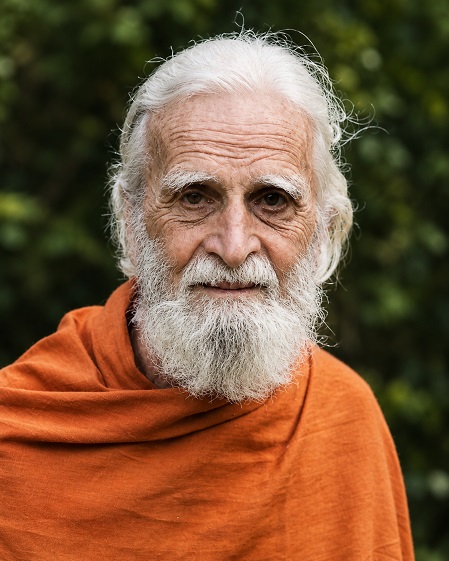
13th May 2026
Fr Bede Griffiths - 33rd anniversary of his death
A New Vision for the Modern World: The Spiritual Wisdom of Fr. Bede Griffiths
The spiritual vision of Fr. Bede Griffiths continues to illuminate a world that is grappling with inner emptiness, division, and confusion on the thirty-third anniversary of his death. Despite the extraordinary technological and scientific advancements of modern civilisation, humanity remains restless in spirit. Machines increasingly connect people, but they disconnect them from themselves, nature, and God. Fr. Bede Griffiths recognised that the crisis of the modern world was not merely political or economic but deeply spiritual. He believed that humanity had lost its sacred center and urgently required a new vision that was rooted in inner awakening and universal wisdom. Bede Griffiths persists in illuminating a world that is grappling with inner vacancy, division, and confusion. Humanity's spirit remains restless, despite the extraordinary technological and scientific advancements of modern civilisation. People are becoming more and more connected through technology, but they are also becoming more and more disconnected from themselves, nature, and God. Fr. Bede Griffiths recognised that the contemporary world's crisis was not solely political or economic but also profoundly spiritual. He believed that humanity had forfeited its sacred core and was in dire need of a new perspective that was founded on universal wisdom and interior awakening.
Fr. Bede Griffiths, born in England in 1906, began his journey in the Christian monastic order, but his spiritual quest eventually took him to India, where he experienced Hinduism's profound mystical wisdom. At Shantivanam Ashram in Tamil Nadu, he practiced a contemplative life that combined Christian faith with Eastern spiritual truths. His objective was not to superficially blend faiths, but rather to seek the deeper truth that runs through all real spiritual traditions. Griffiths thought that underneath religious differences there is one eternal divine reality inviting humanity to unity and love. Bede Griffiths states that modern humanity is suffering because it has become ensnared in materialism and ego-consciousness. Although scientific progress has provided humans with enormous power over the outward environment, many people continue to be spiritually devoid on the inside. The reason that individuals continue to seek fulfilment through goods, success, and outward achievements is the reason that problems like anxiety, loneliness, aggression, and despair continue to spread. Griffiths taught his students about a direct experience of the divine mystery that goes beyond the boundaries of the ego. He believed that the human heart yearns for something that is limitless. In the absence of spiritual depth, contemporary life becomes disjointed and devoid of significance.
Fr. Bede Griffiths maintained that God resides within each individual, drawing inspiration from both the Upanishads and Christian mysticism. Thus, the spiritual journey is not just about external religion or rituals; it also involves discovering the divine presence concealed within consciousness. He recognised a truth that is comparable to Christ's teaching that the kingdom of God is within the Upanishadic phrase "Tat Tvam Asi" - Thou Art That. This realisation elevates spirituality from a mundane belief to an internal experience. Griffiths believes that genuine religion transcends fear and division, advancing toward communion with the divine and all of creation.
One of the most fundamental parts of his vision was his conviction that the future of humanity was dependent on the combination of the scientific intellect of the West and the meditative wisdom of the East. Furthermore, he was of the opinion that technological progress on its own could never be sufficient to maintain civilisation; in the absence of spiritual consciousness, human progress would continue to be insufficient and aimless. From his perspective, science and spirituality were not competing forces but rather complementary aspects of the human experience of meaning and fulfilment. Bede Griffiths became a live representation of this synthesis while he was at Shantivanam. As he embraced meditation with Christian prayer while dressed in saffron robes, he exemplified a spirituality that transcended the bounds of both culture and religion. The way he lived his life was a testament to the conviction that the sacred is not bound to any particular tradition, but rather is a universal truth that has been integrated into the very hearts of all people.
Fr. Bede Griffiths also warned against humanity's growing alienation from nature. Long before ecological spirituality gained widespread attention, he recognised that environmental destruction posed a more profound spiritual issue. When humans simply regard nature as a resource, they lose sight of its sacred nature. Griffiths felt that the universe shows divine presence and that humans must reclaim a feeling of gratitude for creation. He advocated for a new cosmic consciousness in which individuals rediscover their interconnectedness with the earth, one another, and God. He believed that such a vision was necessary for the modern world's healing.
Fr. Bede Griffiths' spiritual insight is still very relevant thirty-three years after his death. In a world full of noise, strife, and uncertainty, his message calls people to calm, contemplation, and inner transformation. He emphasises that true peace begins in the human heart and that only the human heart can achieve sustainable change, not external structures. Fr. Bede Griffiths believed that a new era of spiritual awakening was possible, one in which humanity overcomes division and rediscovers the sacred unity of all existence. His message continues to encourage searchers worldwide to go from fragmentation to wholeness, from fear to love, and from separation to divine contact.
There are numerous misleading voices. Anxiety, guilt, jealousy, comparison, and the ongoing need to prove oneself are some of their manifestations. These voices climb over the wall instead of entering through the gate. Instead of connection, they want control. Psychologically speaking, they are wounds masquerading as guidance. This is avidya, the ignorance that pursues illusion and forgets the Self, according to Indian mystical tradition. These sounds ruin presence, steal attention, and kill peace. Success might come at the expense of one's soul. The thief frequently leaves emptiness in their wake while coming across as astute, urgent, and convincing.
Then Jesus says, "I am the gate." Confusion becomes direction at a gate, which is a sacred threshold. Violence, pretence, or ego cannot lead to a deeper life. The gate is submission, patience, humility, and honesty. In prayer, the still point is found. Grace is discovered when the mind becomes open and receptive, much like the silent witness commended in the Upanishads. Anyone who enters through this gate returns home by the proper path. While many people seek freedom by running away from themselves, Christ provides freedom by allowing oneself to sincerely enter God's light.
The teachings of Christianity and Vedanta, when combined, show us that God is not far away but rather is inside us as love, serenity, and light. Jesus Christ invites us into a loving relationship with the Father via mercy and compassion, whereas Indian spirituality invites us inside to find the real Self beyond the restless mind. When we master the art of living in silence, prayer, humility, and service, these roads converge. The holy mystery comes alive inside you every time you forgive, pray honestly, assist another, or seek truth with an open heart. The God you seek is already within you, leading you constantly in love and mercy, so don't limit yourself to outward rituals or words; instead, journey deeper into spiritual solitude every day.
The shepherd calls each sheep by name, emphasising that the Divine has a personal, intimate, and loving relationship with us rather than a cold, mechanical, or remote one. God sees every hidden aspect of each of us, including the wounded infant bearing old anguish, the restless intellect seeking clarity, the tired worker burdened by life, the covert doubter struggling with faith, and the yearning lover longing for truth and beauty. In this spiritual sense, being called is a sign of profound recognition, comprehension, and unconditional acceptance. False identities imposed by the environment, trauma, or ego cause a great deal of human suffering; we start to think of ourselves as failures, victims, achievers, superior, or unwelcome. However, these labels don't really reflect who we are; they are merely shadows. Christ communicates to the deeper self made in love, the sacred core that no harm can damage, behind all stolen identities. A similar understanding is offered by Indian spiritual wisdom, which provides insight: we are more than passing thoughts, changing emotions, and temporary social roles. As the Chandogya Upanishad affirms, “Tat Tvam Asi”, “Thou art That". meaning the deepest truth within the person is rooted in the divine reality. The soul finds rest, worry subsides, and we awaken to our deepest truth that God knows, loves, and calls us into wholeness when compassion speaks our true name.
The sheep are also led into pasture by the shepherd. True spirituality emancipates rather than confines. It provides sunlight, activity, sustenance, and space. Many people worry that they may lose themselves if they give up. But the only thing lost is the false self. The deeper individual starts to breathe. According to Jesus, he came so they could live abundantly. Abundance is an inner flow, not a luxury. Gratitude emerges in everyday situations, love flows freely, forgiveness comes naturally, and courage rises silently. According to Indian wisdom traditions, the heart fills up because it gives and receives, much like a river.
This gospel helps as a mirror for day-to-day existence, encouraging sincere introspection. Which voice, the voice of fear or the voice of love, am I hearing right now? Which thief, resentment, worry, pride, false desire, or despair, am I secretly feeding? Instead of entering via the gate of truth, humility, and trust, where am I attempting to scale barriers with control, pretence, and impatience? Every day, even for a short while, take a seat quietly and listen beneath the disharmony of your thoughts. There is a voice inside that is stronger than shame, kinder than ambition, and older than fear. It calls, not condemns. You will find fertile fields of compassion, inner clarity, confidence, and fearless joy if you follow that voice. Then, prayer is more than just talking to God; it's listening to God in the heart. life is no longer a battle on one's own but a reliable relationship with God. The awakened spirit learns to follow home, and the shepherd always leads the way in love. One simple exercise is to start every morning in quiet, put your palm on your heart, inhale three times, and ask yourself, "Lord, what voice shall I follow today?" Review the times that love led you and the times when false voices diverted you as you wrap up your day. The way gradually becomes apparent in this devoted practice.
Fr. Dorathick OSB Cam
Called Forth from Within: Awakening Beyond the Inner Tomb
Reflection on John 11:1–45The story of Lazarus in John 11:1–45 reveals the depths of human awakening, as well as being a miracle story. Bethany enters the soul's inner world, where loss and love collide. Lazarus symbolises the part of us that goes silent when life seems lost and meaning is hidden. Martha and Mary express the basic human experience of absence, the sense that the divine has arrived too late, when they lament, "Lord, if you had been here." Beneath this regret, however, is a deeper mystery: what seems delayed is frequently the silent prelude to a bigger revelation.
Jesus's delay is crucial. It contradicts human expectations that a supernatural solution must provide instant relief. Rather, the waiting becomes a transformative experience. Something in the human heart is strained beyond its typical bounds in that area of uncertainty. This experience is similar to the Tiruvācakam, Tamil hymns composed by the 3rd-century Shaivite bhakti poet Manikkavasagar, in which longing becomes a kind of togetherness. The soul weeps because it is being pulled into a more profound consciousness of presence rather than because it has been abandoned. Therefore, the agony of waiting is not meaningless; rather, it is a refinement of vision, where one starts to perceive that absence itself could mask a concealed closeness.
When Jesus steps himself, he starts with involvement rather than authority. "Jesus shed tears." A significant truth is revealed by these tears: human suffering does not escape the Divine. Rather, it completely embraces it. The line separating the sacred from the human becomes blurred in this shared mourning. The tears themselves dissolve the illusion of isolation, acting as a kind of awakening. They serve as a reminder that genuine transformation passes through pain rather than avoiding it, enabling compassion to serve as the foundation for the emergence of new life.
The statement, "I am the resurrection and the life," completely changes the story's viewpoint. Resurrection is shown as a current reality rather than as a far-off future. It is an awakening that can happen right now, in the middle of everyday life. This realisation is consistent with the teachings of the Bhagavad Gita, in which Arjuna is given a fresh view of the battlefield rather than being cut off from it. Perception is altered rather than life itself, which changes externally. Lazarus is called back into the same world in a same manner, but he returns with a life that has crossed the barrier of death and emerged rejuvenated.
"Lazarus, come out" is a universal call that is not just addressed to one guy. It calls each individual to break free from cycles of fear, attachment, and unconscious life. However, Lazarus is still wrapped in burial garb even as he comes out. This particular detail shows that waking is a process as well as a moment. The next instruction, "Unbind him, and let him go," refers to the progressive liberation from anything that impedes full freedom. For a long time, monastic wisdom has described this as an inner death, where a deeper life can be experienced by letting go of the illusory layers of identity.
In the modern era, many people wander around as if they are alive but are actually confined within themselves; they are surrounded by distractions yet lack depth. The Lazarus narrative directly addresses this issue. It challenges us to bravely examine ourselves: what is still hidden within us, hidden behind distraction or fear? The first step in the awakening process is the willingness to roll away the stone and confront the ignored. A deeper voice that calls, invites, and restores can be heard when that openness is welcomed. The miracle is not limited to the past; it occurs wherever a person has the courage to pay attention and respond.
Fr. Dorathick OSB Cam
Shantivanam: A Living Vision of Silence, Unity, and Divine Presence
On this holy Foundation Day of Saccidananda Ashram, Shantivanam,
we pause not only to commemorate a beginning but also to step
further into a vision that is still alive. A vision that is not
constrained by the existence of the past but rather continues to
develop in the midst of solitude, prayer, and the hearts of
innumerable individuals who are on a journey in search of truth,
serenity, and direction.
The founders of Shantivanam had a dream of something that was deeply simple yet dramatically transformative: a place where East and West might meet, where contemplation and action could coexist, and where the Christian faith could be articulated through the spiritual genius of India. They had a vision of an ashram that would allow the Gospel to be lived in the language of Indian spirituality.
The practice of solitude, simplicity, harmony with nature, and the spiritual rhythms of the past would accomplish this vision. This notion was not an attempt to combine traditions superficially; rather, it was an effort to uncover the deeper unity that already resides at the core of all genuine spiritual paths.
The notion that God is not far away but rather intimately present formed the foundation of their vision. Sat, Chit, and Ananda mean "being," "consciousness," and "bliss." The ashram was meant to be a place to experience and discuss this spiritual reality. They sought to cultivate an atmosphere that would allow the inner journey to grow through prayer under the open sky, singing in the quiet of the morning, and living a life characterised by humility and community.
To this day, Shantivanam continues to be a conduit for achieving that vision. The ashram continues to serve as a haven for those seeking peace in a chaotic world, profundity in a more distracted era, and cohesion in a society split. The purpose of people from various cultures and beliefs is not to flee from life but to rediscover its core. Each and every moment of communal prayer, each and every moment of peaceful meditation, and each and every act of basic hospitality is a manifestation of the founders' dream.
Yet, the vision is not fixed; it develops over time. In a world shaped by ecological crises, social divisions, and spiritual unrest, the ashram stands as a gentle yet potent reminder of an alternative way of living. Its dedication to simplicity challenges consumerism. Its interfaith openness opposes division. Its contemplative rhythm provides healing for minds overwhelmed by speed and noise. The call of Shantivanam today is more profound than ever: to be a place where inner transformation fosters outer compassion. The silence cultivated here is not an end in itself, but a source of clarity and love that extends into the world. The ashram invites each person to realise that true peace is not found in possession or achievement but in the presence of the divine.
As we celebrate this Foundation Day, we also bow in deep gratitude. We thank the founding fathers whose courage and spiritual insight gave birth to this sacred space. We remember with reverence all the monks who have dedicated their lives in prayer and service, sustaining the spirit of the ashram through generations. We extend our heartfelt appreciation to the oblates, friends, and well-wishers whose quiet support, presence, and love have helped Shantivanam grow and remain alive in its vision.
Looking
ahead, the vision for Shantivanam remains luminous. It is called
to continue as a beacon of contemplative life, a bridge between
traditions, and a witness to the unity of all creation. Its
future lies not in expansion or recognition, but in fidelity to
silence, to truth, and to the sacred within all.
On this Foundation Day, we are reminded that Shantivanam is not
just a place; it is a way of being. A call to live simply, to
seek deeply, and to love universally.
The founders planted a seed; today, it continues to grow quietly, inviting the world into its peace.
Fr. Dorathick OSB Cam
Taken from Fr. Dorathick's Facebook page
The disciples pose a question at the outset of the narrative that exemplifies an ancient human tendency to assign blame: "Who is to blame for the man's blindness, his parents or himself?" This inquiry is reminiscent of the psychology of conflict. Nations and communities frequently seek an individual to assign responsibility for their hardships. They fabricate narratives that serve as justifications for hatred and division. The human mind prioritises moral superiority and certainty over comprehension.
This pattern is disrupted by Jesus. He refuses to perceive the man's blindness as a consequence of his sin. Rather, he redirects the emphasis to transformation: the "works of God" are made known through the lens of suffering. From the mystical perspective, this implies that revelation is feasible even in the absence of light.
Symbolic significance is inherent in the healing process. Jesus instructs the man to apply mud to his eyes and then cleanse them. The procedure is straightforward, yet it is also participatory. The individual is required to act and demonstrate trust. His vision gradually returns. This is indicative of the psychological process of awakening in human existence. Blindness is not limited to the absence of physical sight; it can also refer to the existence of unexamined assumptions, anxieties, and rigid identities. This type of myopia frequently results in war.
The Tamil sage Thiruvalluvar, in the Tirukkural, offers a similar insight about wisdom and self-awareness: The truly wise know what wisdom is; the unwise do not even know their ignorance
The spiritual blindness depicted in the Gospel narrative is explicitly addressed in this verse. The religious authorities are unable to recognise the truth before them because of their conviction that they already possess a clear understanding. Conversely, the individual who was previously blind gradually develops a more profound comprehension of his recovery and the individual who assisted in his recovery. Humility fosters genuine awareness.
In the current era of global unrest, this passage prompts introspection. Modern societies are endowed with an extraordinary technological vision, which includes surveillance systems, potent intelligence networks, and satellites. However, we frequently fail to recognise the fundamental unity of human existence, despite these capabilities. This blindness perpetuates cycles of retaliation, suspicion, and dread.
The philosophical depth of the Brahma Sutras sheds light on this theme from another spiritual tradition. Its opening aphorism states: Now, therefore, the inquiry into Brahman
This straightforward assertion initiates a deeper inquiry into the nature of ultimate reality. Human beings begin to query the deeper nature of existence, leading to the disappearance of blindness in spiritual terms. War frequently occurs when individuals adhere to limited identities, such as nation, religion, or ideology, without investigating the fundamental essence of existence that unites all life.
Vedantic wisdom posits that a single consciousness exists beneath all distinctions. Violence becomes feasible when this reality is overlooked. In this view, the act of causing damage to another individual is not only morally wrong but also an erroneous understanding of the nature of reality. Consequently, spiritual vision is a more profound awakening to the unity of existence than merely ethical awareness.
In John 9, the narrative concludes with an astonishing paradox. Those who assert their ability to see remain agnostic, while those who acknowledge their blindness begin to see. This reversal conveys a critical message that is pertinent to the present. Humility is the foundation of genuine vision, the willingness to acknowledge that we may not have a comprehensive understanding of the truth.
In times of conflict, numerous spiritual traditions serve as a reminder that genuine transformation commences with a shift in perspective. The interior attitudes that perpetuate violence begin to deteriorate as individuals become aware of the shared dignity of all human beings, humility, and compassion. Consequently, the blind man's recovery is not merely a miraculous event. It has become a symbol of optimism for humanity. The spirit's eyes can be opened, even in the presence of darkness. And when that occurs, the universe itself undergoes a transformation. In a world troubled by conflict, the story of John 9:1–41 reminds us that true healing begins with a change in how we see. When we acknowledge our own blindness with humility, the possibility of deeper wisdom and compassion emerges. In that awakened vision lies the hope for peace and the renewal of our shared humanity.
Fr. Dorathick OSB Cam
A Prayer for Peace in Times of War
Reflection on Matthew 4:1-11
The story of Jesus in the desert (Matthew 4:1–11) is sometimes interpreted as a historical conflict between desires, but when analysed from a psychological and spiritual perspective, it symbolises the universal human struggle to reconcile the ego and the Divine. The "wilderness" is not only a place; it is the quiet, inward realm where our darkest fears and shadow selves surface. The "false self", fueled by pride, power, and hunger, is put to the test against the "True Self" that is rooted in God in this crucible.
In terms of psychology, Jesus' fast symbolises a time of sensory deprivation that awakens the unconscious. After forty days, the "tempter" manifests as the voice of primordial anxiety rather than as a physical demon. Our survival instinct is targeted by the first temptation, which is to turn stones into bread. Throughout our lives, we frequently attempt to satiate a spiritual hunger with worldly "stones," believing that having physical security will ultimately complete us. Jesus' rejection serves as a reminder that the "Word," or the vibration of divine truth, is necessary for the psyche to flourish and that it cannot be maintained by consumption alone.
The concepts of Pati (Lord), Pasu (Soul), and Pasa (Bondage) are profoundly paralleled by the ancient Tamil sage Thirumoolar in his Tirumantiram. Thirumoolar teaches that although the body is a temple (Udambay Alayam), the senses frequently control it. According to the Tirumantiram, Jesus is exercising what is known as the control of the senses to realise the light within when he opposes the demon. Thirumoolar writes that "even as the sun's rays cause the lotus to bloom, so does the Grace of God cause the soul to blossom." The Pasu (soul) is being tempted by the Pasa (fetters) to break its bond with Pati.
The temptation of spiritual inflation is the second temptation, which is to leap from the pinnacle of the temple. As per psychology, this is the ego's attempt to establish its "specialness," requiring the Divine to act in its place in order to justify its existence. In contemporary society, this shows up in our fixation on approval from others and "likes." We desire a God who resembles us. But in order to be spiritually mature, we must let go of the need for validation. The Gospel and the Tirumantiram both demonstrate that true faith is about bringing our will into harmony with the cosmic rhythm of Dharma, not about challenging God's might.
The most powerful shadow is the desire for power and control, which is offered by the last temptation: the "kingdoms of the world." Because we are afraid of our own insignificance, we frequently try to control our surroundings. Jesus committed a major psychospiritual act when he rejected this authority. He understands that internal, not external, sovereignty is what real sovereignty is. Instead of dividing our energies among the transient diversions of material dominance or worldly position, to "worship the Lord your God only" means focusing the mind on a single, transcendent Point of Light.
We must recognise our "wilderness" amidst the chaos of the digital era if we are to make this relevant today. The temptation to use our digital "stones" as the foundation of social currency is ever-present. Like Jesus, we are asked to withdraw from the hectic pace of the world in order to regain our fundamental identity. Our wilderness is the fear of "not having enough" or "not being enough." We learn from the wilderness experience that we are cherished children of God, not what we own, what we do, or what others think of us.
The well known quote from Thirumoolar says, "If the body perishes, the soul perishes." This serves as a reminder that Jesus' physical hunger was genuine and holy. His triumph was a mastery of the body rather than a rejection of it. The psychospiritual discipline of Matthew 4:1–11 challenges us to a "holy fast", a deliberate choice to say "no" to the indulgences that numb our souls in a society of overindulgence and burnout. We make room for the "angels," or tranquillity and intuitive insights, to tend to our tired thoughts when we purge our cravings.
In the end, this gospel offers as an individuation orientation. Jesus came out of the desert with a purpose in hand after facing his shadows. We are being invited to quit escaping our inner deserts. We transition from fragmentation to wholeness when we confront our pride, hunger, and thirst for power with the wisdom of the Word and the silence of the Tirumantiram. We come to understand that the Spirit that guided Jesus through the wilderness also guides us out, strengthened, centred, and prepared to serve. The wilderness experience teaches us that internal ego mastery through divine alignment, rather than external force, is what wins our biggest fights. By combining the discipline of the Gospel with the light of the Tirumantiram, we are able to turn our dark cravings and primal hunger into a single, holy devotion. In the end, we come out of our deserts as souls who have completely realised our actual strength and purpose, not as victims of our wants.
Fr. Dorathick OSB Cam
The Sermon on the Mount is not solely an ethical guide; it is a mystical initiation. From Matthew 5:17 to 37, Jesus is seen as both the interpreter and the incarnation of the Law. "I have not arrived to abolish; rather, I have come to fulfil." This fulfilment is not a legal conclusion; rather, it is an interior transformation. The Law is transcended from stone tablets to the living heart, where obedience transforms into communion and command into desire.
According to the Catechism of the Catholic Church, this movement is precisely described as "The Law of the Gospel fulfils, refines, surpasses, and leads the Old Law to its perfection." Not as sentiment, but as divine participation, that perfection is love. The revelation of Jesus is that righteousness is no longer assessed by external conformity, but rather by internal alignment. The dawning of the Kingdom of God is characterised by the unification of the heart.
At the outset, Jesus expresses wrath, thereby revealing the concealed source of violence. Initially, murder is a disintegration in communion, rather than a mere act of the hand. From the ego's refusal to acknowledge the other as brethren in God, anger is the result of the illusion of separateness. The genuine sacrifice is therefore reconciliation. "Reconcile yourself with God by leaving your offering at the altar," stated Jesus. Holiness is corrupted by worship that lacks affection.
This wisdom resonates throughout various cultures. The Tirukkural asserts that "even virtue is vain." If the spirit is devoid of compassion" (Kural 34).
Jesus and Tiruvalluvar both maintain that the interior existence is the genuine moral foundation. The Divine cannot be reflected in a heart that is divided. This inward gaze is further enriched by Jesus' teaching on desire. He does not censure the body; rather, he elevates the vision. The act of gazing with desire is to disregard the sacredness of the other, thereby reducing mystique to possession. In a mystical sense, lust is a loss of sight. It conceals the divine image that radiated from each individual.
According to the Catechism, "Purity of heart enables us to see according to God" (CCC 2518). Seeing accurately is already a form of supplication. This interior psychology can be found in the Bhagavad Gita, which states, "When a man dwells on the objects of the senses, attachment is born; from attachment arises desire, and from desire, anger" (Gita 2:62).
The same fundamental chain is traced by both Krishna and Jesus. Liberation is not achieved through repression; rather, it is achieved through recollection, which involves the return of desire to its source in God.
The metaphors of tearing out the eye and cutting off the hand are not invokes to violence, but rather to spiritual surgery. They identify the courage necessary to break free from attachments that obscure one's perception. Love is not negated by detachment; rather, it is purified. It restores the freedom to love without entanglement.
Jesus once again transcends legal authorisation to emphasise divine intention when discussing divorce. He evokes the primordial unity of love, in which the covenant reflects the faithfulness of God. Fragmentation within the psyche is reflected in the separation of individuals. In this context, fidelity is not merely a matter of endurance; it is a form of participation in the unwavering love of God.
The movement inward is brought to fulfilment by Jesus' teaching on truthfulness. "Permit your affirmative response to be a positive one." The genesis of oaths is fear, the concern that our word is inadequate. However, the truth is espoused effortlessly when the heart is reconciled. The Tirukkural asserts that "Truth is the sole lamp of virtue; All other virtues are sprung from it" (Kural 292).
The truthful individual is no longer required to swear by heaven, as paradise already resides within. This intrinsic coherence is referred to as "the law of freedom" in the Catechism (CCC 1972). Freedom is not the autonomy from God, but rather the alignment with Him. Righteousness becomes effortless when the will is rooted in divine love, akin to a flame ascending.
Matthew 5:17–37 reveals Christ as the fulfilment of the Law at its most fundamental level, as He is its living center. He is not merely a teacher of the path; he is the path. The Catechism asserts that "Christ is the end of the law, because the law has no further goal beyond Him" (CCC 1953). This same surrender is expressed in the Bhagavad Gita: "Refrain from all laws and seek refuge in Me alone" (Gita 18:66).
This is the fulfilment of love, not lawlessness. The Law ceases to be restrictive when the heart is united with God; rather, it becomes alive.
Therefore, Jesus urges the disciples to adhere to non-division, meaning there is no distinction between ethics and prayer, desire and holiness, or interior life and outer action. This is not moralism; it is mysticism. The Law is achieved when love becomes instinctual, when wrath transforms into compassion, desire into reverence, and truth into the soul's natural breath. The Kingdom is no longer anticipated; it is disclosed within this fulfilment.
Fr. Dorathick OSB Cam
Reflection on Matthew 5:13–16
The words of Jesus are shown through fundamental symbols such as salt, light, lamp, and hilltop city, each leading beyond moral exhortation to interior transformation. These photos depict the soul's secret architecture and deep relationship with the world. They reveal not what we must become, but who we are when we live from our innermost core. Salt transforms invisibly. It makes no announcement; instead, it dissolves and becomes a part of whatever it touches. Spiritually, salt represents the peaceful strength of an awakened presence. A person who values compassion, truth, and self-awareness can change their environment without using force. Psychospiritually, this expresses the idea that healing and transformation arise from inner qualities rather than external control. When Jesus warns that salt loses its taste, he means a loss of essence, a forgetting of one's core. Life continues, but something important is missing: significance, sensitivity, and depth.
This forgetfulness is not failure, but rather a disengagement. Contemporary psychology can refer to it as alienation from the genuine self, but mystical traditions recognise it as a lack of awareness of the divine presence. The offer is gentle: Remember. Remember the sacred energy bestowed to human mind. Salt does not try to be salt; it just stays true to its nature. Similarly, spiritual aliveness arises from alignment with one's fundamental truth rather than constant striving. Light exposes itself by simply being present. It does not discuss darkness; rather, it dissipates it. In mystical jargon, light represents awakened awareness, the ability to see reality clearly and love unconditionally. Jesus' declaration that humans are the light is fundamentally inclusive. It emphasises an inner light that exists in every person, regardless of history, culture, belief, or brokenness. Even damaged lives have brilliance. Light shines through the fissures.
“Even while I was lost in darkness,
You made me Your own, O Lord,
And lit within me a lamp that never dies.”
Here, the spiritual understanding is profound: light is not a recompense for perfection. It is sparked exactly by perplexity and weakness. The undying lamp represents the indwelling presence, the holy spark that is unaffected by despair or failure. The city on a hill broadens the perspective from individual to collective. Inner enlightenment naturally spreads outwards. Consciousness is contagious. When people live with clarity and love, communities reorganise themselves in subtle ways. This city was established on shared presence rather than domination or conformity. It accepts numerous routes, languages, and names for the sacred, but it shines with a singular light. Finally, the demand to let light shine does not imply a spiritual performance. "Good works" develop naturally from a transformed awareness. Compassion springs from understanding, justice from empathy, and humility from unity. The self is transparent, and all glory returns to the Source. Tiruvāsagam expresses surrender:
“Not I, but You alone,
Dancing as my heart, my breath, my being.”
This is the heart of the teaching: the ego loosens its grip, and life itself becomes luminous. Salt seasons the earth. Light reveals the way. Human beings, awake to their inner depth, become channels of healing, for one another and for the world. To live as salt and light means remembering our deepest truth and allowing it to flow outward in harmonious force.
When the ego melts, the inner light radiates freely, mending without effort or exhibition.
When we awaken from inside, human existence becomes a blessing, illuminating the world simply by being completely alive.
Fr. Dorathick OSB Cam
A Reflection on Matthew 2:1–12
The Epiphany is portrayed as a cosmic disturbance rather than a quiet domestic moment. A star shifts position, wise men journey, a king shivers, and the heavens move closer to Earth. In Matthew 2:1–12, Jesus' birth is disclosed not initially to the mighty or those with religious certainty, but to distant seekers, Magi whose names, origins, and beliefs are left unspecified. This very ambiguity becomes the key to the mystery: God opts to reveal Himself beyond boundaries.
The Magi are attracted by a light beyond their control and understanding. This star is more than an astronomical phenomenon; it’s a spiritual call. It resonates with the innate restless longing in every human heart, the desire for meaning, truth, and connection. Although these wise men interpret the language of the heavens, their true pursuit is not just knowledge but a sense of Presence. Their story shows us that faith often starts not with certainty but with desire; not with having all the answers but with a sense of wonder. They arrive in Jerusalem, the city of power and religion, expecting recognition. Instead, they find fear. Herod, threatened by a child, reveals the fragility of domination. When power is rooted in control rather than love, even an infant becomes dangerous. This contrast exposes a timeless truth: the same revelation that awakens some hearts will unsettle others. Epiphany is never neutral. Light comforts those who seek it and disturbs those who fear losing their darkness.
Guided once more by the star, the Magi arrive not at a palace but at a humble house; not a throne, but a child held in his mother’s arms. Here, the divine embraces vulnerability. God does not dazzle with power but invites through humility. The Magi kneel, not out of coercion but through recognition of holiness wrapped in simplicity. True worship isn’t spectacle; it’s surrender. Their gifts, gold, frankincense, and myrrh, are more than symbols. They evoke the full spectrum of human response to God. Gold honors the child’s sacred worth, affirming divinity’s presence in flesh. Frankincense ascends like prayer, acknowledging mysteries beyond understanding. Myrrh, bitter and prophetic, confronts suffering and mortality. These gifts together reveal a vital truth: God is present not only in glory but also in prayer, pain, kingship, and crucifixion.
Epiphany reveals a God who is profoundly inclusive. The first to acknowledge Christ are outsiders, not insiders. They come from different cultures, religions, and worldviews, and they are still welcomed. This challenges any notion of restricting God to a single people, language, religion or tradition. The Christ child belongs to everyone. In Him, the sacred cannot be owned. The Magi’s final act is subtle but powerful: “they returned to their country by another way.” Encountering Christ always changes our path. Spiritual growth involves more than gaining insight; it transforms our way of living. Once we see the light, we cannot go back to how we were. Epiphany urges us to discover new ways of living, marked by compassion instead of fear, humility instead of control, and inclusion instead of exclusion.
Mystically, the star still shines. It appears whenever truth stirs the conscience, whenever love breaks through indifference, whenever hope rises in unexpected places. The Magi live on in every seeker who dares to trust the light within and beyond themselves. The child still waits, in the poor, the stranger, the wounded earth, and the hidden spaces of our own hearts.
Epiphany is not a moment in the past but an invitation now. To rise, to journey, to offer what we have, and to allow ourselves to be changed. For when God is revealed, the world is never the same, and neither are we. The Epiphany calls us to become seekers shaped by light and transformed by encounter: like the Magi, we are drawn beyond boundaries, invited to offer all that we are, our gifts, our prayers, and even our wounds. Having encountered God in humility and love, we cannot return unchanged; instead, we are sent back into the world by “another way,” carrying the revelation that God’s saving presence is universal, inclusive, and continually unfolding in every culture, every life, and every open heart.
The past year leaves an imprint on our souls, joys become gratitude, struggles turn into wisdom, and losses transform into tenderness. Often, we hasten toward the future without fully integrating these experiences. The new year invites us to reflect on what we've learned and to carry that knowledge forward intentionally. Reflection isn't about nostalgia; it's a spiritual practice that helps us find meaning in our experiences. By honouring the past without clinging to it, we gain the clarity to move forward without regret.
Many of us start the new year focused on resolutions, thinking change has to be dramatic to count. However, lasting transformation often begins silently. The real work of a new year isn’t about becoming someone else but about becoming more fully ourselves. Purpose isn't found through pressure but through alignment, when our actions match our values and our inner life supports our outer commitments. A year lived with integrity, even in small ways, holds more significance than one driven by restless ambition.
Welcoming a new year calls for humility. Life seldom follows our plans, and uncertainty is an inevitable part of it. Instead of trying to control everything, the latest year encourages us to trust. This trust doesn't ignore challenges; it recognises that meaning can still be found within them. Setting intentions becomes an act of hope, not prediction. We focus on qualities we want to embody, like patience, courage, and compassion, knowing these will guide us no matter what the year holds. Thus, the future is something we approach, not something to conquer.
A new year is also an invitation to renew our relationships with others, with the world, and with ourselves. Forgiveness, reconciliation, and honesty are powerful ways to begin again. Carrying unresolved resentment or self-judgment into a new year burdens the soul. Letting go is not forgetting; it is choosing freedom over fixation. When we step into the new year with lighter hearts, we create space for deeper connection and authentic joy. Growth often happens not through addition, but through release.
Ultimately, the new year reminds us that life’s meaning is not found in perfection but in presence. Each day offers an opportunity to live with awareness, kindness, and purpose. We do not need to have everything figured out to begin. It is enough to walk forward faithfully, learning as we go. When welcomed with reflection, humility, and hope, the new year becomes more than a passing of time; it becomes a sacred invitation to live more deeply, love more generously, and remain open to transformation.
May this new year be welcomed not with fear of the future but with trust in the meaning that develops daily. May it grant us courage to start anew, wisdom from the past, and grace to live each moment intentionally. If we move forward with open hearts and steady faith, this year can become more than just a passage of time; it can be a sacred space where growth, healing, and hope silently take root.
Fr. Dorathick OSB Cam
From the Gospel according to Matthew
Mt 2:13-15, 19-23
When the magi had departed, behold,
the angel of the Lord appeared to Joseph in a dream and said,
“Rise, take the child and his mother, flee to Egypt,
and stay there until I tell you.
Herod is going to search for the child to destroy him.”
Joseph rose and took the child and his mother by night
and departed for Egypt.
He stayed there until the death of Herod,
that what the Lord had said through the prophet might be fulfilled,
Out of Egypt I called my son.
When Herod had died, behold,
the angel of the Lord appeared in a dream
to Joseph in Egypt and said,
“Rise, take the child and his mother and go to the land of Israel,
for those who sought the child’s life are dead.”
He rose, took the child and his mother,
and went to the land of Israel.
But when he heard that Archelaus was ruling over Judea
in place of his father Herod,
he was afraid to go back there.
And because he had been warned in a dream,
he departed for the region of Galilee.
He went and dwelt in a town called Nazareth,
so that what had been spoken through the prophets
might be fulfilled,
He shall be called a Nazarene.
The Gospel of the Holy Family places us not in an idealized, peaceful household but in a family on the run. Matthew recounts stories of dreams, danger, displacement, fear, obedience, and return. Joseph receives warnings in the night, Mary cares for a vulnerable child, and Jesus starts his life on earth as a refugee. This represents the sacred space of family life, not one of perfection but of faithful responsiveness amid these challenges and uncertainty.
On a spiritual level, the flight into Egypt illustrates how God enters human history through vulnerability. The Holy Family does not avoid suffering but moves through it together. Egypt, traditionally a symbol of bondage, becomes a sanctuary. Spiritually, this signifies that God can transform even threatening environments into spaces of safety. In the inner life, “Egypt” represents the unconscious, those hidden areas of fear, trauma, and unresolved memories. God does not ignore these areas; instead, divine presence enters them, sanctifying them from within.
Joseph’s dreams are a key focus in this Gospel. He is shown as a man of few words but someone who listens deeply. Psychospiritually, he represents mature masculinity: open, perceptive, and obedient to God's voice that emerges in silence. His quiet courage is evident. He does not try to control events but responds to them. Many families today seek this kind of wisdom, leaders who can handle anxiety without being controlled by it, act decisively without resorting to violence, and trust in God even when the way forward isn’t clear.
Despite her silence in the text, Mary is far from passive. She embodies the Word made flesh in her body and heart as she faces exile and instability. She exemplifies the spiritual ability to hold onto life amid uncertainty. Psychologically, Mary symbolises emotional containment; she remains present, nurturing, and hopeful even when circumstances threaten to overwhelm her. In modern families, where stress, economic pressure, and emotional disintegration are prevalent, Mary's presence serves as a reminder that love can be a stabilising force.
Jesus, the child, is the most vulnerable member of the family, yet he is the reason for their journey. The Gospel subtly teaches that children often carry the future that frightens the present. Herod’s violence reflects the ego’s fear of losing control. In modern terms, systems, political, economic, and even familial – sometimes harm children out of fear, insecurity, or unmet needs. The Holy Family shows another way: protecting the child is protecting hope itself.
When the family returns from Egypt, they do not resume their original place. Nazareth becomes their new home, an unassuming, overlooked town. Spiritually, Nazareth represents the hidden, quiet growth of holiness. Psychospiritually, this town indicates that healing and development often occur during everyday routines: shared meals, daily work, mutual forgiveness, and perseverance. Though families today might feel invisible or insignificant, God intentionally uses these ordinary spaces for transformation.
The challenges facing today’s families, including migration, financial instability, mental health struggles, fractured relationships, and digital overload, mirror the Gospel’s themes of displacement and fear. Many families live in a constant state of flight, emotionally or physically. Yet the Holy Family offers hope: God travels with us. Anxiety does not disqualify us from holiness; it can become the very place where trust is learned.
Ultimately, this Gospel reveals that family life is a spiritual path. It is a school of love, patience, and surrender. The Holy Family teaches us that salvation unfolds not apart from family struggles but through them. When families choose to listen deeply, protect the vulnerable, and trust God step by step, even the darkest nights can become pathways to light. In this sacred companionship of Jesus, Mary, and Joseph, every family can obtain both courage and consolation. The Holy Family reminds us that God dwells within our struggles, not beyond them. When families choose love, trust, and faithful listening amid uncertainty, hope quietly takes root. Even in fragile homes and hidden places, God is shaping a future filled with light.
Fr Dorathick OSB Cam
Christmas is often regarded as a joyful celebration, but at its core, it remains a profound mystery that cannot be reduced to decorations or sentiment. There is a radical truth behind the holiday lights and traditions: God did not come in power, distance, or abstraction, but as flesh, weak, dependent, and exposed. The genuine mystery of Christmas is not just that God entered human history, but how He chose to do so, through fragility. Central to Christmas is the doctrine of the Incarnation, which affirms that the infinite became finite, eternity embraced time, and ultimate strength took on weakness. This is more than a poetic metaphor; it challenges our deepest beliefs about divinity, control, and worth. If God had wanted to impress humanity, Christmas would have looked very different: spectacular, specific, and commanding. Instead, the Incarnation occurs quietly, almost invisibly, on the margins of history: no throne, no army, no declarations to the powerful. God arrives as an infant, unable to speak, helpless, and dependent on human care.
This choice defies typical psychological expectations. Power usually seeks security, and divinity is considered superior. However, Christmas reveals a God who chooses to enter risk and refuses distance. By becoming flesh, God embraces hunger, pain, misunderstanding, rejection, and ultimately death. The wonder lies not in that God became human, but in God's desire to share fully in human vulnerability. The Incarnation elevates the human body, which is often viewed as weak, sinful, or disposable, to a divine dwelling. This shifts our view of ourselves: if God becomes flesh, then embodiment is not something to escape but a reality to honour. Psychologically, much human suffering stems from rejecting the body: feelings of shame, dissociation, perfectionism, and self-hatred. Christmas challenges this by affirming that God did not ignore physicality to save humanity; instead, God embraced it. Every breath, wound, and limitation becomes a place where divine presence resides. The manger itself reinforces this truth. God is born not in purity or control, but amid animals, dirt, and disorder. The message is unmistakable: holiness is not fragile. It can survive a mess. It can dwell in what we consider unworthy.
At its core, the Incarnation is an act of love, and love is inherently vulnerable. Loving means accepting the possibility of rejection, misunderstanding, or injury. When God becomes human, He doesn't only teach love – He embodies it in its most open and exposed form. The infant Jesus cannot compel belief; He can only sign us into a relationship. This highlights a profound psychological truth: true transformation cannot be forced. Love that demands obedience isn't genuine. Christmas shows a God who offers up control to leave space for freedom. This attitude influences our interactions with others. If God engages with humanity through vulnerability rather than domination, then authentic human connection must follow suit. Christmas invites us to move away from manipulation, performative acts, and emotional defences, and instead embrace honesty, tenderness, and willingness to take risks.
The Incarnation also transforms our understanding of suffering. God doesn't simply watch pain from afar; God endures it from within. Cold nights, exile, fear, grief, and loss are all familiar to the divine. The divine doesn't eliminate suffering from the world but redefines its significance. Psychologically, suffering becomes overwhelming when it feels meaningless and isolating. Christmas offers no promise of escaping pain but provides companionship amidst it. God isn't saying, “I will keep you from being human,” but, “I will be human with you.” Therefore, Christmas resonates deeply with those who are broken, grieving, or overlooked. The Incarnation affirms that no human experience is too small or too difficult for God’s attention, including weakness, confusion, or despair.
One of the most unsettling aspects of Christmas is its ordinariness: a young woman, a small town, a family under pressure, a child born into poverty. Nothing extraordinary by worldly standards. Yet, this is exactly the point. The Incarnation shows that God is present not only in peak spiritual moments but also in everyday life. Washing, working, resting, and loving become sacred when God shares them. Christmas moves spirituality from escapism to active participation. Psychologically, this anchors meaning in reality rather than fantasy. We don’t need to transcend our lives to find the divine; we are invited to engage with them more deeply. Attention becomes prayer. Care becomes worship.
The Christmas mystery also involves rejection. Many fail to notice God’s presence, as there is “no room in the inn.” This detail is not accidental; it is central to the story. God is willing to be ignored, highlighting a profound truth about free will. Love that seeks acknowledgement becomes control, but God’s choice to be overlooked safeguards human freedom, even at a high cost. The Incarnation isn't a promise of universal acceptance but an act of love. For the human heart, this feeling can be both terrifying and healing. It shows that worth isn't based on recognition. God entering the world aware of rejection means that our feelings of invisibility don't imply abandonment.
Encountering the mystery of Christmas involves more than just admiration from afar; it requires us to be transformed by it. The Incarnation poses a challenge to every individual: if God embraces vulnerability, how should we respond? Will we keep hidden behind strength, control, and appearances? Or will we open ourselves up, becoming more human, compassionate, and present? Christmas isn't simply for consumption and forgetfulness. It aims to reshape our views on power, love, suffering, and purpose. Ultimately, the mystery of Christmas isn't solved but entered into. God becomes flesh not to impress us but to be with us. This reveals a profound truth: that fragility is not the negation of divinity but one of its most profound expressions. Christmas ultimately invites us not just to observe this mystery, but to live it by embracing compassion, humility, and authentic connection.
Fr. Dorathick OSB Cam
Meditation as a Human Necessity Beyond Religious Boundaries
(December 21, 2025)
The most profound crisis of our age is not merely political or environmental; it is interior. Human beings are increasingly disconnected from their inner lives. Constant stimulation, digital saturation, and performance-driven cultures fragment attention and wear away silence. Without inner coherence, those become reactive, fearful, and easily manipulated. Societies built upon such inner instability inevitably mirror it through conflict and division. Meditation addresses this crisis at its root. It restores the capacity for stillness, not as escape, but as grounding. In stillness, the nervous system settles, emotional turbulence is held rather than suppressed, and awareness becomes less fragmented. Modern psychology increasingly recognizes what ancient wisdom always knew: inner regulation is the foundation of ethical action, compassion, and resilience. Thus, meditation is not a luxury for the spiritually inclined. It is psycho-spiritual hygiene for humanity.
Meditation “beyond religion” doesn't oppose religion. Instead, it recognises meditation as a human ability that religions symbolically express but do not exclusively possess. Silence, focus, breath awareness, and inner listening are universal experiences accessible to everyone, regardless of their beliefs. In a world that is diverse and often divided, this universality is profoundly important. Meditation serves as a common space where differences are acknowledged without hostility. When people learn to dwell in their inner worlds with patience and humility, they become less driven by fear and better at engaging in dialogue. True global harmony begins where internal violence diminishes. Meditation cultivates a shared human language beneath ideology, a language of presence, vulnerability, and awareness.
At its core, meditation reveals the mystical dimension of human life. Mysticism isn’t about visions or extraordinary phenomena; it’s about experiencing reality at its deepest level. Throughout history and across cultures, mystics share a common insight: beneath superficial differences, all of reality is interconnected, and the self isn’t isolated. Meditation gently dissolves the illusion of separation, enabling practitioners to see themselves not just as isolated egos but as part of a larger whole, whether called God, Being, Life, or Mystery. This awareness doesn’t diminish individuality; it enriches it by grounding it in relationship. Such mystical insight has significant ethical consequences. When interconnectedness is felt, compassion becomes a natural response rather than a moral duty. Violence, exploitation, and domination are seen as not only immoral but also irrational.
Meditation functions on individual and collective levels. Spiritually, it harmonises thought, emotion, body, and spirit. While trauma, grief, and fear don't disappear, they are addressed with awareness rather than avoidance. This integration is vital amidst collective trauma from war, displacement, pandemics, and environmental damage. Socially, meditation cultivates essential qualities today: patience, listening, humility, and discernment. Leaders who practice contemplative awareness tend to govern differently. Communities rooted in inner life are less likely to polarise. Interfaith and intercultural exchanges, guided by meditative presence, shift from debate to genuine encounter. Inner peace isn't about withdrawing from the world; it's the foundation for responsible action.
As 2025 draws to a close, humanity cannot afford to treat meditation as a role practice or a spiritual trend. It must be reclaimed as a shared human responsibility. Schools, workplaces, healthcare systems, and public spaces all stand to benefit from cultivating interior awareness, not to impose beliefs but to nurture presence. Global harmony will not be achieved by agreements alone, nor by technology or policy without inner transformation. Peace negotiated externally without inner peace remains fragile. Meditation reminds us that the future of humanity depends as much on the quality of our consciousness as on the structures we build. In the returning light of December 21, meditation stands as a quiet, radical act of hope, inviting humanity to remember who it is beneath fear, and to rediscover the inner stillness from which a more harmonious world can be born.
World Meditation Day invites humanity to pause, breathe, and return to inner stillness.
In cultivating peace within, we plant the seeds of harmony for the whole world.
Fr. Dorathick OSB Cam
7th December 2025
From the Gospel according to Matthew 3:1-12
and saying, "Repent, for the kingdom of heaven is at hand!"
It was of him that the prophet Isaiah had spoken when he said:
A voice of one crying out in the desert,
Prepare the way of the Lord,
make straight his paths.
John wore clothing made of camel's hair
and had a leather belt around his waist.
His food was locusts and wild honey.
At that time Jerusalem, all Judea,
and the whole region around the Jordan
were going out to him
and were being baptized by him in the Jordan River
as they acknowledged their sins.
When he saw many of the Pharisees and Sadducees
coming to his baptism, he said to them, "You brood of vipers!
Who warned you to flee from the coming wrath?
Produce good fruit as evidence of your repentance.
And do not presume to say to yourselves,
'We have Abraham as our father.'
For I tell you,
God can raise up children to Abraham from these stones.
Even now the ax lies at the root of the trees.
Therefore every tree that does not bear good fruit
will be cut down and thrown into the fire.
I am baptizing you with water, for repentance,
but the one who is coming after me is mightier than I.
I am not worthy to carry his sandals.
He will baptize you with the Holy Spirit and fire.
His winnowing fan is in his hand.
He will clear his threshing floor
and gather his wheat into his barn,
but the chaff he will burn with unquenchable fire."
Repentance: The Road That Leads Us Home to Peace
Reflection on Matthew 3:1–12
The Gospel for this Sunday brings us to the wilderness, where John the Baptist stands as a lonely, fierce voice preparing the way for Jesus. His message, "Repent, for the kingdom of heaven is at hand!", can sound like a harsh charge. However, if we listen carefully, beneath the urgency, we might hear something delicate and profoundly hopeful. John is not telling us to be terrified. He is calling us to peace. Great peace. The kind of peace that is only found in the human heart when something within us changes, softens, surrenders, and opens to God.
The wildness is not an optional aspect in this gospel. It's the ideal backdrop for peace to begin. In the wilderness, noise fades, distractions disappear, and the spirit is finally free to breathe. It is a location where we are confronted with reality rather than busyness, the truth of who we are, what we carry, and what we desire. This explains why John's voice soars there. Integrity is always the first step towards finding peace. And honesty starts with peace. In that silence, we begin to hear what our emotions have been trying to say behind all the noise: we are tired of carrying old burdens, pretending, and fighting internal fights that take our joy. Repentance is just the moment when we ultimately turn to the One who can provide the serenity we seek.
However, John's words can sound harsh, since he mentions axes, and fire, winnowing fans, and barren trees. However, these phrases are not threats; they are symbols. They indicate God's desire to accomplish the inner work necessary for peace to take root. The "axe at the root" is pointed not at our worth or identity, but at what prevents us from being entire. Every one of us has "roots" that drain our lives: resentment, guilt, pride, fear, self-protection, and obstinate behaviours that we continue to repeat even when they tire us. God does not remove these to punish us. He cuts them away to set us free.
The winnowing fan symbolises delicate separation. In the ancient world, grain was hurled into the air so that the wind might blow away the useless chaff, leaving the nourishing grain behind. This is what God desires to achieve in us: to distinguish what is true from what is false, what is weighty from what is holy, and what is wounded from what is complete. Christ's fire is not destructive; rather, it is a refiner's fire. A fire that provides warmth. A fire that lights. A fire that consumes only what we no longer need to carry. Peace does not come when everything in life is tranquil, but when God's gentle fire purifies everything in the heart.
John also criticises individuals who approach him based on their religious heritage: "Do not say, 'We have Abraham as our father.'" In other words, peace cannot be inherited, replicated, or borrowed. It must be cultivated from the inside. Too often, we settle for surface-level spirituality, external rituals, familiar language, and comfortable habits, rather than allowing God to reach the inner centres where true transformation occurs. John pushes us away from hollow religion and towards a live experience with God, in which repentance is an act of love rather than an obligation. When we open ourselves to God in truth, peace comes because the heart is no longer divided between appearance and authenticity.
Repentance is fundamentally different from punishment. It is about coming home. It is the soul turning away from everything that fragments, drains, or deceives, and returning to the One who is peace Himself. It is the inward transformation that occurs when we declare, however gently, "Lord, I want to live differently." Peace occurs when we stop fleeing. The moment we cease pretending. The time we cease clinging to things that do not bring life.
But John understands his limitations. His words are: "The One who comes after me is mightier than I." John can call us to repentance, but only Christ can provide the serenity we desire. While John can wash with water, only Christ can baptise with the Holy Spirit and fire. John can awaken our consciences, but only Christ can heal our wounds. True repentance leads to peace, which we receive rather than produce. It is the gift of the One who enters our wilderness and shines light where we were lost.
This Gospel teaches us that repentance is the most peaceful act we can do since it restores us to wholeness. It asks us to lay down the burdens we were never meant to bear, to let God prune what no longer serves us, and to allow His refining fire to heal us. When we repent, we provide actual place for Christ to reside. And when Christ dwells, peace always follows.
May this Advent be a season where repentance becomes your entryway to peace: gentle, deep, permanent peace that soothes your spirit and leads you back to God.
Fr. Dorathick OSB Cam
Swami Abhishiktananda (Henri Le Saux) saw the Advent season as an invitation to awaken to the timeless wonder of Christ's presence within, rather than a waiting period for a historical event. Though he did not write formal Advent treatises, his contemplative writings and experiences in India show a strong connection to themes such as expectancy, internal awakening, and divine indwelling. Advent, in his vision, is the season when the heart listens more closely for God's silent footsteps. Just as the prophets waited for the Messiah, Christians today are encouraged to share in that hallowed expectation, which Abhishiktananda defines as an internal journey.
Abhishiktananda, who was steeped in Indian spiritual traditions, saw Advent through both Christian theology and the Upanishadic concept of "inner light." For him, the advent of Christ is most truly revealed not in historical recollection, but in the present moment, in the depths of the hridaya, the cave of the heart. Advent is thus a season of inner awakening, in which one becomes sensitive to the divine Presence that is constantly seeking to manifest itself. This awareness is attained not by external excitement, but through meditative quiet and attentive silence, the same disciplines he practiced at Arunachala.
Advent waiting can be viewed as a transformational calm, rather than a passive or anxious expectation. Abhishiktananda believed that the divine presence exists within the seeker, like a hidden flame waiting to be discovered. The preparation for Christmas is thus not primarily about outward busyness, but about removing the inner hurdles that prevent us from seeing the Light that has already dawned. Silence, simplicity, and profound listening become vital practices, allowing the believer to hear God's soft whisper, which is frequently lost in the noise of daily life.
A new approach to Christmas preparation involves developing stillness. In a world full of activity, Abhishiktananda would tell Christians that the most important preparation is to make space for God. This can be as easy as spending a few minutes each day reclining in silence before the Lord, enabling the heart to become still enough to receive. Lighting a candle or diya at this time might serve as a representation of Christ's inner light. This practice combines Christian tradition with meditative understanding from India, emphasising the universality of divine presence.
Abhishiktananda's life revealed that genuine joy comes not from accumulating more, but from letting go. Advent, therefore, is a time to simplify one's surroundings, routine, and desires. By limiting distractions and unneeded commitments, the believer creates space for the calm and clarity that Christmas represents. This simplicity naturally stimulates compassion, causing one to recognise God's presence in everyone, especially the impoverished and forgotten, just as Abhishiktananda continuously urged his readers to perceive Christ in everyone.
Abhishiktananda believed that the best way to prepare for Christmas is to transform one's heart into Bethlehem. Christmas is more than just commemorating an event from the past; it is also about welcoming Christ, who seeks to be born afresh within us. When the heart is filled with stillness, compassion, simplicity, and awakened awareness, the mystery of the Incarnation is experienced as a living reality rather than a story. This is Abhishiktananda's Advent vision: a journey within to discover Emmanuel, God with us, at the very centre of our being.
On his death anniversary, we remember Swami Abhishiktananda, whose life of deep contemplation and unity continues to inspire us to seek the Divine within.
Fr. Dorathick OSB Cam
30th November 2025
From the Gospel according to Matthew 24:37-44
Jesus said to his disciples:
"As it was in the days of Noah,
so it will be at the coming of the Son of Man.
In those days before the flood,
they were eating and drinking,
marrying and giving in marriage,
up to the day that Noah entered the ark.
They did not know until the flood came and carried them all away.
So will it be also at the coming of the Son of Man.
Two men will be out in the field;
one will be taken, and one will be left.
Two women will be grinding at the mill;
one will be taken, and one will be left.
Therefore, stay awake!
For you do not know on which day your Lord will come.
Be sure of this: if the master of the house
had known the hour of night when the thief was coming,
he would have stayed awake
and not let his house be broken into.
So too, you also must be prepared,
for at an hour you do not expect, the Son of Man will come."
Mystery at the Threshold: A Mystical Journey Into Advent Vigilance
Matthew 24:37–44
Advent begins as a revered threshold, a space where time slows, intensifies, and gradually radiates with concealed potential. It is the season when the boundary between the mundane and the sacred becomes more permeable, prompting the spirit to once again attune itself to the presence of mystery. Matthew 24:37–44 represents one of Advent’s most profound calls, urging not to despair, but to remain vigilant and attentive. It invites us to a heightened state of awareness, a spiritual vigilance grounded in love rather than anxiety; in presence, rather than anticipation. When these words are viewed through a mystical perspective, they shift from being primarily about catastrophe to emphasising consciousness.
Jesus refers to the "days of Noah," a period during which life continued unaltered by a heightened consciousness. Individuals consumed food and beverages, entered into marriage, yet they remained spiritually dormant. Not due to their sinful rituals, but because they were inattentive to the movement of the Holy among them. Their eyes were open, yet their souls remained unawakened. This is the human condition that Jesus aims to illuminate: a life lived superficially, oblivious of the divine Presence subtly pressing at the boundaries of perception.
Advent does not diminish the everyday patterns of life; it consecrates them. However, it accomplishes this by urging us to engage with them through a heightened awareness. The mystical heart perceives Jesus' words not as a forewarning of calamity but as an invitation to heightened consciousness: Live entirely in awareness. Live with ample space. Live as though the Divine is approaching with each moment, because it is.
The image of one person being taken and another remaining, two in the field, two at the mill, can be interpreted not solely as an external division but as an internal separation within each individual personality. Within each individual resides a dormant self and an awakened self, a self that adheres to illusion and a self that ascends to truth. The "one taken" may represent the awakened spirit elevated into divine awareness; the "one left" signifies the aspect of ourselves still immersed in forgetfulness. Advent invites us to cultivate the awakened inner self.
Psychospiritual awakening occurs precisely within these internal thresholds. It is the transition from an oblivious existence to a life characterised by purpose, deliberate intention, and receptivity to the sacred. Many mystics describe this as the transition from the limited self, the ego focused on survival, to the authentic self, which acknowledges its unity with God, Love, and the divine source from which all life originates.
Matthew’s invocation to remain vigilant resonates profoundly with this inner labour. It is the vigilance of the spirit, rather than the vigilance born of fear. It is the vigilance of one who yearns to recognise the divine spark within every breath, every encounter, and each unfolding moment. Vigilance transforms into a form of prayer, serving as a means of recognising that the present moment is the convergence point of human longing and divine proximity.
The passage also depicts the proprietor and the thief: had he known the hour, he would have remained vigilant. Initially, this appears somewhat disconcerting. However, in a mystical sense, the thief represents the unforeseen emergence of grace, God's presence during concealed moments, not to cause damage but to restore order, to awaken, and to challenge the routines that keep us unaware. Divine presence frequently enters our lives subtly and unexpectedly, akin to a gentle murmur seeping through the fissures of the heart. Grace seldom manifests with elaborate ceremony; it discreetly integrates into everyday life, transforming our perspective from within.
The invitation, therefore, is not merely to anticipate a momentous future event but to remain attentive to the nuanced, transformative movements of grace already in progress. Being alert entails becoming attuned to the subtle whispers of intuition, the gentle impulses of compassion, the awakening of conscience, and the emergence of hope in unexpected circumstances. This is the core of psychospiritual awakening: perceiving the Divine not as remote, but as intricately embedded within every experience.
Advent vigilance is not merely passive anticipation; it embodies active receptivity. It is the liberation of the spirit, the gentle opening of the heart, and the readiness to be unexpectedly touched by love. It involves exploring the regions within ourselves where we may be emotionally dulled, guarded, or unconscious. It involves acknowledging the impulses that divert our attention through commotion, distraction, or urgency—anything that prevents us from perceiving the subtle descent of the Holy.
From a mystical perspective, Advent is not merely a season but a stance—a manner of existence that perceives life as a threshold. Each instant teeters on the brink of revelation. Each inhalation holds the potential for a sacred encounter. Every interaction radiates with immediacy. The coming of the Son of Man is not merely a cosmic event but an ongoing manifestation of Christ-consciousness within the human spirit.
And thus, Matthew 24:37–44 serves as a solemn Advent reminder: awaken. Remain attentive in the present moment. The divine presence is close at hand.
Not within the distant heavens, but within the tranquil chambers of your psyche.
Not through dramatic gestures, but in the quiet, sacred present.
As we progress through the season of Advent, may we cultivate the ability to stand at the threshold with reverent mindfulness. May we open our souls to the enigmatic manner in which God manifests, unexpected, unanticipated, yet invariably with love. And may the awakened spirit within us ascend to embrace this sacred proximity, entering the enigma with courage, awe, and a vigilant heart.
Fr. Dorathick OSB Cam
23rd November 2025
From the Gospel according to Luke 23:35-43
The rulers sneered at Jesus and said,
"He saved others, let him save himself
if he is the chosen one, the Christ of God."
Even the soldiers jeered at him.
As they approached to offer him wine they called out,
"If you are King of the Jews, save yourself."
Above him there was an inscription that read,
"This is the King of the Jews."
Now one of the criminals hanging there reviled Jesus, saying,
"Are you not the Christ?
Save yourself and us."
The other, however, rebuking him, said in reply,
"Have you no fear of God,
for you are subject to the same condemnation?
And indeed, we have been condemned justly,
for the sentence we received corresponds to our crimes,
but this man has done nothing criminal."
Then he said,
"Jesus, remember me when you come into your kingdom."
He replied to him,
"Amen, I say to you,
today you will be with me in Paradise."
Where Love Reigns: Christ the King in Our Vulnerability
Reflections on Luke 23:35–43
Today’s solemnity of Christ the King highlights a powerful and paradoxical Gospel scene: Jesus reigning not from a golden throne, but from the Cross. Luke 23:35–43 reminds us to reflect on Calvary's true meaning: kingship, power, and salvation. The crowd around Jesus mocks Him, with leaders sneering, soldiers taunting, and even a criminal shouting, “If you are the King of the Jews, save yourself!” Beneath their words lies a common human question: “If God exists, why does suffering persist? Why isn’t life simpler?” This Gospel scene echoes the questions many of us face today, shaped by mental stress, social divisions, loneliness, and global uncertainty.
But Jesus chooses not to come down from the Cross. He does not flee. Instead, He stays with us, vulnerable, in pain, and authentically human. His kingship isn’t about wielding power over life; it’s about being present within life itself. He doesn’t govern through force but through compassionate endurance, even in silence. On the Cross, Jesus shows us a God who is not distant but profoundly present, especially where we feel fractured or overwhelmed. This reveals a profound psychospiritual insight: genuine transformation usually starts not in our strength but in our moments of surrender. Many individuals today carry undisclosed burdens, anxieties that constrict the heart, grief residing in the bones, lingering painful memories, fears about what lies ahead, and the longing to be noticed. The Cross directly addresses this reality: God is present in those very places. Christ’s throne is precisely where we often attempt to conceal our vulnerabilities.
Then, we hear the voice of the “good thief,” a man aware of his faults, limitations, and regrets. He does not pretend to be better than he is. He approaches Jesus with a simple, deeply human prayer: “Jesus, remember me.” These words echo the longing of every soul for dignity, belonging, and hope. He only seeks connection, not a miracle, nor an escape, but a place in God's heart. Jesus responds with profound tenderness: “Today you will be with me in Paradise.' Not tomorrow, not after proving himself or earning it. Today. This is the gift Jesus gives. the promise that love, mercy, and God’s kingdom are present now, breaking into our wounded lives. This message is especially important for our world today, fragmented, rushed, and often harsh. Christ the King is not a ruler who excludes or intimidates. He is the king who embraces the forgotten, uplifts the unheard, and welcomes the imperfect. His kingdom is wide enough for the questioning, the struggling, the exhausted, the searching. In Christ’s kingdom, no one is beyond hope, and no story is too tangled for healing.
The good thief teaches us something essential: spiritual growth begins when we allow ourselves to be honest with God and with ourselves. To say: “This is where I am. This is my truth. Remember me here.” And Christ, the compassionate King, meets us exactly in that place. On this feast, we celebrate a king whose power is love that does not give up. A king whose authority is rooted in mercy. A king who does not ask us to hide our wounds, but who invites us to bring them to Him.
May we, like the good thief, find the courage to turn toward Jesus in our vulnerability, trusting that our wounds are places where His mercy enters. As we rest in the truth that God never forgets us, may we discover again and again that His kingdom is already reaching toward us with quiet strength. In that sacred meeting place, may His healing restore what is broken, His dignity lift what has fallen, and His peace anchor our hearts in a hope that endures.
16th November 2025
From the Gospel according to Luke 21:5-19
how the temple was adorned with costly stones and votive offerings,
Jesus said, "All that you see here--
the days will come when there will not be left
a stone upon another stone that will not be thrown down."
Then they asked him,
"Teacher, when will this happen?
And what sign will there be when all these things are about to happen?"
He answered,
"See that you not be deceived,
for many will come in my name, saying,
'I am he,' and 'The time has come.'
Do not follow them!
When you hear of wars and insurrections,
do not be terrified; for such things must happen first,
but it will not immediately be the end."
Then he said to them,
"Nation will rise against nation, and kingdom against kingdom.
There will be powerful earthquakes, famines, and plagues
from place to place;
and awesome sights and mighty signs will come from the sky.
"Before all this happens, however,
they will seize and persecute you,
they will hand you over to the synagogues and to prisons,
and they will have you led before kings and governors
because of my name.
It will lead to your giving testimony.
Remember, you are not to prepare your defense beforehand,
for I myself shall give you a wisdom in speaking
that all your adversaries will be powerless to resist or refute.
You will even be handed over by parents, brothers, relatives, and friends,
and they will put some of you to death.
You will be hated by all because of my name,
but not a hair on your head will be destroyed.
By your perseverance you will secure your lives.
“Endurance of the Soul: A Psycho Spiritual Reflection on Luke 21:5–19
In Luke 21:5–19, Jesus gently shifts the crowd’s focus. They admire the beauty and strength of the Temple, believing it to be something permanent. But Jesus reminds them that even the strongest structures can fall. His words invite us to look beyond what looks stable on the outside and pay attention to the deeper work God is doing within us. True security is not found in buildings, routines, or circumstances, but in God’s steady presence shaping our hearts.
This passage speaks to our human struggle with control. We all have inner temples we cling to, whether they are roles, relationships, or ideas about who we are. When Jesus says that not one stone will remain standing, he is also acknowledging the inner changes that come with growth. What we relied on may shift, not to harm us, but to free us from illusions and lead us toward a more honest and grounded life. The disciples want certainty and ask when these things will happen, but Jesus offers presence instead of timelines. He tells them not to be afraid, reminding them that real strength is staying centered even when life feels uncertain.
Jesus also speaks of conflict, betrayal, and hardship. These moments are not proof that God is far away. Often, they are signs that we are growing. When we live more authentically, old patterns resist change and relationships can shift. Yet Jesus reframes these challenges as opportunities to witness to God’s work in us. “This will give you an opportunity to testify,” he says. And sometimes our testimony is simply the quiet way we choose peace, compassion, and trust in the Jesus promises, “I will give you words and wisdom,” assuring us that we will never face life’s pressures alone. He ends with a beautiful truth: “By your endurance you will gain your souls.” Endurance is not stubborn pushing. It is the daily returning to God’s presence, the steady choice to trust even when the path is unclear. Luke 21:5–19 reminds us that when life shakes, God remains steady. What falls away may be clearing space for something deeper, truer, and more life giving to grow within us. And so, when everything around us feels uncertain and the familiar pieces of our lives begin to shift, Jesus gently invites us not to fear but to lean into the One who never lets us go. Even in the shaking, God is quietly shaping something deeper in us. Sometimes what we lose is not our life falling apart, but our soul finally finding space to breathe. May we trust that every step, even the painful ones, is held in love, and that through endurance, our souls are slowly becoming who they were always meant to be.
Fr. Dorathick OSB Cam
The Temple of the Living Spirit
From the Gospel according to John 2:19-21.
19 Jesus answered them, “Destroy this temple, and I will raise it again in three days.”
20 They replied, “It has taken forty-six years to build this temple, and you are going to raise it in three days?”
21 But the temple he had spoken of was his body.
A Reflection on John 2:19–21 and the Tirumantiram
In the Gospel of John, Jesus says, “Destroy this temple, and in three days I will raise it up.” Those who heard him thought he was referring to the great temple of Jerusalem, a magnificent structure that took years to build. Yet Jesus was not speaking of stone or marble. He was speaking of his own body, of the living temple that held the Spirit of God.
This statement is more than a prophecy of resurrection. It is a profound revelation about where the divine truly lives. It invites us to see the sacred not as something distant or confined to places of worship, but as something alive within the human being. The real temple is not built with human hands. It is the human heart, the dwelling place of the Spirit.
This truth finds a remarkable echo in the *Tirumantiram*, a spiritual text composed by the Tamil sage Saint Tirumular more than a thousand years ago. He writes, “The body is the temple, and the soul is God within. Those who seek outside wander in confusion. Those who turn within find the Light of the Lord.” His words, though born in another land and another faith, resonate with the same wisdom Jesus revealed. Both point to the inner holiness that exists in every human being.
When we look at life through this lens, even the reality of death takes on new meaning. The body, like any temple, can fall into ruin. It ages, it weakens, and one day it returns to the earth. But what it contains, the divine spark within, cannot be destroyed. That light continues, unchanged by time.
This understanding brings comfort when we stand among graves or remember those who have passed. Their bodies may rest in silence, but the spirit that animated them remains alive in the mystery of God. The *Tirumantiram* expresses this truth in another verse: “He who knows the soul knows no death. He lives in the joy of union even amid sorrow.” Death, then, is not a wall but a passage. It is the soul’s return to the eternal home it has always known.
The words of Jesus, “I will raise it up,” are not only about his own resurrection but about the power of life itself to rise again and again. The temple falls, and yet it is rebuilt. In nature we see this same rhythm—flowers die and bloom again, night yields to morning, and despair gives way to hope. The pattern of resurrection is written into the fabric of creation. It is also written within us.
Whenever we rise after failure, whenever we choose love over bitterness, whenever we heal from heartbreak, the temple within us is being raised again. Resurrection is not only a miracle of history. It is an ongoing transformation that takes place each time life defeats death in our own hearts.
To recognize the body as a temple changes how we live. It teaches reverence for our own lives and for the lives of others. It calls us to care for our bodies as sacred vessels and to honor the divine presence in every person we meet. It reminds us that even the smallest act of kindness or compassion is an offering made at the altar of life.
Saint Tirumular describes this sacred truth in simple beauty: “The temple within is built of truth and love. The Lord who dwells there is never gone.” These words, like those of Jesus, call us to remember that we are more than flesh and breath. We are bearers of a divine flame that no darkness can put out.
In this light, death becomes less an ending and more a continuation of divine life in another form. Our loved ones do not vanish. They become part of the greater Spirit that moves through the universe. They live in the quiet strength that remains, in the love that continues to shape our days, in the gentle presence that still walks beside us unseen.
To live as the temple of the living Spirit is to live with awareness that every breath is sacred. It is to see life and death not as opposites, but as movements within the same eternal rhythm of love. For the Spirit that raised Jesus and the Spirit that sang through Tirumular are one and the same, the Spirit of life that never ends, and the Spirit of love that never dies.
Fr. Dorathick OSB Cam
From the Gospel according to John
6:37-40
Jesus said to the crowds:
“Everything that the Father gives me will come to me,
and I will not reject anyone who comes to me,
because I came down from heaven not to do my own will
but the will of the one who sent me.
And this is the will of the one who sent me,
that I should not lose anything of what he gave me,
but that I should raise it on the last day.
For this is the will of my Father,
that everyone who sees the Son and believes in him
may have eternal life,
and I shall raise him on the last day.”
Awakened to Eternal Light:
“For this is the will of my Father, that everyone who sees the Son and believes in him may have eternal life; and I shall raise him up on the last day.” — John 6:40
On this All Souls’ Day, the Church calls us to a sacred space bridging the visible and invisible worlds, the living and the dead, time and eternity. John 6:40 becomes more than just a comforting verse; it opens a window into divine mystery. In it, Jesus unveils the Father’s will: those who see and believe in the Son will not perish but be raised into eternal light. This message reflects the core of Christian hope: life emerging from death, unity from separation, and resurrection overcoming decay. Spiritually, the verse addresses the longing inside every human heart, the desire to see God, to believe beyond illusions, and to belong to something death cannot destroy. The word “see” is not just about physical vision; it signifies an awakening of spiritual awareness. To “see the Son” means to emerge from illusions and recognise the divine presence shining within everyday moments. Belief is more than just agreeing to a doctrine; it is the soul’s surrender to the living mystery of Christ, the Bread of Life that satisfies the eternal hunger.
On All Souls’ Day, this verse reminds us that those who have departed are not lost but are embraced by the Father. Death is seen as a transition, a passage into divine light. Reflecting on John 6:40 places us at the edge of eternity, where we experience both the sorrow of separation and the peaceful hope of reunion. The souls we honour are not far away; they are nearer than breath, wrapped in the everlasting present of God. Psychologically, the promise of resurrection speaks deeply to our inner landscape. The human psyche often lives under the shadow of loss of relationships, time, innocence, and identity. We fear endings because they mirror our own mortality. Yet Jesus’ words break through this existential fear: “I shall raise him up on the last day.” The assurance of resurrection is not only about the end of time; it is also about the continual renewal within us, the resurrection of meaning after despair, of love after betrayal, of peace after chaos. Every moment we turn again to faith, something in us is raised up.
Mystically, this verse unveils the cyclical dance of divine will. God longs for us to desire Him. The Father’s will isn't forced but freely given, not demanded but shown through love. Eternal life doesn't only start after death but begins the moment we awaken to divine presence within. The “last day” isn’t just a future event but a moment of inner awakening, when the soul finally yields to the timeless love that has always called it home. Every prayer for the dead reflects our own spiritual journey toward that homecoming. All Souls’ Day serves as a reflective link between heaven and earth. While we pray for the departed, we're reminded that our lives are connected within the communion of saints, a vast spiritual network of grace. In silent remembrance, our hearts open wider; we feel that life's significance extends beyond physical and temporal limits. Every soul, whether living or departed, is a spark of the divine fire, and God's desire is to reunite all these sparks with the eternal flame of love.
John 6:40 is not merely a promise for a few but an invitation extended to everyone. It reassures us that every act of love, faith, or hope, even tears, is never lost. God's divine memory encompasses all, and Christ’s resurrection serves as its heartbeat. On this sacred day, as we honour the faithful departed, let us also awaken to our own hidden resurrection, the subtle emergence of eternal life within us, here and now, until the day when all souls are raised into perfect light.
On this All Souls’ Day, we contemplate the mystery of divine mercy revealed in John 6:40 — the promise that everyone who looks to and believes in the Son will share in eternal life. This sacred promise blends theology with mysticism: faith perceives what the eyes cannot see, and love unites what death appears to separate. The resurrection of Christ is not just a past event but a continual display of divine life within creation. As we entrust the faithful departed to the Father’s care, we participate in the same flow of grace guiding all souls toward ultimate light. The Father’s will, made known through the Son, brings every part of existence together in wholeness, every soul into communion, until the final dawn when time gives way to eternity and all creation is united in God's radiant oneness.
Fr. Dorathick OSB Cam
2nd November 2025
From the Gospel according to Matthew 5:1–12
A reading from the holy Gospel according to Matthew 5:1-12
Seeing the crowds, Jesus went up on the mountain, and when he sat down, his disciples came to him. And he opened his mouth and taught them, saying: “Blessed are the poor in spirit, for theirs is the kingdom of heaven. “Blessed are those who mourn, for they shall be comforted. “Blessed are the meek, for they shall inherit the earth. “Blessed are those who hunger and thirst for righteousness, for they shall be satisfied. “Blessed are the merciful, for they shall receive mercy. “Blessed are the pure in heart, for they shall see God. “Blessed are the peacemakers, for they shall be called sons of God. “Blessed are those who are persecuted for righteousness’ sake, for theirs is the kingdom of heaven. “Blessed are you when others revile you and persecute you and utter all kinds of evil against you falsely on my account. Rejoice and be glad, for your reward is great in heaven, for so they persecuted the prophets who were before you.
Gospel: Matthew 5:1–12 — The Beatitudes
Today, the Church celebrates All Saints’ Day, a solemn occasion honouring all saints- known and unknown- who have attained fullness in God. This day is not only about remembering them but also about hope and invitation. The saints show us that holiness is not an exclusive goal for a few; it is a universal calling for all. As the Preface of today’s Mass states, “You crown the merits of the saints and crown your own gifts.” Therefore, holiness involves both God’s grace and our generous response.
Matthew 5:1–12, one of the most profound passages in Scripture, contains the Beatitudes, which serve as the foundation of the Christian life, a reflection of Jesus Himself, and a guide to sainthood. When Jesus ascended the mountain to teach, He was not merely offering moral guidance; He was outlining what it truly means to live in God's Kingdom, as faithful disciples who mirror God’s heart. Each beatitude starts with the word “Blessed” , in Greek, Makarios, which signifies more than just “happy.” It denotes a profound, spiritual joy that arises from living in communion with God. This joy is not reliant on external factors, but on the inner reality of grace. The saints exemplify this joy because their happiness was grounded not in comfort, wealth, or success, but in their complete trust in God.
“Blessed are the poor in spirit, for theirs is the kingdom of heaven.”
The poor in spirit are those who acknowledge their dependency on God. They are neither proud nor self-reliant but receptive to grace. The saints, whether living in luxury or poverty, consistently exhibited this humble attitude. St. Thérèse of Lisieux described it as her “little way,” understanding that everything is a gift of grace and that, without God, we are nothing. Being poor in spirit means surrendering control and making God our greatest treasure.
“Blessed are those who mourn, for they shall be comforted.”
Saints are not immune to suffering; in fact, they often endure it more intensely. However, they transform their pain into compassion, mourning for the world's sins, injustice, and everything that hurts the human heart. Their tears serve as a prayer of unity with Christ, who also wept over Jerusalem. Mourning signifies love, not weakness, a compassionate heart attentive to others' suffering.
“Blessed are the meek, for they shall inherit the earth.”
In a world that prizes power, dominance, and control, meekness might seem foolish. But meekness is not weakness; it is strength under control. It is the gentleness of those who trust God’s justice rather than taking vengeance. The saints demonstrated this meekness through patience, forgiveness, and mercy. Think of St. Francis of Assisi, who saw all creation as brother and sister, or of Mary, the humble servant of the Lord, whose quiet “yes” changed history.
“Blessed are those who hunger and thirst for righteousness…”
The saints were never unworried. They longed for holiness, justice, and truth. Their lives were characterised by a deep desire, not for their own glory, but for the glory of God. They remind us that holiness begins with desire,a thirst for something greater than this world can offer.
Finally, “Blessed are the peacemakers, for they shall be called children of God.”
True peace is not the absence of conflict, but the presence of reconciliation. The saints built bridges where others built walls. They forgave enemies, healed divisions, and became instruments of God’s peace. In a world torn by anger and division, this beatitude is urgently relevant. To be a peacemaker is to reflect the very face of Christ, the Prince of Peace.
All Saints’ Day reminds us that the Beatitudes are not impossible ideals, but lived realities. The saints prove that it can be done , through grace, perseverance, and love. They were ordinary men and women who allowed God to do extraordinary things in them. Their lives tell us that holiness is not about perfection, but about faithfulness. As we honour them today, let us remember that we are all called to be saints, not necessarily canonised, but sanctified by love. Let us look at the Beatitudes not as distant ideals, but as the mirror of our own vocation. May we, like the saints, live with hearts poor in spirit, merciful, pure, and peaceful, so that one day, we too may rejoice with them in the Kingdom of Heaven.
Fr. Dorathick OSB Cam
26th October 2025
From the Gospel according to Luke 18:9-14
to those who were convinced of their own righteousness
and despised everyone else.
"Two people went up to the temple area to pray;
one was a Pharisee and the other was a tax collector.
The Pharisee took up his position and spoke this prayer to himself,
'O God, I thank you that I am not like the rest of humanity --
greedy, dishonest, adulterous -- or even like this tax collector.
I fast twice a week, and I pay tithes on my whole income.'
But the tax collector stood off at a distance
and would not even raise his eyes to heaven
but beat his breast and prayed,
'O God, be merciful to me a sinner.'
I tell you, the latter went home justified, not the former;
for whoever exalts himself will be humbled,
and the one who humbles himself will be exalted."
Jesus shares the parable of the Pharisee and the tax collector, a story that, on its surface, contrasts pride versus humility; it actually conveys a deeper mystical message: it's not just about moral conduct but about the inner workings of the human soul and its relationship with the Divine Mystery. The Pharisee symbolises the ego’s false sense of independence, carefully listing his virtues and spiritual achievements. In contrast, the tax collector reflects a soul laid bare, acknowledging its flaws and reaching out to God with raw vulnerability.
From a psycho-spiritual perspective, the Pharisee’s prayer, “God, I thank you that I am not like other people,” exposes how self-deception operates subtly. In this context, religiosity acts as a defence: a carefully crafted identity that seeks validation from both God and society. Psychologically, this reflects human tendencies to find worth through external comparison, achievement, or moral superiority. Spiritually, the parable emphasises that God’s judgment of a soul is based not on outward accomplishments or piety, but on its ability for truthful self-awareness, humility, and willingness to receive grace. Pride, even disguised as sanctity, becomes a barrier that keeps the soul from experiencing God's close and loving presence. The tax collector’s plea, “God, have mercy on me, a sinner,” exemplifies profound humility. Spiritually, it symbolises the soul meeting the “unknown God” within, not as a mere idea or standard but as a Presence rooted in vulnerability. Through radical honesty, the ego dissolves, opening a space where divine mercy can flow in. Ironically, recognising one's insufficiency allows the soul to access true fullness. In this context, mercy is not a reward but the natural glow of a Reality beyond human effort.
The parable reveals how spiritual attitudes manifest physically through the body, posture, and attention. The Pharisee, standing upright and confident, symbolises a mindset focused on intellect and social image rather than genuine inner feeling. In contrast, the tax collector, who is “standing far off,” exemplifies a bodily receptivity, an openness to being rather than doing. Mystical theology emphasises this unity of body, mind, and spirit as key to experiencing God's immanence. Therefore, humility is more than just an ethical virtue; it is a physical wisdom, a surrender that aligns the whole being with the divine flow. The parable also addresses modern spiritual seekers, prompting them to consider the subtle pride often hidden in comparisons, spiritual achievements, or moral superiority. Genuine transformation does not arise from external appearances but from inner courage, the readiness to see oneself honestly and to be vulnerable before God. The parable reveals a deep mystical truth: divine mercy is attracted not to superficial virtue but to the heart's openness. A soul that admits its needs is already engaging in a close communion that the ego cannot create.
Luke 18:9–14 serves as a spiritual guide for inner reflection transformation, guiding the soul from pride to humility, from self-dependence to surrender, and from outward religiosity to an authentic encounter with the Divine. This parable reveals the mystical journey of the heart: God’s recognition does not rest on our accomplishments, but on the honesty of those who stand apart in quiet humility, aware of their true condition. In that self-awareness, grace finds an open path to descend upon the humbled ground of the ego.
Ultimately, Jesus’ words invite us to surrender the illusion of control, to let go of the masks we build to feel worthy, and to step into a deeper intimacy with God. True transformation unfolds not in striving, but in yielding; not in perfection, but in presence. It is only through humility that the soul awakens to the mystery of divine nearness, the closeness that pride can never reach. Eventually, the message carries timeless spiritual significance: the kingdom of God is shown not through human achievements but through the quiet, radical act of surrendering the heart. The humble soul, like the tax collector, finds that remaining distant often is the most genuine way to draw closer. True transformation begins when the soul releases its need to prove and simply learns to be. In humility, we discover that surrender is not weakness but the door to divine intimacy. Grace flows most freely where the heart stands bare, truthful, and open before God.
Fr. Dorathick OSB Cam
From the Gospel according to Mat: 28.16-20
The Great Commission: A Universal Call to Divine Action
Reflection on (Mat: 28:16 - 20)
The concluding words of Matthew’s Gospel (28:16–20), known as The Great Commission, stand as one of the most powerful passages in the New Testament. They are often read as a directive for spreading the Christian faith, yet they hold a much deeper and more universal message. At their heart, these verses reveal a call to divine action, a way of living that unites contemplation and service, faith and freedom, the human and the divine.
The disciples are told to meet the risen Christ on a mountain in Galilee, and that detail is no accident. In Scripture, mountains are places where heaven and earth meet, spaces of revelation where human perception opens to the divine. When Jesus declares, “All authority in heaven and on earth has been given to me,” He is not asserting power in a worldly manner. Instead, He affirms the unity of all creation in God. Having fully unified the human and divine within Himself, Christ exemplifies the truth that existence, consciousness, and joy, what Indian sages refer to as Sat-Chit-Ananda, are aspects of the same fundamental reality.
Matthew tells us that when the disciples saw Jesus, they worshipped Him, but some doubted. This brief line captures the essence of the human spiritual journey. We are drawn to the divine, yet we struggle with uncertainty. Even in the face of resurrection, doubt lingers. Christ does not rebuke His followers for this; instead, He gives them a mission. In doing so, He transforms their hesitation into purpose. Faith, He shows, is not about having every answer, but about moving forward in love and service despite our questions.
When Jesus says, “Go therefore and make disciples of all nations,” His words are not a call to domination or forced conversion. They are an invitation to selfless action, to share divine love through one’s life and example. In this way, the Great Commission mirrors the teaching of the Bhagavad Gita, where Lord Krishna instructs Arjuna to perform his duty without attachment to outcomes (Nishkama Karma). Both teachings call for service to the world (Loka-samgraha) born of compassion rather than ambition. In our time, the idea of conversion is often misunderstood, sometimes even weaponised, creating tension where there should be harmony. Yet, the Catechism of the Catholic Church reminds us:
“The Church proposes; she imposes nothing. She respects and promotes the freedom which Christ came to give man.” (CCC 160).
Discipleship and transformation, which is a much deeper and more universal concept than simply "Christianizing" the world through a singular, Western cultural framework "Christianization" often implies a focus on converting people and sometimes imposing a specific cultural or political system alongside the religion. The universal understanding, however, centres on a process of spiritual growth and holistic change that is intended for every ethnic and people groups. True discipleship is never about instilling fear, compulsion, or control. Instead, it involves awakening the divine presence within others through love, respect, and genuine care, always allowing full freedom. Christ's mission is a call to share light, not to force belief. The modern churches need to recognise that a priest’s or pastures role isn't to make people dependent on the Church, but to help them encounter the living God within themselves and others, which is where the true Church exists. Let's return to the simplicity of the Gospel: to serve rather than rule souls; to expose love rather than defend power, thereby freeing all people.
The Commission ends not with a command, but with a promise: “And remember, I am with you always, to the end of the age.” This is the deepest reassurance of all, that the divine presence is not distant or conditional, but living within every heart. The Christ who sends His followers into the world also walks beside them, and indeed, within them. In this, we glimpse the non-dual truth expressed in many spiritual traditions: that the Divine and the human are not separate but one reality, revealed in love.
Seen in this light, the Great Commission is far more than a missionary directive. It is a universal call to awaken, to act selflessly, and to live from divine awareness. The mountain of Galilee becomes a symbol for every soul’s ascent toward truth , an invitation to embody the sacred in daily life. Christ’s final words, “I am with you always,” remind us that we never walk alone. The divine presence moves through every act of kindness, every moment of faith, every quiet surrender.
To live the Great Commission, then, is to participate in God’s own work, to bring healing, wisdom, and love into the world without seeking reward. It is to serve with open hands, open hearts, and a spirit rooted in the eternal presence of the One who is always with us.
Fr. Dorathick OSB Cam
passing along between Samaria and
Galilee. And as he entered a village, he
was met by ten lepers, who stood at a
distance and lifted up their voices and
said, “Jesus, Master, have mercy on us.”
When he saw them he said to them, “Go
and show yourselves to the priests.” And
as they went they were cleansed. Then
one of them, when he saw that he was
healed, turned back, praising God with a
loud voice; and he fell on his face at
Jesus’ feet, giving him thanks. Now he
was a Samaritan. Then said Jesus,
“Were not ten cleansed? Where are the
nine? Was no one found to return and
give praise to God except this
foreigner?” And he said to him, “Rise
and go your way; your faith has made
you well.”
In Luke 17:11–19, Jesus travels along the border between Samaria and Galilee, where He encounters ten lepers who cry out from a distance, "Jesus, Master, have mercy on us!" Following His instruction, they present themselves to the priests, and as they do, they are cleansed. Only one of them, a Samaritan, returns to thank and praise God. Jesus notices this and asks, “Were not ten cleansed? Where are the other nine?" He then tells the grateful man, “Rise and go; your faith has made you well.”
This passage contains mystical, spiritual, and psychological layers that deeply connect with the human condition and inner transformation. At first glance, it looks like a healing story, but on a mystical level, it illustrates a pattern of divine contact: petition, obedience, transformation, and gratitude. The lepers’ disease represents human separation from God, others, and the true self. In ancient Israel, lepers were banished and had to live apart, crying out “Unclean!” wherever they went. Thus, leprosy reflects spiritual issues that isolate the soul—such as fear, resentment, ego, and shame. We, too, become “unclean” when living in a self-fragmenting spirit.
The cry of lepers for mercy marks the soul’s awakening to its need for grace. It is the initial step toward healing by opening the heart to divine compassion. Jesus does not heal them right away but instructs, “Go, show yourselves to the priests,” encouraging trust before witnessing results. Spiritually, this symbolises the inner journey of obeying divine wisdom even when external change isn't yet visible. Transformation often happens “as they go,” not at the moment of the request but along the trusting path.
The key psychological insight here is that healing involves both divine intervention and active effort. The lepers’ readiness to follow Jesus’ instructions serves as a link between hopelessness and renewal. Healing starts when a person cooperates with grace, aligning their inner commitment with outward actions. The return of the Samaritan holds deep mystical meaning; he alone comes back to express thanks, acknowledging the source of his healing. Gratitude completes the grace cycle, turning physical healing into spiritual completeness. The Greek word ‘sozo’, used by Jesus and translated as “made well,” also signifies salvation or wholeness. Therefore, the Samaritan’s faith results in not only physical recovery but also inner salvation. Gratitude allows the soul to embrace the fullness of divine life.
This passage encourages us to reflect on our own hearts daily. How often do we accept blessings and continue without acknowledging the Source with gratitude? In modern life, cluttered with distractions and self-reliance, we often overlook the quiet miracles- breath, kindness, or healing after pain. Psychologically, gratitude shifts our mindset from scarcity to abundance, from anxiety to trust. Spiritually, it elevates awareness, transforming ordinary moments into a connection with the Divine. The nine who did not return symbolise the parts of our humanity that receive grace yet remain unaware. The one who returns represents the awakened self, conscious of the divine Presence within and around. Therefore, Luke 17:11 -19 calls us not just to be healed but to become whole, moving from asking to praising, from fear to faith, and from simple survival to gratitude. True healing is more than the restoration of the body; it is the awakening of the heart. Gratitude becomes the doorway through which grace is completed and joy is renewed. Only when we return to give thanks do we encounter the fullness of God’s presence within us. Thus, every act of gratitude becomes a silent prayer of wholeness and divine communion.
Fr. Dorathick OSB Cam
Fr. Jules Monchanin
68th Mahasamadhi Anniversary 10th October 2025
Incarnation and Interiorization: Monchanin’s Vision of the Church as Living Contemplation
Fr. Jules Monchanin (1895–1957), a French Catholic
priest who later became Swami Param Arubianandam, dedicated his life in India
to uniting Christian theology with Hindu contemplative traditions. His idea of
the Church was revolutionary, shifting focus from institutional growth to
spiritual depth. Monchanin believed the Church’s main role was not just
evangelisation through Western methods, but to embody a' Living Contemplation'
through the concepts of Incarnation and Interiorization. His pioneering work at
the Saccidananda Ashram (Shantivanam) provides a meaningful model for
interfaith dialogue and spiritual renewal amid today's fragmented, globalised
society.
Fr. Monchanin's initial core principle, Incarnation, emphasises the Church’s need to be rooted in local culture. He understood that although Christ's revelation is both unique and universal, its expression must be highly relative. European Church models, having fulfilled their purpose, were insufficient to express Christ's mystery within the Indian cultural landscape. Fr. Monchanin viewed India's search for the Absolute (Brahman) and its ancient practice of sannyasa (renunciation) as “seeds of the Word” waiting for Christian realisation. His goal was to assist Christianity in adopting an authentic Indian form, enabling Christ to be "rethought" and "re-lived" through Indian lenses, rather than merely imported. This concept challenges the notion that Christianity is tied to any one dominant culture, asserting that the Word must embody flesh in every human context to attain genuine universality.
The second and perhaps most defining movement is Interiorization. Monchanin believed that India's greatest spiritual contribution was its focus on inner life, introspection, and the ultimate reality within the heart. He saw this deep emphasis on human interiority as key to understanding the Church’s essential contemplative nature. By incorporating authentic Hindu meditation and prayer (dhyana) practices into Christian monastic life, Monchanin aimed to turn the Church in India into a centre of contemplation. His vision envisioned the Church as a “Living Contemplation”—a community that continually offers adoration to the Holy Trinity through its very existence, guided by the rich mystical traditions from the East. Naming the ashram Saccidananda (Being-Consciousness-Bliss), a Hindu term for ultimate reality, and linking it to the Trinity, exemplified his effort to integrate Indian spiritual depths into the Christian faith.
Fr. Monchanin’s vision remains relevant today for two main reasons. Firstly, his work highlights the importance of inculturation within a universal Church, showing that cultural adaptation is a deep theological need rather than just a superficial liturgical change- crucial for the fulfilment of the Incarnation worldwide. Secondly, his focus on Interiorization offers a meaningful critique of modern institutional religion. In a world overwhelmed by technology and external success measures, Fr. Monchanin’s concept of "Living Contemplation" reminds us that the true identity of both the Church and the human person is rooted not in activism or structure but in the silent, profound, and often high pursuit of experiencing God inwardly. His life continues to challenge us to move beyond superficial syncretism and cultivate a sincere, mystical imitation of holiness across different faiths.
Fr. Jules Monchanin's life provides a profound model for spiritual renewal and interfaith synthesis. His vision of the Church as "Living Contemplation," built on Incarnation (deep cultural rooting) and Interiorization (mystical inner focus), transcends mere institutionalism. The Saccidananda Ashram remains a testament to his belief that the authentic universality of Christ's message is realized through its radical embodiment in diverse, contemplative cultural forms. Ultimately, Monchanin calls all people, regardless of faith, to seek true identity not in the external world, but in the silent, mystical pursuit of God within the human heart.
5th October 2025
From the Gospel according to Luke 17:5-10.
Lord, “Increase our faith!” And the
Lord said, “If you had faith as a grain of
mustard seed, you could say to this
sycamine tree, ‘Be rooted up, and be
planted in the sea,’ and it would obey
you.” Will any one of you, who has a
servant ploughing or keeping sheep,
say to him when he has come in from
the field, ‘Come at once and sit down
at table’? Will he not rather say to him,
‘Prepare supper for me, and put on
your apron and serve me, till I eat and
drink; and afterwards you shall eat and
drink’? Does he thank the servant
because he did what is commanded?
So you also, when you have done all
that is commanded you, say, ‘We are
unworthy servants, we have only done
what was our duty.
Commentary on Luke 17:5–10 by Fr. Dorathick
The perennial human yearning for trust, stability, and assurance in the face of fragility is revealed when the apostles cry out, "Increase our faith!" Jesus' reply challenges their presumption: faith is not a measurable commodity; it is not about accumulation. "If you had faith the size of a mustard seed..." Presence is the essence of faith, not possession. The Infinite is accessible through a solitary glimmer of genuine trust. From a psychospiritual perspective, this demonstrates that our apprehensive pursuit of "having more faith" frequently obscures the genuine impediment: our attachment to control. Faith, in its mystical essence, is not an interior empire that we construct; rather, it is a radical release, a consent that must be borne. The soul must surrender to the fertile unknowing where God's life germinates, much like a mustard seed that surrenders itself to the soil and the dark.
In its simple wisdom, the Tirukkural affirms this: "To those who do not cling to desire, all that is desired comes" (Kural 371). As in the gospel, relinquishment is the means by which increase is achieved. The desire for spiritual mastery can evolve into a distinct ego-project. True faith emerges when the heart relinquishes its control, thereby enabling grace to pass through it without hindrance.
This movement of self-emptying is emphasised by Jesus' parable of the servant. The servant does not anticipate praise after working in the field, but he or she continues to provide service. Nevertheless, the ego yearns for acknowledgement and compensation. On a psychological level, this craving is derived from our desire for validation; however, it becomes a snare in the spiritual realm. In order for the soul to become more transparent to God, it must be cleansed of its addiction to self-congratulation.
Abba Poemen, the Desert Father, once said, Teach your mouth to express what is in your heart, but teach your heart to remain silent before God." The demise of the ego's demand to be seen is indicated by the silence of the heart. The soul is liberated to serve in that solitude, as service is a manifestation of love.
The union of interior trust and outer humility is indicated by the interplay between mustard-seed faith and inadequate service, which is a profound psychospiritual transformation. The compulsion to perform or justify decreases as trust is strengthened. Service becomes a source of pleasure rather than a burden as meekness matures. Consequently, the ego no longer exists in a state of oscillation between pride and guilt, but rather in a consistent rhythm of love.
This truth is once again reflected in the Tirukkural: "The rarest of rare are those who, having renounced pride, walk in humility" (Kural121). Alignment with the Real is the essence of humility; it is not a sign of frailty. It is the environment in which the mustard seed of faith can grow into the tree of divine life.
The modern psychology teaches that the ego flourishes on dualities: success versus failure, recognition versus neglect. However, in Christ's teaching, faith dissolves these polarities. The subordinate evaluates his performance by adhering to the task at hand, rather than by the master's gaze or the results. This fidelity is therapeutic, as it frees the psyche from perpetual self-assessment. The mystic does not reside in the cycle of "How am I doing?" but rather in the consistent stream of "Here I am, Lord. The Bhagavad-Gita reminds us that all paths converge: to act without pride, to trust without grasping, and to love without seeking reward. In this convergence, the mustard seed of faith becomes the tree of divine life.
Fr. Dorathick OSB Cam
"There was a rich man who dressed in purple garments and fine linen
and dined sumptuously each day.
And lying at his door was a poor man named Lazarus, covered with sores,
who would gladly have eaten his fill of the scraps
that fell from the rich man's table.
Dogs even used to come and lick his sores.
When the poor man died,
he was carried away by angels to the bosom of Abraham.
The rich man also died and was buried,
and from the netherworld, where he was in torment,
he raised his eyes and saw Abraham far off
and Lazarus at his side.
And he cried out, 'Father Abraham, have pity on me.
Send Lazarus to dip the tip of his finger in water and cool my tongue,
for I am suffering torment in these flames.'
Abraham replied,
'My child, remember that you received
what was good during your lifetime
while Lazarus likewise received what was bad;
but now he is comforted here, whereas you are tormented.
Moreover, between us and you a great chasm is established
to prevent anyone from crossing who might wish to go
from our side to yours or from your side to ours.'
He said, 'Then I beg you, father,
send him to my father's house, for I have five brothers,
so that he may warn them,
lest they too come to this place of torment.'
But Abraham replied, 'They have Moses and the prophets.
Let them listen to them.'
He said, 'Oh no, father Abraham,
but if someone from the dead goes to them, they will repent.'
Then Abraham said, 'If they will not listen to Moses and the prophets,
neither will they be persuaded if someone should rise from the dead.'"
Commentary on Luke 16:19-31 by Fr Dorathick.
The Chasm Within: Awakening to Eternal Compassion
It is not merely a narrative about two individuals, but also a mirror held before the soul of humanity. The parable of the Rich Man and Lazarus is found in Luke 16:19–31. The illusions that we live in, the secret chasms that we create within ourselves, and the urgent need to awaken to compassion are all revealed by this knowledge.
Not the purple robes or the feasting that the wealthy man enjoys, but rather his blindness, is the source of his tragedy. He was a living symbol of agony, yet Lazarus was not seen by anybody while he lay at his front gate. Even while he is in Hades, the wealthy man does not seek Lazarus for forgiveness; rather, he asks Abraham to send him after him in the capacity of a servant. It is not just the fire from the outside that causes him anguish; rather, it is the smouldering loneliness of a heart that has never learnt to love.
Through a Western mystical perspective, Augustine and Thomas à Kempis emphasise that sin constitutes the soul's unbalanced affection. A rich individual's mistake is not in their riches, but in their self-attachment and rejection of communion. The parable urges the contemporary seeker to understand that paradise and hell are not far places, but rather conditions of relational awareness: connection with God and others or alienation from both. Lazarus, in his affliction, exemplifies a soul receptive to divine mercy, demonstrating the Beatitude that the hungry are fortunate, as their hunger invites them into God’s arms of mercy. The Eastern Christian and Desert Father traditions elaborate on this vision: the gap is the spiritual distance caused by desire and apathy. Abba Poemen and Abba Macarius both talk about spiritual poverty as a road to God. Lazarus' lack is paradoxically his sanctity: he is devoid of himself yet full of God. The affluent guy, while outwardly dressed in luxury, remains internally naked. The parable moves beyond morality and into metaphysics, with the outside and inner worlds mirroring one other and the soul's orientation determining its everlasting resonance.
The parable is consistent with Eastern philosophical understandings of maya and avidya. The affluent individual is stuck in a delusion, mistaking ephemeral pleasure for reality and rejecting the interconnectedness of all beings. Lazarus represents the enlightened self, surrendering to the eternal flow. In Hindu and Buddhist traditions, the rich man's clutching causes karmic friction, but Lazarus' resignation leads to release. The distinction between them is the result of the mind, not circumstance.
The Sufi belief emphasises the transformational power of attention and love. Rūmī preaches that the divine enters via wounds and that God's face is disguised in the weak, destitute, and marginalised. Lazarus is more than a beggar; he is the threshold of revelation. The rich man's suffering is a spiritual revelation: to reject the divine in the other is to live in self-imposed fire. The "great chasm" refers to the distance between a closed heart and kindness.
This parable relates directly to our current mindset. In an age of prosperity and technological distraction, the Lazarus at our gate can be as close as a neighbour, as personal as our own unrecognised need. The abyss within represents the apathy we foster, the alienation we normalise. However, Christ's call remains: to see, touch, nourish, heal, and bridge the gap between self and other. Ultimately, the parable is about waking, not guilt, but awareness. Judgement is not punishment; it is a revelation. Compassion is the soul's bridge, and each act of charity narrows the gap between worlds, exposing eternity in the present. Lazarus reveals the heavenly face, wounded but dazzling. When the soul crosses the barrier of love, it encounters the infinite, and the abyss inside melts in the light of eternity.
Fr. Dorathick OSB Cam
"A rich man had a steward
who was reported to him for squandering his property.
He summoned him and said,
'What is this I hear about you?
Prepare a full account of your stewardship,
because you can no longer be my steward.'
The steward said to himself, 'What shall I do,
now that my master is taking the position of steward away from me?
I am not strong enough to dig and I am ashamed to beg.
I know what I shall do so that,
when I am removed from the stewardship,
they may welcome me into their homes.'
He called in his master's debtors one by one.
To the first he said,
'How much do you owe my master?'
He replied, 'One hundred measures of olive oil.'
He said to him, 'Here is your promissory note.
Sit down and quickly write one for fifty.'
Then to another the steward said, 'And you, how much do you owe?'
He replied, 'One hundred kors of wheat.'
The steward said to him, 'Here is your promissory note;
write one for eighty.'
And the master commended that dishonest steward for acting prudently.
"For the children of this world
are more prudent in dealing with their own generation
than are the children of light.
I tell you, make friends for yourselves with dishonest wealth,
so that when it fails, you will be welcomed into eternal dwellings.
The person who is trustworthy in very small matters
is also trustworthy in great ones;
and the person who is dishonest in very small matters
is also dishonest in great ones.
If, therefore, you are not trustworthy with dishonest wealth,
who will trust you with true wealth?
If you are not trustworthy with what belongs to another,
who will give you what is yours?
No servant can serve two masters.
He will either hate one and love the other,
or be devoted to one and despise the other.
You cannot serve both God and mammon."
The story of the dishonest steward frequently makes people uncomfortable. Why does Jesus seem to be praising a dishonest one? But rather than celebrating dishonesty, the Lord is asking His followers to consider how they use the transient riches of life to preserve the eternal. The narrative turns into a mirror reflecting our own challenges with wealth, security, and the pursuit of purpose.
The steward is in danger of losing his job, therefore, he must deal with this situation. Acting wisely out of desperation, he lowers his master's tenants' debts in order to be welcomed later. Jesus emphasises his intelligence rather than his immorality and teaches that if people in this world are so wise in planning for the future, then "children of light" ought to be even wiser in getting ready for everlasting life.
Spiritually speaking, the lesson strikes a profound chord. Across many faiths, ancient wisdom maintains that material belongings are but tools in the soul's journey and are thus temporary. Detachment, the ability to stop clinging, is the key to true insight. Although the steward's understanding is imperfect, they recognise that relationships endure longer than financial accounts and that material possessions are not the ultimate priority. The idea that wealth only acquires lasting worth when it is transformed into kindness, charity, and unity is radicalised by Jesus. From a psychospiritual perspective, this fable exposes the restless ego in action. Our survival-driven selves, which manoeuvre, calculate, and plot to stay in power, are represented by the steward. He realises, however, that while wealth isolates when hoarded, it connects when shared, which is the wisdom underneath his fear. The crisis of the steward is therefore an awakening, an invitation to realign life with a greater purpose.
The teachings of the Church emphasise this shift in perspective. Material possessions are given to us for the benefit of everyone, not only for our own personal gain, according to the Catechism. In Laudato Si' and Evangelii Gaudium, Pope Francis exhorts the faithful to embrace the Gospel of brotherhood and care for the environment while rejecting the idols of materialism and utilitarianism. As Jesus states, the decision is clear: "You cannot serve both God and Mammon." With its deceptive claims of power and status, Mammon enslaves. God provides peace, pleasure, and fellowship.
The parable's crucial message confronts us in today's world of increasing inequality, ecological abuse, and unrelenting consumer culture. People have abused creation, disregarded the needy, and inflated their wants, much like the steward mishandled the trust. Instead of pleading with us to give up, Christ urges us to turn from our sins, to make visionary use of what little we have, to put our faith in relationships based on mercy and justice, and to be ready for the "eternal dwelling" where love alone will last.
You understand the point: money is a means to a goal, not an end in itself. It has the power to enslave when venerated and to sanctify when shared. Every material thing is a gift from God that may be used for the greater good. Instead of clinging to transient things, a wise disciple gives themselves up to the One True Master.
Fr. Dorathick OSB Cam
“No one has ascended into heaven but
he who descended from heaven, the Son
of man. And as Moses lifted up the
serpent in the wilderness, so must the
Son of man be lifted up, that whoever
believes in him may have eternal life.”
For God so love the world that he gave
his only-begotten Son, that whoever
believes in him should not perish but
have eternal life. For God sent the Son
into the world, not to condemn the
world, but that the world might be
saved through him.
“No one has ascended into heaven except the one who descended from heaven, the Son of Man.”
According to. Augustine, the paradox of the Mediator is shown in these words: "He descended in mercy, He ascends in majesty." In addition, Gregory of Nazianzus added his well-known principle, "What is not assumed is not healed." Christ totally embraces human frailty, including death, in order for us to transcend into God.
This rhythm is also recognised by Indian mystics in the soul's journey. The descent of consciousness into the depths of existence is the start of an ascension rather than a fall. The mūlādhāra, or base, must be entered in order for the divine energies to rise, according to yogic psychology. Similar to this, a Christian's journey cannot be considered complete without a modest descend into our frailty and brokenness.
“And just as Moses lifted up the serpent in the wilderness, so must the Son of Man be lifted up.”
Origen perceived a representation of Christ in the bronze serpent: the exact emblem of death, transformed into a healing tool when it is resurrected. According to Gregory of Nyssa, when anything is brought into the light, it might become life-giving. Here, the paradox of the Cross was recognised by the Fathers: the site of shame turns into the site of glory.
Similar tones are used in Indian mystical teachings. According to yoga , the serpent is a symbol of coiled energy that is both harmful when repressed and freeing when raised. After transformation, the poison turns into amṛta, or nectar. This implies that, from a psychospiritual perspective, our emotions and shadows can be poisonous when suppressed, but they can also be sources of knowledge and power when they are raised into awareness and grace. The Cross within lifts our inner serpents—our shame, rage, and grief—into the healing gaze of love.
“That whoever believes in him may have eternal life.
For Athanasius, eternal life is nothing less than deification: “The Son of God became man that we might become god.” Belief is not intellectual assent but trustful surrender to Christ, who heals and unites us with divine life. The sages of India speak of sat-cit-ānanda , being, consciousness, bliss, as the eternal ground of existence. Eternal life is this fullness breaking into the present, tasted whenever we surrender the anxious ego and rest in Love. Psychospiritually, it is a shift of centre: from restless self to abiding spirit.
“For God so loved the world that he gave his only Son.”
"God loves us, not because we are worthy, but in order to make us worthy," Augustine believed. Divine love is living, abundant, and generous. Cyril of Jerusalem maintained that the core of redemption is kindness rather than punishment.
This draws a parallel with Indian bhakti. The Divine Lover sacrifices Himself for the beloved because love is inherently giving, not because the beloved is flawless. The bhakta is aware that merit comes after love. The harsh voice of the inner critic is psychologically silenced by this: grace is received rather than earned.
“God did not send the Son into the world to condemn the world, but that the world might be saved through him.
"It was not that we might be punished, but that we might be loved," said John Chrysostom. Salvation, according to the Fathers, is healing rather than judgement. According to Cyril of Alexandria, salvation is when people are reunited with God.
This is equivalent to pūrṇatā, or fullness of being, and mokṣa, or freedom from bondage, in Indian knowledge. Salvation is a transformation of the world, not an escape from it. It is the inward liberation into completeness from judgement and fear.
The great paradox of healing, then, is the Cross within: a descent that turns into an ascent, a snake that rises into light, poison that turns into nectar, and judgement that dissolves into mercy. Understanding that everlasting life begins right now, wherever the heart gives itself over to Love, is what it means to reflect on these words with the Fathers and with Indian mystical insight.
The way to divine ascending is by a descend into human weakness, according to the mystery of the Cross. Love does not judge; rather, it brings all the pieces of the soul together to form a healing whole.
Fr. Dorathick OSB Cam
7th September 2025
From the Gospel according to Luke
14:25–33
and he turned and addressed them,
“If anyone comes to me without hating his father and mother,
wife and children, brothers and sisters,
and even his own life,
he cannot be my disciple.
Whoever does not carry his own cross and come after me
cannot be my disciple.
Which of you wishing to construct a tower
does not first sit down and calculate the cost
to see if there is enough for its completion?
Otherwise, after laying the foundation
and finding himself unable to finish the work
the onlookers should laugh at him and say,
‘This one began to build but did not have the resources to finish.’
Or what king marching into battle would not first sit down
and decide whether with ten thousand troops
he can successfully oppose another king
advancing upon him with twenty thousand troops?
But if not, while he is still far away,
he will send a delegation to ask for peace terms.
In the same way,
anyone of you who does not renounce all his possessions
cannot be my disciple.”
Commentary by Fr Dorathick.
The Cost of Discipleship: A Commentary on Luke 14:25–33
The Desert Fathers reiterated this truth. The great patriarch of monasticism, Abba Anthony, espoused the notion that to genuinely live, one must "die before death". As Jesus demands, carrying the cross entails relinquishing the small self, its desires and security, to access the expansive liberation of the Spirit. Renunciation is not deprivation in the desert or the monastery; rather, it is an expansion of the heart as it opens to the Infinite.
Jesus mentions that His disciples are identified by the cross they bear. The cross may be interpreted as the interior yajña in Indian vision, which is the sacrificial fire in which the ego, along with all of its desires, is sacrificed. The disciple relinquishes the illusory self in the blazing love of God, much like the Vedic sacrificer who places offerings into the fire to be consumed and transformed. Rather than solely external suffering, the cross is a profound interior act of surrender in which one's will is merged with the divine will. The spiritual discipline of tapasya, which burns away impurity and reveals the concealed treasure of the Spirit, is undertaken along this path.
Similarly to a king who prepares for battle or a person who constructs a structure, Jesus instructs His disciples to "count the cost." This is not a call to despair, but rather a recognition that discipleship is not a casual pursuit. The Desert Fathers were aware that the monastic path necessitated vigilance, forbearance, and humility, as it was a form of internal warfare. In the same vein, the Indian sages cautioned that the journey to liberation necessitates śraddhā (faithful perseverance) and abhyāsa (continuous practice). It is impossible to pursue the Infinite with a half-hearted attitude. The pearl of great price, the kingdom within, and the awakening to Christ, who is the totality of Being, are all beyond measure, although the cost is everything.
In this context, Christ is depicted as the Supreme Guru, inviting seekers to experience the radical liberation of God-realization, as seen through the Indian spiritual perspective. He dismantles bonds not to abandon us in isolation, but to reunite us with the foundation of all existence. In the same way that the yogi departs from his home to uncover the eternal Self, the disciple of Christ relinquishes the possessive self to embrace the unitive love of the Father.
The Desert Fathers experienced this union as luminous stillness (hesychia), where God takes up residence in the heart. The Indian mystics refer to samādhi as the state of stillness in which they are absorbed in the Absolute. The same mystery is hinted at by both: the disciple who has renounced all enters into All, no longer adhering but abiding in the eternal embrace.
Jesus' call continues to pierce the heart in the midst of a world characterised by rapid developments, chaos, and limitless attachments.
Renunciation of "all" is not a rejection of existence but rather a liberation from its attachment. Our daily discipline is the cross, which enables us to live with simplicity, truth, and compassion. In a world that prioritises "more", discipleship is willing to settle for "enough". In this context, renunciation is a process of transformation, not escape: the purification of love and the liberation of relationships.
Christ's eternal love is the liberation we obtain, despite the fact that the cost is everything.
Fr. Dorathick OSB Cam
at the home of one of the leading Pharisees,
and the people there were observing him carefully.
He told a parable to those who had been invited,
noticing how they were choosing the places of honor at the table.
"When you are invited by someone to a wedding banquet,
do not recline at table in the place of honor.
A more distinguished guest than you may have been invited by him,
and the host who invited both of you may approach you and say,
'Give your place to this man,'
and then you would proceed with embarrassment
to take the lowest place.
Rather, when you are invited,
go and take the lowest place
so that when the host comes to you he may say,
'My friend, move up to a higher position.'
Then you will enjoy the esteem of your companions at the table.
For every one who exalts himself will be humbled,
but the one who humbles himself will be exalted."
Then he said to the host who invited him,
"When you hold a lunch or a dinner,
do not invite your friends or your brothers
or your relatives or your wealthy neighbors,
in case they may invite you back and you have repayment.
Rather, when you hold a banquet,
invite the poor, the crippled, the lame, the blind;
blessed indeed will you be because of their inability to repay you.
For you will be repaid at the resurrection of the righteous."
Taking the Lowest Place: The Gospel Lesson of Humility
A Commentary on Luke 14:1, 7–14
While celebrating the Sabbath at a Pharisee's home, Jesus observed the guests' practice of claiming special seating arrangements, as recorded by St Luke. Then, Jesus addressed the need for humility, saying, "When you are invited, go and sit in the lowest spot... Because the self-glorifying will inevitably lead to self-humbling. " When you host a banquet, invite the poor, the crippled, the lame, and the blind," he said, expanding the teaching even further. At the surface, it appears to be a lesson on social humility and charity. Underneath it all, nevertheless, is mystical knowledge that speaks directly to the Desert Fathers' and our own modern people's psychospiritual struggles.
A strong correlation existed between the banquet table and prestige, individuality, and social status in ancient societies. According to the mystical interpretation, the "banquet" represents the soul's inner existence. Every single day, our minds are set up with various thoughts, wants, and judgements. Whatever we secretly hold in high regard becomes the host to our goals, fears, needs, and opinions. When we're proud, we want to put the "self" in the spotlight and demand that everyone acknowledge and approve of us.
But Christ shows us the secret way: settle for the lowest spot inside. Plunge into one's heart was a common theme among the Desert Fathers when they referred to humility. A wise man named Abba Macarius says, "Seek to be unknown by men if you want to be known by God." From a psychospiritual perspective, this involves leaving behind the ego's need for approval and arriving at a place of submission, where one can relax under the watchful eye of God. These days, it seems like we can't escape our digital banquets, our professional circles, our social media feeds, and our carefully framed identities. Any prediction or post has the potential to become a run for the presidency. We seek validation by comparing ourselves to others and looking on enviously. Psychologists may refer to this as the "performative self," or the agitated ego that needs constant validation.
"Go and sit in the lowest place." This is precisely what Christ said to calm people's nerves. Sitting low is a form of self-release rather than self-contempt. This mystical position represents complete liberation from the control of outward appearances. When one stops trying to be "seen" and instead just is, they have entered the lowest realm of the soul, where stillness resides. This state of inner calm was known as 'hesychia' by the Desert Fathers. True honour, rewarded not by humans but by God, who raises at the right time, is found by the soul there. In the second part of the lesson, the focus moves from our seating arrangements to the guests we invite. Instead of inviting the well-off, Jesus says to welcome the poor, crippled, blind, and lame. This is, at its most simple level, about extreme hospitality. On a more esoteric level, these "guests" represent the aspects of ourselves that we typically push to the side.
We often ignore the scars, gaps, and blind spots present in our minds. These elements of ourselves are often ignored or buried because we would rather have the polished, competent, "acceptable" portions of ourselves served at our inner banquet than the tasteless ones. On the other hand, Christ exhorts us to embrace all parts of ourselves, even the crippled, the wounded child, and the unspoken sorrow. The first step in achieving lasting healing is creating room for these "poor" parts of yourself. The Desert Fathers were aware of this. 'Your confinement will teach you everything,' Abba Moses stated. The latent scars emerge in the quiet of isolation, clamouring for acceptance. Inviting people in compassionately is like Christ's banquet, where no one is left out.
So, the mystical banquet isn't about self-glorification or pride, but rather kenosis, or emptying oneself. True glorification does not consist in material success but in the revelation of one's intimate relationship with God. On a psychospiritual level, the modest person does not have to worry about or worry about being the centre of attention. A modest spirit, rather than clinging to honour, exudes an uplifting radiance that raises everyone around them. In light of modern times, Luke 14 serves as a call to reschedule the spiritual banquet. When we put ourselves in Christ's shoes, we discover his live presence in the depths of our hearts. You can see God's kingdom coming to earth right now if you extend an invitation to the impoverished, both in your outward actions of compassion and in your inner embrace of our broken humanity.
So, Jesus' teachings become more than just rules of behaviour; they become a mystical way of life: give up your pride, embrace the outsiders, and discover that where you are at your lowest, heaven is sitting with you
Fr. Dorathick OSB Cam
Swami Abhishiktananda's journey was driven by a desire for sincerity. Leaving the protection of monastic life in France, he plunged into the world of Indian spirituality, ready to listen, understand, and experience. His affinity to Hinduism's advaitic heritage, particularly Sri Ramana Maharshi's teachings, opened up new possibilities for him. He spent years in the Arunachala caves near Tiruvannamalai, immersing himself in quiet, meditation, and the burning subject of self-realization.
Swami Abhishiktananda saw this as a strengthening of Christianity's mystical core, rather than a rejection of it. He came to believe that the non-dual awareness praised in Advaita Vedanta and the profound mystery of God revealed in Christian contemplation were not mutually exclusive, but rather complimentary. His writings, such as Saccidānanda and The Further Shore, capture the meeting point of both traditions, pointing to the ineffable reality that transcends all words and notions.
What makes his life inspiring, especially on this day of his birth anniversary, is the fortitude with which he allowed his convictions to change. He did not cling to established forms for safety; rather, he welcomed the unknown. His example shows us that true spirituality involves both faithfulness and freedom, fidelity to one's own roots and the freedom to follow the Spirit wherever it leads.
Swami Abhishiktananda's legacy also calls for dialogue. In a world where religious traditions are frequently separated, he showed the potential of engaging the other with humility and respect. He approached Hinduism not as an outsider looking to compare or critique, but as a seeker who saw a way to truth. This approach enabled him to connect profoundly with Hindu sages, sadhus, and seekers while remaining true to his Christian identity. His idea was not to mix traditions into one indistinguishable totality, but to enable each to shine in its whole, lighting the other.
On his birth anniversary, one is reminded of his emphasis on the holy experience from inside. Swami Abhishiktananda often emphasised the stillness of the heart, in which theology and dogma dissolve in the face of God's presence. He knew from his life that labels and classifications frequently fail to reflect the breadth of spiritual experience. His later years were marked by a growing awareness of the mystery that exists beyond both the "self" and the "not-self".
His trip was not without challenges. He struggled with the conflict between his Christian commitments and his strong affinity to Advaita. However, it was during this battle that his honesty showed. Instead of looking for simple solutions, he accepted and lived with the dilemma. His integrity makes his testimony powerful even now.
As we commemorate his birth anniversary, a concise message emerges from his life: seek truth with honesty, open your heart to the wisdom of others, and hold fast to the silence within. Swami Abhishiktananda's story continues to inspire spiritual seekers across religions, reminding us that the divine mystery transcends our human limitations.
In honouring him, we honour not only a monk, mystic, and writer, but also a bridge builder between worlds. His life reveals that genuine spirituality transcends boundaries and that the urge to awaken to the One Reality is at the centre of all seeking.
Fr. Dorathick OSB Cam
teaching as he went and making his way to Jerusalem.
Someone asked him,
"Lord, will only a few people be saved?"
He answered them,
"Strive to enter through the narrow gate,
for many, I tell you, will attempt to enter
but will not be strong enough.
After the master of the house has arisen and locked the door,
then will you stand outside knocking and saying,
'Lord, open the door for us.'
He will say to you in reply,
'I do not know where you are from.
And you will say,
'We ate and drank in your company and you taught in our streets.'
Then he will say to you,
'I do not know where you are from.
Depart from me, all you evildoers!'
And there will be wailing and grinding of teeth
when you see Abraham, Isaac, and Jacob
and all the prophets in the kingdom of God
and you yourselves cast out.
And people will come from the east and the west
and from the north and the south
and will recline at table in the kingdom of God.
For behold, some are last who will be first,
and some are first who will be last."
Commentary of Fr Dorathick.
The Narrow Door: A Passage to Infinite Freedom
a reflection on Luke 13:22–30
The "narrow door" is one of the most disturbing images of Jesus' teaching, as evidenced by the Gospel passage of Luke 13:22 30. As he continues on his way towards Jerusalem, which serves as a symbol of both death and resurrection, he informs his listeners that a significant number of individuals will attempt to enter, but only a small number will prevail. The text is intended to serve as a reflection of the current condition of human consciousness, rather than as a threat. It encourages us to embrace radical authenticity by questioning whether we merely "dine with the Master", claiming superficial familiarity, or whether we allow his Spirit to transform our entire being.
The narrow door represents the constriction of the ego from a spiritual and psychological perspective. Attachments, unresolved anxieties, and identifications frequently consume the human psyche. We are impeded from experiencing the depth of Being by the masks, roles, and narratives we bear, which provide us with a sense of security. The swollen ego is unable to pass through the narrow entryway, not because God withholds entry. In order to gain entry, it is necessary to relinquish illusions, thereby releasing the burden of resentment, hubris, and false self-images. This is analogous to the "process of individuation" that Carl Jung would refer to, the arduous yet liberating fusion of light and shadow. We are unable to introduce our unconscious clinging into the Kingdom; rather, we must become transparent, purged, and whole.
Jesus' caution that numerous individuals would "knock and not be recognised" refers to the lamentable reality of spiritual bypassing. It is effortless to assert spiritual affiliation through ritual, association, or cultural identity in modern society, yet remain unaltered internally. Knowing Christ by name or even participating in religious life externally is insufficient; what is crucial is an internal transformation. The distinction lies between merely adopting the Christ archetype and genuinely allowing it to emerge from the depths of the Self in psychological terms.
The concept of pāśa, which are the bindings that bind the soul (paśu) and obscure its unity with Śiva, the Supreme Consciousness, is echoed by the narrow door from the perspective of Śiva-Siddhānta wisdom. Despite the soul's desire to unite with its Source, its path is obscured by karmic residue, egoic clinging, and ignorance (māyā). In the same way that Jesus speaks of striving to enter, the Śaiva tradition emphasises the importance of disciplined practice (sādhana), surrender, and grace (anugraha) in order to break through the narrow corridor of bondage and to enter the immense freedom of divine union. It is a paradox that the ego perceives the door as limited, while the soul perceives it as infinite.
Mystically, the passage also distorts human expectations. In the kingdom of God, Jesus declares that "many from east and west, north and south, will recline at the table," while some who believe themselves to be first will be the last. The cosmic reversal is revealed here: the Divine is not accessible as a result of worldly status, cultural entitlement, or religious heritage, but rather as a result of interior receptivity. This aligns with the Siddhānta doctrine that liberation (moksha) is not restricted to caste, creed, or privilege, but is accessible to all who submit to the transformative force of divine grace.
In the present day, the narrow door bears a vital message. In the present era, the human psyche is being strained by consumerism, information overload, and insatiable ambition as a result of overexpansion. Instead of dissolving the ego, we are instructed to expand it. The narrow door, however, encourages a reduction to essence, stillness, and simplicity. The concept of "last becoming first" serves as a reminder that individuals who appear insignificant, those who live humbly, authentically, and compassionately, may already be on the path to the Kingdom, while those who pursue prominence are at risk of being excluded.
The narrow door is not about exclusion but about transformation, which is evident in the mystical paradox. God is not the one who restricts us; rather, it is our incapacity to relinquish the burden we bear. The door, in reality, opens inward, directly into the heart's innermost sanctuary. In John 10:9, Christ is not merely the conclusion of the path; he is the Door. Similarly, in Śiva-Siddhānta, liberation is not a distant event but rather a revelation of what is already alive and well within.
Thus, Luke 13:22–30 encourages us to engage in radical introspection: to eliminate illusions, to adopt humility, and to overcome the psychic constriction to achieve boundless freedom. The narrowness transforms into a passage to immensity, and a sense of surrender into a gateway to the infinite.
Fr. Dorathick OSB Cam
17th August 2025.
From the Gospel according to Luke 12:49-53
Jesus said to his disciples:
"I have come to set the earth on fire,
and how I wish it were already blazing!
There is a baptism with which I must be baptized,
and how great is my anguish until it is accomplished!
Do you think that I have come to establish peace on the earth?
No, I tell you, but rather division.
From now on a household of five will be divided,
three against two and two against three;
a father will be divided against his son
and a son against his father,
a mother against her daughter
and a daughter against her mother,
a mother-in-law against her daughter-in-law
and a daughter-in-law against her mother-in-law."
Commentary on Luke 12:49–53
“I came to cast fire upon the earth, and how I wish it were already kindled! … Do you think I have come to bring peace on earth? No, I tell you, but rather division.”
The idea that Christ is the "Prince of Peace" appears to be at odds with this verse, which frequently shocks the listener. Here, however, Jesus describes a fire that burns to purify, awaken, and transform rather than eradicate. False security, attachments, and illusions are all consumed by the fire, which is divine love and truth. Indian spiritual philosophy holds that the sacred fire, Agni, acts as a mediator between people and the divine, eradicating ignorance and fostering a higher state of consciousness. Christ's fire, like Agni, does not allow us to feel at ease; instead, it disturbs us until we live in reality.
Jesus acknowledges that the purifying fire causes division, even within families. According to Indian mystics, the journey overturns conventional patterns when an individual responds to the Spirit's invitation. The Bhagavad Gita portrays Arjuna, who is called to uphold dharma, suffering from internal strife. In an identical way, Christ maintains that when love for God calls, one must make a decision that may divide one against one's mother, father, or brother.
Psycho-spiritually speaking, this "division" stands for the internal conflict between the soul's yearning for truth and the ego's need for protection. Family relationships frequently reflect the world of the ego: safety, customs, and acceptance. However, the fire of the Spirit forces us to be true and individuated. This could lead to internal struggle that manifests outside as disagreements with those who don't comprehend the way. This conflict between the lower, conditioning-bound self and the higher, liberation-seeking self is acknowledged in Indian psychology, particularly in the works of Sri Aurobindo and others.
Jesus' teachings call for compassion rather than animosity. He reminds us that, just as a seed must split in order for a shoot to form, spiritual growth necessitates separation from the past. He refers to the agonising grace of transition as the division. False at ease based on compromise or conformity must end when we choose the fire of truth. This has two lessons to teach us. First, we are encouraged to embrace the fire despite our discomfort, believing that God's fire only consumes transient things. Second, we must acknowledge that true living can disrupt relationships and social norms. This is loyalty to the more profound Self in God, not rejection of other people.
Luke 12:49 53 becomes a call to radical authenticity: to welcome the inevitable divisions of the soul's journey, to allow the holy fire to purify us, and to have faith that fresh light will emerge through the burning. The fire that Jesus brings is not conflict; rather, it is the intense energy of awakening that liberates us from weakness. This division is the rupture necessary for wholeness, the separation of the illusory self and the true self. It is not a matter of severing families; rather, it is a matter of breaking the interior prisons of fear, conformity, and stagnation. Christ's fire serves as the evolutionary force, compelling us to expand our consciousness and embrace a more liberated state of being.
Fr. Dorathick OSB Cam
The celebration of the birth of Lord Krishna, one of the most adored and esteemed characters in Hinduism. Krishna Jayanthi, also known as Janmashtami. Devotees commemorate this occasion by reading sacred texts, fasting, recreating Krishna's childhood activities, and singing devotional songs throughout India and many other countries. As midnight, which is thought to be the time of Krishna's birth, approaches, temples and houses are decked up with flowers, lamps, and decorative kolams.
The life of Krishna, as described in the Puranas, Mahabharata, and Bhagavad Gita, contains important lessons for everyone, not just Hindus. His teachings have an universal spiritual message that can uplift individuals of all faiths, transcending religion, culture, and time.
Dharma, or live a life of integrity, responsibility, and righteousness, is central to Krishna's teachings. He serves as a reminder that our actions, thoughts, and service are what truly define our lives, not the material possessions we acquire. This philosophy is consistent with the teachings of all major religions, including the Sikh goal of selfless service, the Buddhist path of ethical behaviour, the Christian call to love thy neighbour, and the Islamic emphasis on justice.
Detachment from outcomes while completely pursuing moral behaviour is another recurring topic in Krishna's teachings. Similar ideas are echoed in various traditions, such as the Buddhist doctrine of non-attachment and the Christian concept of submitting to God's will. He tells Arjuna in the Bhagavad Gita to act without attachment and commit one's deeds to the Divine.
Krishna's profoundly ironic personality also teaches that spirituality doesn't have to be gloomy or depressing. His playing of the flute, his Gopis dances, and his profound compassion demonstrate that joy and love are not just diversions from the spiritual path, but rather necessary manifestations of it. The intense love for the Beloved in the Sufi tradition, the joyful praise of the Psalms, and the Zen gratitude for beauty in the here and now are all reflections of this joy.
Krishna Jayanthi is a reminder that the spiritual core of all religions points towards truth, compassion, and togetherness in a world where religious, racial, and ideological differences frequently eclipse our common humanity. True spirituality accepts difference and recognises the Divine spark in every person, just as Krishna welcomed individuals from all backgrounds.
Hence, Krishna Jayanthi invites everyone, irrespective of faith, to consider timeless principles: living authentically, serving others without expecting anything in return, loving profoundly, and finding delight in the Divine presence both inside and around us. The festival thus serves as a bridge among religions, conveying the ageless lesson that "the path may differ, but the destination is one."
"May love, harmony, and peace fill your hearts with the joyful spirit of Krishna Jayanthi." I wish all of my Hindu sisters and brothers a joyous occasion that will be filled with love, joy, and unity.
Fr. Dorathick OSB Cam
20 July 2025.
Luke 10:38-42
where a woman whose name was Martha welcomed him.
She had a sister named Mary
who sat beside the Lord at his feet listening to him speak.
Martha, burdened with much serving, came to him and said,
"Lord, do you not care
that my sister has left me by myself to do the serving?
Tell her to help me."
The Lord said to her in reply,
"Martha, Martha, you are anxious and worried about many things.
There is need of only one thing.
Mary has chosen the better part
and it will not be taken from her."
Reflection by Fr Dorathick
The Martha Dilemma: Choosing What Truly Matters
(Reflection on Luke 10:38-42)
Jesus' visit to Martha and Mary's house in Luke's Gospel is a well-known incident that goes beyond a straightforward household dispute. It depicts a significant "Martha Dilemma", a perennial human conflict between the need for inner connection and the demands of the outside world. This story is a complex fabric that is interwoven with mystical invitations, psycho-spiritual truths, and contemplative insights; it is not solely a matter of quiet devotion versus exceptional service.
Martha represents the human predicament trapped under the tyranny of the urgent from a contemplative standpoint. She greets Jesus as a valued guest and diligently gets to work on the practicalities of hospitality, both of which are admirable. Despite her best intentions, her drive to serve ends up being a source of "worry and distraction." The Greek phrase for Martha's condition, perispaoumai, literally translates as "to be pulled away or pulled apart". A picture of disintegration, depicting a spirit scattered by numerous tasks and anxieties, is vividly portrayed in this.
Mary, on the other hand, opts for the contemplative life, or vita contemplativa. In a position of openness and focused listening, she sits at Jesus' feet. Being present and absorbing the Word is a deliberate decision rather than passive indolence. In this sense, contemplation is a deeper engagement with reality rather than a flight from it; it is a foundation in the fundamentals that permits clarity in the midst of confusion. Here, the thoughtful realisation is that genuine service frequently originates from a source of inner peace rather than from hectic action. As Martha's appeal to Jesus shows, service can turn into bitterness and fatigue in the absence of this inner spring.
The story resonates with our inherent desire for identity and value in a profoundly spiritual manner. One could interpret Martha's bustle as an inadvertent attempt to showcase her worth. She is likely a competent and accountable individual, drawing her sense of self from her ability to perform, organise, and manage. When Mary does not follow this expected pattern of "doing", Martha feels threatened in her established role, abandoned, and undervalued. She is expressing a sense of unfairness and a need for approval when she begs Jesus, "Lord, do you not care that my sister has left me to do all the work by myself?"
Jesus' mild reproach, "Martha, Martha, you are anxious and troubled about many things, but one thing is necessary," is an invitation to reconsider her source of stability and worth rather than a condemnation of her service. He is referring to the internal state that drives her actions. Developing the "one thing necessary" is more about cultivating a state of being than completing a task. It's about realising that our intrinsic value is based on our being beloved as God's children, not on our output or how effectively we serve others. Mary, who finds her identity in just being with the Divine, exemplifies a bold acceptance of her intrinsic worth in her silent presence. She no longer feels the need to "do" in order to be noticed or appreciated.
The deepest message of the story is a mystical invitation to unite with the Divine Presence. As she sits at Jesus' feet, Mary is intimately in contact with the incarnation of Truth, Love, and Being. She is not solely acquiring knowledge from a teacher. This incident condition is an example of the unio mystica, in which the divine absorbs the individual soul. The "one thing necessary" is a Presence to experience, not an idea to comprehend.
Preoccupation prevents Martha from seizing this significant opportunity. The "many things" she is preoccupied with keep her from truly experiencing the "one thing." Mysticism says the Absolute is the "one thing" that is the source of all life and action. Choosing the "better part" signifies acknowledging the soul's deepest longing for contact with the Divine and aligning with this ultimate truth.
Although external service (the "Martha" aspect) is important and required in the world, the story implies that it needs to be inspired and guided by an inward connection (the "Mary" aspect). Without it, service could become a futile effort and a source of stress instead of a sacred offering. The mystical reality is that when we have a strong connection to the Source of all being, serving others comes naturally and happily.
The goal of the Martha Dilemma is to integrate Martha and Mary's attributes rather than pick one over the other. Contemplation informs action, not the other way around. In the world, we are expected to be Martha's active, involved, and welcoming—but with Mary's heart, grounded in serenity, presence, and an understanding of the "one thing necessary".
In our busy and problematic modern society, where distraction is common and busyness is frequently exalted, Luke 10:38–42 serves as a timeless mirror. Luke 10:38–42 compels us to evaluate our "many things" and focus on the "one thing" that truly matters - our nurtured presence, our secure identity in divine love, and the mystical connection that is the sole source of sustenance and nourishment for genuine service. Therefore, the Martha Dilemma is a constant call to refocus, reprioritise, and experience the deep serenity that results from picking the superior option.
Our world is characterised by speed, loudness, and branding. There are spiritual influencers, virtual wisdom clips, and self-help gurus on every corner of the internet. Some have thousands of followers; some sell courses promising peace or instant enlightenment. But deep down, most of us still quietly long for something real for someone who doesn’t just tell us what we want to hear but who helps us remember who we really are.
That’s what a true Guru does. Because life is messy. Because the mind is tricky. Even the most resilient individuals can become lost at times. A true Guru doesn’t give you a magic solution. They hold a mirror up to your soul. They challenge your illusions, your fears, and your ego. They might not even say much. But in their presence, you feel something shift. You feel seen, not the version of you that tries to impress the world, but the part of you that’s tired, tender, and quietly seeking.We all need someone to remind us that the inward journey is worthwhile and that we're closer to home than we think.
That’s the challenging part. Today, spirituality is everywhere. That’s a good thing in some ways. Wisdom that was once hidden away in caves, ashrams, and monasteries is now available to everyone with a smartphone. But it also means it’s easy to get caught up in charisma instead of character, style over substance.
So how do you recognise a true Guru?
They don’t need your worship.
They don’t sell you fantasies.
They don’t want to control you.
They don’t make it about them.
They help you grow—even if that growth is uncomfortable.
And most importantly: they help you outgrow even them.
A true Guru wants you to stand on your own feet. They want you to become so clear, so inwardly steady, that you don’t need them anymore. Their job isn’t to keep you under their wing forever; it’s to help you unfold your own. Their impact remains, even if you part ways. That’s the power of real guidance. It stays with you long after the teacher is gone.
Here’s something beautiful: The outer Guru always points you to the inner Guru.
There’s a voice inside you that already knows. There is a calm knowing in your heart when something is true. That gut feeling when something is off. That part of you that feels peaceful not when you get what you want, but when you feel aligned with something deeper.
A true Guru helps you find that place within yourself—and teaches you how to trust it. And sometimes, that teacher isn’t even a person. If you slow down enough, you’ll notice that nature has been teaching you all along. The river shows you how to let go.
The mountain teaches you how to be still.
The tree gives and provides without asking anything back.
The moon reminds you that it’s okay to have phases.
Endings are actually disguised beginnings, as the seasons demonstrate.
We’re so busy these days that we forget to listen. But nature, in its quiet way, holds some of the deepest wisdom we’ll ever find.
Guru Purnima isn’t just about lighting incense or touching someone’s feet. It’s about honouring the light that shows up in your life, whether it’s a teacher, a friend, a parent, a stranger, or the wind in the trees.
It’s about asking yourself: Who (or what) has helped me become more honest? More awake? More loving? And then it’s about giving thanks. I
If you're still searching for a true Guru, don't rush. The right one will come when you're ready. In the meantime, learn to recognise the quiet teachers all around you—and especially the ones within you.
A true Guru doesn’t fill you up with new ideas. They strip away everything you’re not until you’re left with the truth of who you are.
And that is the greatest gift of all.
Grateful to all the gurus on this auspicious occasion of Guru Purnima. Your wisdom, guidance, and blessings light the path of knowledge and truth. Thank you for being the guiding stars in our lives.
Fr. Dorathick OSB Cam
The theme for International Yoga Day 2025, "Yoga for One Earth, One Health," is a valued call to relearn how all life is interconnected in the loving presence of God. It serves as a reminder that there are deep connections between the physical, social, and spiritual well being of our bodies, ecosystems, and the universe. According to its original definition, yoga represents the unification of the body, mind, spirit, and the divine. However, this combination is not pantheism; God is neither the Earth nor the totality of things. Instead, despite staying superior to creation, God tenderly maintains everything that exists and is present in everything. Perceiving God in everything means not confusing God with the world, but rather acknowledging His sacred presence throughout its beauty, order, and vitality. By taking care of our bodies and the planet, we are honouring the Creator, who is deeply concerned with His creation, as the theme "One Earth, One Health" calls us to acknowledge. When done with this attitude, yoga creates a route to respect, healing, and thankfulness for the life that emanates from God through everything.
In today's popular culture, yoga is frequently undervalued as a spiritual practice and relegated to a commercialised form of exercise. A perspective of yoga that is almost exclusively focused on physical attractiveness, flexibility, and personal accomplishment has been spread via social media, advertising, and competitive yoga sessions. The core of yoga, which is to open the soul to God's presence rather than to perfect the body, is lost in this limited perspective. Many people have misunderstood yoga's greater meaning and instead used it as a solitary stress reduction method or as a means of self worship. Worse, contemporary yoga occasionally gets into fuzzy spiritualities that either melt the peculiarity of God's transcendence or descend into pantheism. Authentic yoga does not teach us that we are God or that God is a creature. Instead, while always respecting God's boundless mystery and otherness, genuine yoga helps us recognise His sacred presence within creation. It helps us understand that the world is full of evidence of God's love, but it is not God.
In its most profound form, yoga is a path to a closer relationship with God, the Creator of everything. Although the word yoga is derived from the Sanskrit root "yuj", which means "to yoke" or "to unite", this union must always be seen as the union of God and humanity in a way that acknowledges God's transcendence. In Christian spirituality, this union—rather than being absorbed into the divine essence—is referred regarded as intimacy with God or participation in His divine life. Not because they thought creation was God, but rather because they felt God's loving presence permeating everything, the great mystics like St Francis of Assisi and St. John of the Cross saw God in creation. With effective yoga practice, we can become more aware of the sanctity of life, the wonder of our bodies, the value of every breath, and the symphony that God has woven into the natural world. Kindness, self control, and honesty—the ethical pillars of yoga—align with biblical values and serve as a reminder that our lives, our treatment of others, and our respect for creation as God's gift all reflect our unity with Him.
The theme "One Earth, One Health" inspires us to practice yoga beyond the confines of our mat. A lifetime of stewardship, thankfulness, and compassionate action should be the result of true yoga. If we accept that God exists in creation, not as the creation but as its sustainer, then we are called to treat the Earth with the same love and care that we would show a holy place. We can recall that the air we breathe is a gift from God, and all living things share it by practicing breathwork, or pranayama. By practicing mindful movement, we can learn how to walk gently, consume in moderation, and make life-giving decisions that promote the health of the entire planet. The idea here is not that God is nature but rather that God's wisdom and concern are reflected in nature. Yoga for "One Earth, One Health" means actively mending the divisions between ourselves, our communities, and the natural environment while also living in gratitude for the web of life. As an act of respect for God, yoga thus turns into a spiritual ecology that calls us to conserve the environment and maintain our own health.
We are challenged to restore yoga to its spiritual purpose as we commemorate International Yoga Day 2025: a means of connecting with God, a means of achieving inner peace, and a call to coexist peacefully with the natural world. When yoga is done with this perspective, it turns into an embodied prayer, a means of presenting ourselves to God through our everyday decisions, our breath, and our movements. It is a discipline that makes it easier for us to see more clearly, listen more intently, and love more freely. This true yoga, one that honours God's transcendence, recognises His immanence, and exhorts us to act as humble stewards of His creation, needs to be rediscoverable in the present world. The concept of "One Earth, One Health" serves as a reminder that the health of the world and our own well-being are inextricably linked to the Creator. We can help create a world where inner serenity breeds harmony on the outside by practicing yoga with the proper aim, which is to honour God rather than ourselves. Living in God's presence, seeing His hand at work in everything, and enjoying moving to the divine rhythm of life are the core principles of yoga.
Happy International Yoga Day! May your life be filled with the balance, peace, and joy that yoga brings to the soul.
Fr Dorathick OSB Cam
“The Trinity is not a mathematical formula. The living God, in whom the fullness of being, the Word, and the Breath of life are eternally realised and communicated, is a mystery. For Abhishiktananda, the Trinity reveals that God is both infinitely beyond us and intimately within us—a mystery that transcends all conceptual thinking and leads to pure spiritual awakening. It is a tangible reality that must be encountered. For a generation that is in search of authenticity, depth, and connection, the Trinity provides not only profound theological truth but also a pathway to divine encounter that engages the intellect, heart, soul, and even psychology.
The Trinity teaches that God is one being in three persons: the Father, the Son, and the Holy Spirit. This isn't a problem to solve; it's a mystery to enter. When Christianity talks about mystery, it doesn't imply something we can't know. It refers to a knowledge that is limitless, a truth so vast that we could dedicate our entire lives to its exploration without ever exhausting our depths.
To understand the Trinity, you first need to know that God is a relationship. Some religions have a single view of God, but the Christian God is always loving and giving between the Father, the Son, and the Spirit. This heavenly communion shows that love, mutuality, and relationships, not power or control, are what make the universe real.
From Augustine to Catherine of Siena, from the Desert Fathers to modern-day contemplatives, the Trinity was a lived, transforming experience for mystics throughout history.
We frequently address God the Father in our prayers. However, we know the Father through Jesus; the Son and the Holy Spirit are the ones who bring that relationship to life in us. The Trinity resides within us; it is not merely above us. In John 14:23, Jesus declared, "We will come to them and make our home with them."
We are invited to experience each Person of the Trinity in a different way by the mystical tradition:
We are rooted in the unconditional love of the Father, who is the source of all beings. The Son, who bears God's image, walks with us through our joy, suffering, and redemption. The Holy Spirit is the life-giving force that transforms, inspires, and leads us from within.
Prayer becomes a divine participation, a communion with a love that never stops giving, receiving, and flowing when we allow ourselves to be open to this inner life of God.
It's interesting to note that psychological insights regarding human identity and wholeness are strongly reflected in the relational structure of the Trinity. Modern psychology emphasises the importance of connection, belonging, and selfless love in human development. This psychological fact is reflected in the Trinity: since we are created in the likeness of a relational God, we are meant to be in relationships.
Using psychological terminology, Saint Augustine explained the Trinity as consisting of three separate faculties in a single human soul: memory (the Father), understanding (the Son), and will (the Spirit). Carl Jung, although not a theologian, intuitively understood that symbols of divine unity in multiplicity significantly shape the human psyche. The harmony we yearn for in our inner lives is reflected in the Trinity's harmonious interaction of unity and diversity.
In the relational, harmonious life of the Triune God, broken human experience—disconnection, anxiety, and self-centredness—finds healing. We are drawn to inner peace, genuine relationships, and unity the more we internalise the reality of the Trinity.
The younger generation requires the practical application of theology. What impact does the Trinity have on our lives?
1. Relationship-Based Living
Relationships must take precedence over individualism and loneliness if God is relational. The Trinity teaches us to love without conditions, to embrace diversity, and to look for community and family. Our friendships, families, and social circles should mirror the love and respect reciprocated within the Godhead.
2. Accepting Individual Differences
The Trinity exhibits unity without homogeneity. Despite their differences, the Father, Son, and Spirit are all perfectly one. Such unity pushes us to appreciate diversity in terms of race, culture, viewpoint, and personality as a feature of God's exquisite creation.
3. Change within
4. Mission and Service
The Trinity's dynamic love spills out into creation. Similarly, our love ought to inspire us to do good deeds, show compassion, and serve others rather than staying hidden. The Trinity exhorts us to share the love we experience with others.
In reality, the Trinity is the answer to many contemporary desires, although some view it as a convoluted holdover from early Christianity. The Trinity provides a picture of life where love is at its core – love that is active, self-giving, and always flowing – in a time when people are yearning for connection, authenticity, and purpose.
In a mystic sense, the Trinity is the dance of divine love, or what the early church called 'perichoresis', an endless cycle of giving and receiving. In terms of psychology, it is the remedy for feelings of isolation and disarray. In a practical sense, it serves as a model for how we should live in our communities, families, and the wider world.
The Trinity is not merely a theoretical idea. This is the dance God invites us into. It’s not just a belief to repeat; it’s a relationship to live, a mystery to experience, and a love to share.
The Trinity is not a hindrance to faith but rather a doorway to a divine experience here and now,
Fr. Dorathick OSB Cam

Born from a bold idea to combine the ancient spiritual legacy of India with the contemplative traditions of Christianity, Saccidananda Ashram, Jules Monchanin, who adopted the name Parama Arubi Ananda ("the bliss of the Supreme Spirit"), and Henri Le Saux, known as Abhishiktananda ("the bliss of Christ"), established the ashram with the intention of living out their Christian religion in a way that spoke to the Indian setting. Derived from the Sanskrit words Sat (Being), Cit (Consciousness), and Ananda (Bliss), the Hindu notion for the ultimate reality—which the founders embraced as a symbol of the Christian Holy Trinity—is "Saccidananda." Recognising the universal search for the divine underlying both Hinduism and Christianity, this designation represents their goal to establish a dialogue between them.
The early years of the ashram were simple and demanding. While following the Rule of St Benedict, the basis of Western monasticism, Monchanin and Le Saux aimed to reflect the Indian ideal of sannyasa (renunciation). They lived in thatched huts, ate vegetarian meals with their hands, and wore saffron robes—habits that reflected the way Hindu ascetics lived. They intended to benefit one another spiritually, not to convert or absorb. But Monchanin's death in 1957 and Le Saux's ultimate solitude in a hermitical life in the Himalayas led Fr. Le Saux to hand over the ashram to Fr. Bede Griffiths.
Arriving from Kurisumala Ashram in Kerala, Bede Griffiths brought fresh vitality and leadership in 1968. Expanding the purpose of the ashram, Griffiths who adopted the name Dayananda—"the bliss of compassion" made it a worldwide hub for inter religious dialogue. Under his direction, Shantivanam evolved into a site where Christian liturgy included aspects of Indian culture such as chanting Om, building the chapel in the manner of a South Indian temple. Griffiths felt that, from his thorough study of the Vedas, Upanishads, and Bhagavad Gita with Christian theology, the core of all faiths led to a shared reality, inspiring a worldview. His service until his death in 1993 confirmed Shantivanam's reputation as a link between East and West.
The daily life of Shantivanam powerfully shows its function as a spiritual bridge. Inspired by a South Indian temple, the chapel has a gopuram (tower) at the entry covered with emblems of the Christian Trinity: Father, Son, and Holy Spirit. An outer court cross surrounded by a cosmic wheel represents the Hindu idea of dharma and the Christian message of atonement. This mix of symbols expresses the attitude of unity in variety rather than only beauty.
The customs of the ashram help to develop bridges. While simultaneously practising yoga, meditation, and the study of Hindu scriptures like the Vedanta, monks maintain the Benedictine cycle of prayer, labour, and study. Whether Christian, Hindu, or not religious at all, guests are welcome to engage in this contemplative life, therefore promoting a forum of communication and shared spiritual search. Though its fundamental focus is on quiet and simplicity and its vegetarian diet and saffron robes fit Indian ascetic traditions, its centre is still anchored in the Christian search of relationship with God.
For its day, this synthesis was visionary, foreshadowing the 1960s call to Catholics to acknowledge the "truth and holiness" in other religions. The All India Seminar of 1969 encouraged the formation of an Indian Christian liturgy and theology, enhanced by the spiritual traditions of the country, reflecting this attitude. Becoming a live reaction to these instructions, Shantivanam embodied what the seminar called "interiority"—that sense of God's presence inside every individual, developed through prayer and meditation.
Given the polarising environment of today, Shantivanam's goal is quite relevant. Shantivanam presents a counter-narrative to religious disputes, cultural misunderstandings, and world difficulties, which often stem from an inability to comprehend the shared humanity behind many traditions: a place where variances are welcomed as means of a common reality rather than eliminated. The ashram continues to draw people from throughout India and the world—spiritual seekers, academics, and those just seeking peace.
Often disconnected from their Eastern roots, mindfulness and meditation's development in the West reveals a rising need for contemplative activities. Shantivanam closes this distance by basing such practices on a live spiritual community that honours their global potential as well as its roots. For Christians, it offers a non-insular paradigm of faith that welcomes learning from all traditions, therefore enhancing their personal experience of God. For Hindus and others, it provides a door into Christianity that honours rather than challenges their background.
Furthermore, the simplicity and ecological harmony stressed at the ashram speak to modern issues of sustainability. The monks live close to nature with little material requirements, therefore challenging consumerism and environmental damage. This feature of Shantivanam's testimony is especially relevant as society searches for sustainable living and addresses climate change.
Socially reflecting its dedication to love of neighbour and love of God, the ashram assists surrounding communities through employment and outreach. In a time when religious institutions are sometimes attacked for being disconnected from real-world concerns, Shantivanam's blending of spirituality and service provides a striking illustration of whole faith.
Looking ahead, Shantivanam's approach may be rather important in determining the direction of interfaith relationships and spirituality. The importance of mutual understanding among cultures and faiths will only become more evident as globalisation keeps the planet smaller. The method of the ashram neither syncretism nor exclusion, but a polite discourse that protects unique identities could motivate educational programmes, peace projects, and religious changes all around.
For younger generations, who sometimes reject strict theological frameworks in favour of individualised spirituality, Shantivanam offers a flexible but anchored road. Its focus on experience over doctrine and unity above divide might draw individuals turned off by institutional religion. Encouragement of a reflective life combining East and West might help define spirituality for a post-secular society.
Shantivanam's emphasis on interiority and quiet provides a necessary counterpoint as artificial intelligence and technology change human existence. The ashram's exhortation to retreat inside and connect with the holy might become a haven for individuals looking for meaning outside the screen in a world shaped by digital cacophony.
More than a monastery, Saccidananda Ashram (Shantivanam) is a living link between the spiritual traditions of East and West. From its modest origins in 1950 to its present position as a lighthouse of interfaith cooperation, it reflects a vision of togetherness that spans geography and time. Today it meets urgent requirements for communication, sustainability, and inner peace; its versatility and ageless wisdom will help to shape the future. Whether articulated as a temple, a cathedral, or a forest of peace, Shantivanam reminds us that the most fundamental truths of humanity, whether they are navigated in complexity and division, are ultimately one. As we celebrate this sacred milestone, let us renew our dedication to the path of unity, embodying the spirit of Saccidananda Being, Consciousness, and Bliss. May our lives be a living testimony to the love and presence of God, radiating peace and compassion to all.
Fr. Dorathick
The Deeper Meaning of Mahashivaratri: Beyond Rituals and Religions
Mahashivaratri, also known as the "Great Night of Shiva," is a festival that is celebrated yearly by millions of people all over the world, particularly among groups that are mostly considered to be Hindu. During this auspicious night, devotees participate in a variety of varied rites and activities, including fasting, meditation, and vigils that last throughout the night. On the other hand, Mahashivaratri is something that encompasses more than only religious observances and rituals. In its core, it is comprised of profound spiritual meanings that encourage people from all areas of life, regardless of their religious beliefs, to investigate the most profound aspects of existence and the divine.
The fundamental meaning of Mahashivaratri is that it represents the constant cycle of creation, preservation, and destruction. These three facets of life are embodied by the god Shiva, who is frequently depicted as the cosmic dancer for symbolic reasons. Not only is this night a time for paying homage to Shiva, but it is also a moment to reflect on the cyclical nature of the nature of the cosmos. This is a reflection of a more comprehensive knowledge that life is characterised by ongoing change and development. As a metaphor for accepting one's own life changes, Mahashivaratri serves as a reminder to individuals who are contemplating these topics that it is necessary to acknowledge the need to let go of old habits and to give birth to new views.
Mahashivaratri is a festival that is linked with rituals that yield insights that are not limited by religious restrictions. Exercising self-control and attention via fasting, for example, is not just a form of discipline but also a chance to improve these qualities. People are encouraged to engage in introspection and confront their inner selves as a result of this. A great number of people opt to meditate during this night, which helps them develop a sense of connection with the cosmos and allows them to investigate themselves. People are encouraged to seek peace and serenity in the midst of the turmoil that is life via the practice of introspection, which can find resonance in a variety of spiritual traditions.
In addition, the symbolism of the night can have an impact on people who are not affiliated with the Hindu religion specifically. During Mahashivaratri, one of the most important themes is the transformation of darkness into light, which is a reflection of the human experience. It encourages individuals to confront their shadows and acknowledges that conquering obstacles is the path to personal development and enlightenment. From ignorance to knowledge is a universal notion that is represented in the teachings of many different spiritual schools. These teachings encourage a common journey towards enlightenment and compassion.
The spirit of inclusiveness is the core of Mahashivaratri, which is an important aspect to consider. On a night that invites people to let go of their egos and come together in the quest of greater truth, it transforms into a celebration of the variety that exists in the world. The pursuit of spirituality is a universal endeavour that goes beyond established dogmas and rituals. Despite the fact that the rituals may vary, the end objective is still the same: to establish a connection with the divine and to cultivate a relationship with the community. In this way, Mahashivaratri is made available to everyone, and participation is encouraged regardless of one's background or beliefs.
It is possible that the teachings and traditions of Mahashivaratri might serve as a reminder of the possibility for harmony in a society that is struggling with division and strife. The night is a reflection of the possibility for individuals to come together, share their stories, and get an understanding of each other's journeys towards the holy. It is possible to view the rituals as varied representations of a common human experience, which is a yearning for knowledge, harmony, and connection. This alternative to viewing the rituals as obstacles must be understood.
In conclusion, Mahashivaratri extends beyond its religious origins, resulting in a wider audience being invited to investigate the profound issues that it explores. It is a time for individuals to engage in introspection and for communities to come together, with the goal of highlighting the global search for spiritual comprehension. Through the acceptance of the more profound implications of this holy night, individuals of all religions have the opportunity to discover areas of agreement and to cultivate a conversation that is more inclusive regarding existence and the divine.
Fr. Dorathick OSB Cam
There is neither Jew nor Gentile, neither slave nor free, nor is there male and female, for you are all one in Christ Jesus. Galatians 3:28.
Such a wonderful passage is often forgotten when I read this and see the reality here: roughly 45,000 to 50,000 Christian denominations worldwide. In the name of Jesus, we have been so much divided. This often serves as a counter-witness to many divisions, inequalities, and injustices within the Christian Church and the wider world today. While it proclaims unity, love, and equality "in Christ Jesus," the lived reality often falls short. This disconnect is a sobering reminder of how far humanity can stray from the radical vision of the Gospel and Jesus.
In a world often divided by differences, the call for Christian unity has never been more urgent. As followers of Christ, we are summoned to come together, transcending our denominations and theological divides. This unity is not merely a hopeful aspiration but a divine mandate that echoes throughout scripture. The message is clear: we are called to embrace dialogue, promote peace, cultivate love, and strengthen our faith in the unity of the Spirit.
The path to unity begins with open and respectful dialogue. Christians must engage with one another, sharing perspectives, beliefs, and experiences. Through conversation, we can dismantle the barriers of misunderstanding, fear, and suspicion that often separate us.
Dialogue fosters an environment where we can listen deeply to one another, learn from one another, and ultimately recognise our shared foundation in Christ. This means setting aside preconceived notions and approaching dialogues from the heart with humility, seeking not to win arguments with our dogmas, logic, and convictions but to build bridges.
In a society rife with conflict, Christians have a unique opportunity to embody peace. The teachings of Jesus remind us that we are called to be peacemakers. Promoting peace is not passive; it requires active engagement in our communities and a commitment to healing the wounds of division. Churches and Christian organisations can lead initiatives that promote reconciliation, understanding, and collaborative action in addressing social injustices. By working together toward common goals that reflect Christ’s love, we can become powerful advocates for peace, showing the world that unity is possible.
At the heart of Christian unity lies love—agape love, which transcends preference and partisanship. Jesus taught that love is the greatest commandment, and it binds us together in perfect harmony. When we prioritize love, our differences become opportunities to celebrate the richness of the body of Christ rather than sources of contention. Acts of love—whether through service, support, or simply kindness—create tangible expressions of our faith and reflect the heart of God. Each act of love is a step toward unity, allowing us to reflect the character of Christ in our interactions with one another.
Unity does not mean uniformity; rather, it calls us to appreciate the diversity within the Christian faith. Each denomination and tradition contributes unique insights into the nature of God and our relationship with Him. By strengthening our faith in unity, we acknowledge that we can learn from one another's experiences and insights. This collective journey enriches our understanding and deepens our relationship with God. When we come together to worship, pray, and serve, we embody the truth that we are one body with many parts, each essential to the whole.
The call to Christian unity is a call to action. It invites us to engage in meaningful dialogue, promote peace, cultivate love, and strengthen our faith in the shared journey of following Christ. As we pursue this unity, let us remember that we are not alone in this endeavour. Through the guidance of the Holy Spirit, we can work towards a future where Christians stand together, reflecting the light of Christ in a world that desperately needs hope and healing. The time is now to answer this call, to seek out one another, and to be vessels of God's love and unity in every aspect of our lives.
Inspired by The Week of Prayer for Christian Unity, let's gather with open hearts and minds to welcome communication, peace, love, and faith. This is a moment for us as Christ's followers to put aside our differences and concentrate on the shared values that bind us. Respectful conversation and mutual understanding will help us to create a more united Christian society. Regardless of denomination or practice, let's aim to be peacemakers, extending love and compassion to everyone. Together, we can demonstrate the strength derived from our shared faith and the power of unity in variety.
Fr. Dorathick OSB Cam
17th December -118th
Birth Anniversary of Fr. Bede Griffiths
Contemplative Prayer in the Teachings of Fr. Bede
Griffiths
Dear Oblates and Friends of Shantivanam
Fr. Bede Griffiths is widely recognized for his significant efforts in bridging the spiritual traditions of the East and the West. Specifically, the contemplative practices of Hinduism are reflected in his approach to contemplative meditation, which reflects a unique combination of Eastern spirituality and Christian monasticism. The principles that Griffiths teaches about contemplative prayer provide important insights into the process of seeking the presence of the divine and encouraging personal development.
One of the most important aspects of the contemplative practice that Fr. Bede Griffiths engages in is passing beyond the ego and into a more profound knowledge of the divine. He thought that prayer ought to develop into a type of silent communion rather than only being a form of petition or spoken conversation with God. Through the practice of silent prayer, individuals are encouraged to let go of their ideas and feelings, making room for a deeper encounter with the presence of God.
The Advaita Vedanta school of Hindu philosophy, which places an emphasis on non-duality and the intrinsic oneness of all things, was a significant source of inspiration for Griffiths. At the same time as he advocated for a contemplative prayer practice that acknowledges the interdependence of all life, he perceived connections between this tradition and the mystical components of Christianity. In this sense, Griffiths' method of prayer is extremely inclusive, since it encourages practitioners to go beyond the confines of their own religions and to experience the universal truth that lies at the foundation of all spiritual traditions.
He welcomed individuals who adhered to a variety of religious traditions to engage in activities such as meditation, solitude, and introspection in order to plunge deeper into their spirituality. His teachings placed a strong emphasis on the significance of experiencing silence and stillness within oneself, implying that genuine contemplation is achieved when the mind is calm and receptive to the presence of the divine.
Additionally, Fr. Bede Griffiths emphasized the transformational potential of prayer that is characterized by contemplation. He believed that if humans prayed profoundly and introspectively, they could experience a spiritual awakening that transcended logical comprehension. In order to undergo this metamorphosis, one must transition from a life that is centered on oneself to one that is more in harmony with love, compassion, and union with the divine being.
Fr. Bede Griffiths' contemplative prayer fundamentally invites individuals to embark on a spiritual journey that transcends dogma and theory. It promotes a direct and intimate connection with the divine, which in turn helps to cultivate a sense of calm and oneness with the world surrounding one. An enduring legacy that continues to inspire individuals who are looking for a more profound spiritual life via contemplative meditation is the legacy that Griffiths has left behind. He has done this by incorporating the knowledge of both Eastern and Western traditions.
Fr. Dorathick OSB Cam
Fr. Jules Monchanin's journey toward mysticism began at a young age, when he felt a deep calling to seek God in all aspects of life. Through prayer, meditation, and contemplation, he encountered profound mystical experiences that shaped his spiritual beliefs and practices. People often say that his encounters with the divine were transformative, leading him to a deeper understanding of the interconnectedness of all beings and the importance of living a life of compassion and love.
As a visionary, Fr. Jules Monchanin sought to bridge the gap between different religious traditions and promote harmony and understanding among people of all faiths. He believed that true spirituality transcends any one religion and that the ultimate goal of humanity is to realize the unity of all creation. His teachings emphasized the importance of tolerance, respect, and compassion toward others, regardless of their backgrounds or beliefs.
The life witness of Fr. Jules Monchanin serves as a powerful reminder of the transformative power of mysticism, vision, and interfaith dialogue. His legacy continues to inspire spiritual seekers from all walks of life to embrace unity, peace, and compassion in their own spiritual journeys.
Through his teachings and the community of Shantivanam, Fr. Jules Monchanin's presence resonates as a timeless reminder of the interconnectedness of all beings and the universal quest for spiritual truth.


Fr. Bede Griffiths spiritual journey was greatly influenced by his encounters with Eastern mysticism. His immersion in Indian culture and philosophy gave him a deeper understanding of the interconnectedness of all life and divine unity. Griffiths’ incorporation of Eastern practices such as meditation, yoga and music into Christian spirituality marked a significant departure from traditional Western theological systems. By embracing these Eastern traditions, Griffiths transcended dualism and transcended religious boundaries to achieve a more holistic spirituality. The synthesis of East and West for his own spirituality life not only improved but inspired countless others to search for universal truths found in religious traditions. It reverberates constantly in discourses and tradition. It challenges beliefs and promotes interreligious dialogue.
Fr. Bede Griffiths perspective on spirituality and deep connection to both Eastern and Western traditions have persevered to encourage spiritual seekers around the world. Griffiths noticed a spirituality which transcends the boundaries of our way of life, religion, and geography. His groundbreaking work in Interreligious talk paved the manner for a new information of spirituality that embraced range and unity concurrently. One of Griffiths' maximum enduring contributions to modern spiritual concept turned into his integration of Eastern and Western non secular practices. By combining factors of Hinduism and Christianity, Griffiths created a rich tapestry of spiritual awareness that resonates with human beings of all faiths and religion.
Griffiths' emphasis on the importance of contemplative practices, inclusive of meditation and prayer, furthermore, had a profound effect on modern non secular idea. His teachings on the transformative power of silence and stillness keep encouraging individuals searching for a deeper connection to the divine. In a world marked by division and discord today, Griffiths' message of unity and love is more relevant than ever. His profound insights into the nature of the soul and the interconnectedness of all beings continue to inspire religious seekers at the present time.
Fr. Bede Griffiths' teachings are a lighthouse of wisdom that helps us make sense of the complex modern world we live in and get a better understanding of who we are and where we fit in.
Shanti Shanti Shanti
Fr. Dorathick
Jesus Resurrection and Consciousness
Dear Oblates and friends of shantivanam
In the realm of spirituality and philosophy, the concept of Jesus' resurrection and the connection to consciousness is a topic that has intrigued seekers and scholars for centuries. The idea that a man could rise from the dead and transcend physical limitations raises profound questions about the nature of reality and the power of belief. The resurrection of Jesus is a central belief of the Christian faith, marking the culmination of the Easter story. According to the Gospels, Jesus was crucified, died, and was buried, only to rise again on the third day. This miraculous event serves as a testament to the power of God and the promise of eternal life for all who believe. The resurrection of Jesus is not just a historical event but a profound spiritual truth that transcends time and space. The resurrection of Jesus symbolises the triumph of life over death and the promise of eternal salvation. From a spiritual perspective, the resurrection is not merely a historical event but a profound metaphor for the resurrection of consciousness from the limitations of the material world. By transcending death, Jesus exemplifies the power of divine consciousness to overcome the illusions of separation and fear.
The resurrection of Jesus represents the ultimate act of transcendence, demonstrating that the human spirit is not bound by the confines of the physical body. By rising from the dead, Jesus shows us that death is not the end but a transition to a higher state of being. This profound symbolism invites us to contemplate the nature of consciousness and the limitless potential of the soul. Easter is a time of celebration and reflection. It is a time when we come together to commemorate the resurrection of Jesus Christ and to renew our faith. But Easter is not just about religious traditions and chocolate eggs; it also has a deep spiritual significance that can lead us to a higher state of consciousness.
Easter and consciousness are closely linked because Easter symbolises rebirth, renewal, and transformation. Just as Jesus rose from the dead on Easter Sunday, we too can experience a spiritual awakening that leads us to a higher level of awareness. This process of awakening can help us become more in tune with our inner selves, our purpose in life, and our connection to the divine.
Exploring the spiritual aspect of Easter allows us to inquire deeper into the true meaning of this day. By connecting with our spiritual selves during Easter, we can experience a sense of inner peace, joy, and fulfilment that goes beyond the material pleasures of the season. This spiritual journey can help us grow and evolve as individuals, leading to a more meaningful and purposeful life. One way to cultivate consciousness during Easter is to engage in spiritual practices such as prayer, meditation, and contemplation. By setting aside quiet time for reflection and introspection, we can connect with our inner wisdom and deepen our understanding of the divine. We can also focus on acts of kindness, compassion, and forgiveness during Easter, as these qualities are essential for raising our level of consciousness.
The institution of the Holy Eucharist by Christ on Holy Thursday
Washing the feet of religious or holy people seems to be a common ancient custom. It seems to have spread throughout the world in ancient times. This culture also seems to be prevalent in most major religions such as; it can be prevalent in Hinduism, Islam, Christianity, Shikhism, etc. The act of washing feet has its roots in ancient cultural practices, where hospitality and cleanliness were of utmost importance. In biblical times, it was common for hosts to wash the feet of their guests as a gesture of welcome and respect. In the Gospel of John, we see Jesus himself washing the feet of his disciples, setting an example of humility and service for us. The act of washing feet symbolizes humility and service, two essential virtues emphasized by Jesus in his teachings. By performing this act, the priest demonstrates a willingness to serve others selflessly, regardless of their status or position. It is a reminder that true leadership is not about power or authority but about serving others with compassion and love.
In the act of washing feet, there is an element of forgiveness and reconciliation. Just as Jesus washed the feet of his disciples, he also forgave them for their shortcomings and reconciled with them, setting an example of unconditional love and grace. The priest, by washing the feet of others, symbolizes a willingness to forgive and reconcile with those who may have wronged him.
Washing feet also symbolizes unity and fellowship within us. By humbling oneself to serve and be served, the priest and the congregation come together in a spirit of togetherness and camaraderie. It is a symbol of shared humanity and common purpose, reminding us that we are all equal in the eyes of God and should treat each other with kindness and respect. The ritual of washing feet on Maundy Thursday serves as a powerful reminder of the core values of Christianity – love, humility, and service. It is a call to action for all of us to follow in the footsteps of Jesus, embodying his teachings of compassion and selflessness. Through this simple yet profound act, the priest and the congregation reaffirm their commitment to live out the principles of their faith in their daily lives. The symbolism of the priest washing feet on Maundy Thursday goes beyond a mere ritual – it is a profound expression of love, humility, and service. It serves as a poignant reminder of the teachings of Jesus and challenges us to live out those teachings in our own lives. Pray for all our priests today to be strong in their vocation. Set their souls on fire with love for your people.
Happy feast to all our priests
Fr. Dorathick
The spirituality of Fr. Bede Griffiths can indeed be seen as a pathway to discovering the cosmic Christ. Bede Griffiths, a mystic, embraced a unique approach to spirituality that bridged Eastern and Western mystical traditions. One key aspect of Bede Griffiths' spirituality was his deep reverence for and connection to nature. He saw the natural world as a manifestation of the divine, an expression of the cosmic Christ. For Fr.Bede Griffiths, every aspect of creation, from the beauty of a flower to the vastness of the cosmos, was a reflection of the divine presence. Through his contemplation of the natural world, he sought to deepen his understanding of the cosmic Christ. Fr. Bede Griffiths emphasized the importance of meditation and inner stillness as pathways to encountering the divine. He believed that through silent prayer and contemplation, one could become more attuned to the presence of the cosmic Christ within oneself and in the world. In this way, Bede Griffiths teaches us that the cosmic Christ is not a distant figure but a living presence that can be encountered in our own hearts and in every aspect of creation. Furthermore, Fr.Bede Griffiths' exploration of the intersection between Christian and Hindu spirituality can also lead to a deeper appreciation of the cosmic Christ. Through his experience of living in an ashram and his study of Hindu philosophy, he recognized the universal truths that can be found in different religious traditions. Griffiths believed that these truths ultimately point to the reality of the cosmic Christ, who is present in all of creation and transcends religious boundaries. The spirituality of Fr. Bede Griffiths offers a pathway to discovering the cosmic Christ through a deep reverence for nature, a commitment to inner silence and meditation, and an openness to the wisdom of diverse religious traditions. By embracing these aspects of Fr. Bede Griffiths' spirituality, one can cultivate a deeper awareness of the cosmic Christ's presence within oneself and in the world around us.
66th Death Anniversary of Fr. Jules Monchanin - 10th October 2023
On October 10th, we commemorate the death of Fr. Monchanin. Let us reflect on this day about the Mysticism of Christ taken from Jules Monchanin (1895-1957) as Seen from East and West: Lyon-Fleurie vol. 1, 99, 100.
Monchanin’s Christocentrism is found on the meditation role of Christ. This time it’s not the person of Christ who holds Monchanin’s attention but rather the two natures: it is by Christ , true God and true human, that humanity will be able to attain the divine Essence itself.
Christ is mediator in so far as “in him dwells all the fullness of the Godhead.” Monchanin long meditated on this text of Colossians 2:9, which was at the center of the Christological vision of Teilhard de Chardin, as recalled by Father de Luba. “Paradoxical as it might seem”, says Monchanin,” this Christocentrism itself is the scriptural and theological foundation of the most intellectual type of theocentric mysticism, under its purest form and the most distant from anthropopathism.
"Through Christ, fully human and fully God, is the way toward the bottomless abyss of Divinity, enveloped in its mystery and its silence. Christ, as a human being, is the starting point. The same Christ, as God is the final end. And at that ultimate stage meditation bears on God in what he is: in his Essence, in his absolute Divinity”.
Christ, in so far he is true God and true man, is the way (Jn.14.6) who leads humanity to God. In Christianity, all immersion in the divine Essence is an immersion in Christ: The mystics were immersed in the bottomless ocean of essence, in the fullness- Pleroma - of the Divinity.
The pleroma, recapitulation of all, is the mystery of Christ and the Church, from whence comes Monchanin’s Panchristism and his theology of the Mystical Body.
This vision of the Pauline pleroma is founded of Monchanin’s Panchristism. Christ in "all" according to three perspectives: The pleroma (Col. 2:9), the recapitulation (anakephalaiosis) (Ep 1:10) and the eschatological perspective of God all in all (1 Cor 15:28). In Christ, in whom the pleroma dwell, Monchanin contemplates the One –All, the recapitulation of the cosmos and history in Christ, and their culmination in submission of all to Christ and Christ to God. The final, or eschatological unity is the return of the original, or paternal, unity.
Shanti Shanti Shanti
With love
Fr. Dorathick
Dear Oblates and friends of Shantivanam
Today we celebrate the 30th death anniversary of our beloved Fr. Bede. A reading always fascinates me whenever I think about Fr. Bede where a profound experience had. He acknowledged it to have been one of the crucial events of his life. He describes this transforming experience in the Prologue of The Golden String:
“I walked out alone in the evening and heard the birds singing in that full chorus of song, which can only be heard at that time of the year at dawn or at sunset. I remember now the shock of surprise with which the sound broke on my ears. It seemed to me that I had never heard the birds singing before, and I wondered whether they sang like this all the year round and I had never noticed it. As I walked on, I came upon some hawthorn trees in full bloom and again I thought that I had never seen such a sight or experienced such sweetness before. If I had been brought suddenly among the trees of the Garden of Paradise and heard a choir of angels singing, I could not have been more surprised. I came then to where the sun was setting over the playing fields. A lark rose suddenly from the ground beside the tree where I was standing and poured out its song above my head, and then sank still singing to rest. Everything then grew still as the sunset faded and the veil of dusk began to cover the earth. I remember now the feeling of awe which came over me. I felt inclined to kneel on the ground, as though I had been standing in the presence of an angel; and I hardly dared to look on the face of the sky, because it seemed as though it was but a veil before the face of God”.
Fr. Bede Griffiths comprehended this enhancement of consciousness as an adorned moment that initiated him into the awareness of a transcendent dimension to life. It was an understanding both of self-discovery and self-transcendence, an initiation into a profound harmony and unity. After this, nature appeared “sacramental” connecting him with the presence of an unfathomable mystery drawing.
Fr. Bede’s experience inspires us today to live consciously every moment. Living consciously without ego centered life, we can simply discover the oneness and beauty in everything. Living consciously, it’s not something we can change overnight. Living consciously is a lifestyle, an art. It’s not something you do just once, but a habit that you can form for the rest of your life.
Shanti Shanti Shanti
With prayers
Fr. Dorathick
Dear Brothers and Sisters
The time of Easter is the time of rejoices of exultation for the Resurrection of Jesus. It's a great day of celebration; it's indeed, “the great Sunday.” St. Athanasius says Easter is "the Great Sunday" and the Eastern Churches would call Holy Week "the Great Week. We rejoice and sing Alleluia. In our hearts, the mantra that we keep on repeating today is the Alleluia. The entire creation rejoices because the Lord has risen from the dead. His resurrection is the peak of our Christian faith. Above all, the mystery of Christ's Resurrection is all our hope that someday, after we’ve gone through our mission here on earth, we will join Him in eternal Joy. His resurrection is proof that our life on earth is only transitory and that God is preparing a place for us to be with Him. It's not simply an abstract idea, but simply we could live our heaven here on earth… but how? Is it possible for us to think? Yes, it is quite possible if we live in peace, justice, communion, and harmony with love. Isn’t it amazing that we start to live a life of heaven here already and that we can continue singing the Alleluia together with the angels in heaven and on earth? Yes! So be it!
Easter gives us all new hope and new life to live our life in fullness with our risen Lord. This new life is above all good reason that reinstates us in God's grace so that Christ was raised from the dead. So we, too, might walk in the newness of life as Christ rose from death. The good reason comprises both victories over the death caused by sin or ignorance and a new partaking in grace. It brings about final adoption so that we become Christ's brethren, as Jesus himself called his disciples after his Resurrection: "Go and tell my brethren." This gives us a very firm conviction that life is eternal when we remain with God and surrender to God, even if we die for truth and goodness. Life becomes everlasting with joy. Today let us celebrate Easter with Christ! He is alive! Today, too, in our midst, he walks with us. He changes us and sets us all free from the bondage of ignorance and sins. Thanks to Him, He showed us a way to new life. For with Jesus, the Risen Lord, and no night, no suffering will last forever; and even in the darkest night, in that darkness, the morning star continues to shine.
May the resurrection of Jesus Christ bring you renewed hope, faith, and love.
Wishing you a blessed and holy Easter.
Alleluia Alleluia
with love
Fr. Dorathick
Dear brothers and sisters, soon we will begin the blessed season of Lent with Ash Wednesday, the first day of the Lenten season.
On this day, we mark this special occasion with the sign of ashes on our forehead, as a very symbolic act of recognizing our own impermanence and the fragility of our existence. And as we impose the ashes on the crown of our heads, it represents our willingness to embody God’s love and mercy, with repentant hearts and open minds, desiring to follow Him once again and walk in God's presence.
Whether we are on the Lenten journey of the liturgical year or we are going through a Lenten season of our life, Lent calls us all to recapitulate our relationship with God and move closer to Him, returning to Him and our fellow beings with our whole hearts. Lent is often a time of purification and atonement, just being aware that we are all the children of God, calling us to reckon where we are with the Lord.
Lent is a good time to take a long look in the mirror of our hearts and come to terms with what’s working in our lives and what’s not.
It’s time for a change of heart. 40 days before Easter to take that long look in the mirror together. We’ve gotten rather good at it. Our Lenten practices are a proven method to renew our interior lives.
Most of us know there are three things often we hear about what happens in Lent: it begins with Ash Wednesday, we fast from meat, and we think about something to give up. Those are tangible fundamentals, but it goes a little deeper.
Three disciplines, in particular, have proven to be very effective in helping us in renewing our relationships: 1. Fasting sharpens our will and helps us to evaluate things we might be attached to in a very unhealthy way; 2. almsgiving a service, and charity which opens our eyes to those in need; and 3. prayer it simply deepens our relationship with God.
Pope Francis recently reminds us to reach our goal of personal and ecclesial transformation or conversion. He proposes two paths inspired by the Transfiguration of Jesus.
The first is to listen to God’s Word and our brothers and sisters. Pope Francis reminds us that listening to Christ often takes place in listening to our brothers and sisters.
The second path involves facing the actuality of the daily struggles of life, without getting caught up in extraordinary events and experiences. We’ll walk through these six weeks to Easter together with new hope and grace.
Shanti Shanti Shanti
Fr. Dorathick
Dear Oblates and friends
Anxiety is one of the major issues in modern society. Anxiety is our body's natural reaction to stress. The mental and physical state of anxiety is both negative. Mentally, it is identified by increased arousal and apprehension tormented into distressing worry and physically by unpleasant activation, whether real or imagined. It's a feeling of fear or worry about what's to come in the future. Anxiety is a destructive force capable of eating into the very vitals of our system. Like the roots of the sandalwood tree eaten by white ants, an individual affected by anxiety will lose the powers of discrimination and right judgment and will fall into the abyss of destruction. We often forget that immense power is latent in ourselves. We can lament I am dull, I am weak, incapable, invite lethargy to be our companion, move in the shadow of material pleasures, become a slave of senses, harbor feelings of anger and hatred, and unleashed violence on his fellowmen. In today's world, there is bloodshed in the name of God, religions, politics, power, relationship, and wealth. We, under the guise of modern men and women, have been afflicted by anxiety, fear, and other impurities of the mind and have become very selfish, narrow-minded, and mentally unstable. Our fear can typically create violence and war in us and with others.
On the other hand, the calmness of the mind is one of the beautiful gems of wisdom. It is a result of long and patient effort in self-control, one of the most important fruits of the Holy Spirit to possess. The calm man or woman, having learned how to govern them, knows how to adapt him or herself to others. Today, what we need the most is not the fear of anxiety, but the courage of brotherhood and sisterhood. This feeling of fraternity, generosity, and unselfishness should root in the hearts and minds of all men and women, lest human civilization should move to the brink of disaster. When we become authentic, our minds are free from anxiety, and simply harbor love, friendship, and cooperation, and there will be the fragrant breeze of contentment, peace, happiness, and welfare everywhere. This is what we require now for the growth and happiness of society and our world.
Fr. Dorathick
Dear sisters and brothers,Peace on Earth ChristmasToday we celebrate the Incarnation of God in the person of Jesus, the Good News of great joy. The message of peace is at the very core of the Christmas story. Glory to God in the highest heaven, and peace on earth to those with whom god is pleased. (Luke 2:14).We live in a time of threat of war and violence every day. Despite this, God became incarnate in humanity. The birth of Jesus gives us hope for everybody. However, there is turmoil between nations and cultures, between people and families. We experience darkness, and This Christmas day reminds us God gave light to the darkest parts of our world. God made Himself small and seemingly weak as a child and as a man like us, so that through Him, and His sharing of our human nature and existence, He may bring unto us the perfection of love. Christ could have come as a conquering King and Mighty One, just as many believed or thought that He would have, but He came to us in this way, because He wants to be the bridge between us and our God almighty, He became man so that by uniting our human nature to himself, we may see and receive the fullness of redemption and glory, collectively with him.God had a reason and a meaning for telling the shepherds. Proclaim the Messiah had been born, and that it was good news for all people, not simply only for a selected few people. We must proclaim it to the young and old. Rich and needy, religious and non-religious. Everyone must hear the message of hope and peace that comes from God. The letter of James beautifully reminds us all that ‘wars and battles between the people ’ start ‘inside your own selves’ (James 4:1-)God’s way does not show His power. On the other hand, He has kindness, compassion, and love.During this Christmas, we celebrate peace on earth, but some cannot find peace in their own lives. Many of us and many nations have a peace crisis. As we celebrate Christmas, we are all responsible for promoting peace by raising awareness of all we know about personal relationships with Christ within us and among us. Every day we have opportunities to arise, situations to give this peace within the family, work, social, competitive, or other settings.May this Christmas bring Peace with God, peace with others, and peace in our hearts and minds.Merry Christmas to all.Fr. DorathickTaken from Fr. Dorathick's Facebook page https://www.facebook.com/100001555594183/posts/5848336291894833/?flite=scwspnss
Dear Oblates and friends of Shantivanam,
Today we remember the birth anniversary of Father Bede Griffiths.
As we are in the advent season, the Advent season is a preparation for two comings: the second coming of Christ and the incarnation when Christ became flesh. And preparation is the grace to delve deeper into these mysteries. There are tons of ways we can practically prepare for Christmas during the Advent season. One of the symbolic ways we prepare is by lighting a candle for 4 weeks. Three candles are purple, signifying penance, preparation, and sacrifice; the pink candle represents the same but highlights the third Sunday of Advent, Gaudete Sunday, when we rejoice because our preparation is now halfway finished and Christ will soon come. Christ entered the world to scatter the darkness of evil and show us the way of righteousness. The progression of lighting candles shows our raising readiness to meet Our Lord. As we remember the birth of Fr. Bede we can learn some ways to prepare for Christmas from him, and ways to prepare our hearts for Christ. Fr. Bede often talked about compassion and he was fully compassionate; he preached about harmony, and he showed how it could be carried out; he also taught simplicity and lived a simple way of life. Father Bede’s kindness, openness, and spirit of inquiry were the things that ultimately brought meaning to us all today. To prepare for Christmas, let us light our hearts today with compassion, kindness, and peace.
Shanti Shanti Shanti
with prayers
Today we celebrate the 49th death anniversary of swami Abhishiktananda.
We are in the season of advent. The first part of the Advent season encourages us to prepare for Christmas by uplifting us not only to look backward in time to our Lord’s first coming but also to look forward to his coming again in glory and majesty, to a day when all is, at last, made manifest. The season of Advent is a period for devout and joyful expectation. This period of Advent is a time of grace for us. It is a time of grace offered to us to prepare our hearts so that we are ready to receive Christ at Christmas. That is what Christmas is all about, Jesus. Advent is a time of grace that points out to us that Jesus is the reason for Christmas.
Advent is about seeking God, the noblest of all pursuits. The search for the Divine is a journey to every person's steps at some level. Everyone seeks the perfect happiness which is found in God alone. The vital discovery in life, the essence of understanding the life journey itself, is this: that total satisfactoriness and fulfillment are found in God alone.
In the Catechism of the Catholic Church, it says The search for God "Let the hearts of those who seek the LORD rejoice." Although man can forget God or reject him, He never ceases to call every man to seek him, so as to find life and happiness. But this search for God demands of man every effort of intellect, a sound will, "an upright heart", as well as the witness of others who teach him to seek God (ccc 30)
We need to prepare for Christ’s coming by letting him to be reborn day-to-day in our lives: Advent is the time for us to make this preparation by repenting and renewing our lives through prayer, meditation, penance, and the sharing of our blessings with others.
As Swami Abhishiktananda beautifully reflects: Whether I want it or not, I am deeply attached to Christ Jesus and therefore to the koinonia of the Church. It is in him that the ‘mystery’ has been revealed to me ever since my awakening to myself and to the world. It is in his image, his symbol, that I know God and that I know myself and the world of human beings. Since I awoke here to new depths in myself (depths of the self, of the ātman), this symbol has marvelously developed. Christian theology had already revealed to me the eternity of the mystery of Jesus in the bosom of the Father[1] May This advent invite us to realize this truth and act accordingly. It is full-time now for you to wake from sleep.
Shanti Shanti Shanti
Fr. Dorathick
Awakening Christ Consciousness
Christ consciousness is a mystical term for a spiritually evolved state. When we look at the life and message of Jesus Christ, we see the attributes of love, devotion and courage that are at the heart of his teachings and example. The term “Christ Consciousness” therefore refers to the embodiment of these qualities in our lives. Christ Consciousness speaks of the awakening of the mind and the integration of opposites. The divine union of spirit and flesh, inner and outer, light and dark - it is very non-dual and unified. Christ Consciousness is the state of being aware of our true nature, our Higher Self, and our birthright as children of God the highest level of intellectual development, emotional balance, and spiritual maturity. Jesus achieved this during his human life. Christ Consciousness is, therefore, the path of heartfulness. Paramahansa Yogananda explained that Christ Consciousness is the spiritual essence hidden in the core of every individual, in fact in every atom of creation. Christ has already permeated us and is gently calling us beyond judgment and expectation into the Divine Presence that already exists within our hearts. Christ can be seen as that knowledge of the moment of action when you make a beneficial choice, as that secret of knowing that consciousness is more than just the human body. When the time comes, it is the realization that it is our inner responsibility to shape our attitudes, actions, and ultimately the responses we receive through our commitments. Jesus said, “kingdom of heaven is in you." He points out that spiritual endeavor has an inner orientation to that essence that is already within you and each of us... Christianity tends to emphasize a special quality of connection that instills warmth and connection with all, even in non-dual states of oneness. There is love, the universal solvent that dissolves our separation. This unique blend of cultivating love within and emptying the heart. Christ's teaching was not just a word of wisdom but was pure consciousness. It is the seed of consciousness that we already carry within us, and through the process of embracing both new spiritual realizations and meditation practices, this Christ Consciousness becomes the All-Great Christ of Ever-Present Love and Light. All of the attributes can grow and develop from our being in us.
Integrate your inner workings into your daily life In the Gospel of St.Thomas,
Jesus says: If you create what is within you, what you create will save you. If you don't let out what's inside you, what you don't let out will destroy you. These words perfectly emphasize the need for inner working, the practice of shining the light of consciousness into your inner landscape for self-inquiry, self-understanding, healing, and spiritual transformation. We all need to start this process now and plant the seeds in our hearts of Love, Compassion, Patience, Forgiveness, Generosity, Peace, Faith, Divinity, Charity, Oneness, Humility, Non-judgment, and Gratitude…
Contributing to the creation of a more equal society a respect for Mother Earth is all about directing our own energy and consciousness where it is needed most. The minds of those who have forgotten the beauty and simplicity of the teachings of the Christ Consciousness, the very hearts that can transform not only our lives, but the lives of others, into something truly graceful and full of greater meaning to the world.
Shanti Shanti Shanti
With prayers
Dear
Oblates and Friends of Shantivanam,
We are all on a journey of life. Every day brings a new
sparkle. Every event propels us to the next level of
spirituality. As the morning sun shines through, each day's
activities start to look brighter than yesterday. Light has
a huge influence on life, it is a basic source of energy
that maintains the ecosystems.
What is the function of light? To see and illuminate hidden
areas. When you turn on the light in a dark room, you can
immediately see everything in the room. We often
metaphorically assign light functions to the mental and
moral levels. For example, talk about the light of
conscience. When our minds are so disturbed that we cannot
distinguish between right and wrong, we say that some kind
of darkness blocks our minds. You need an inner light to
show you the way. We call it conscience. Like light, it
dispels shadows of chaos and calls for clear action.
Similarly, we can say that love is light. Life is really
dark when a person is lonely and has no one to take care of
them. But when someone who understands and cares about them
appears, the darkness disappears. With renewed hope and joy,
the world instantly becomes meaningful with the light of
love. The function of light is to reveal. All parts of
knowledge are actually a kind of light. There are countless
dark rooms in the mind. Those who have never studied biology
have dark areas in mind as far as biology is concerned.
Chambers are more or less enlightened as they study this
subject. Knowledge of astronomy can also be another chamber
of enlightenment. All the knowledge we acquire is a kind of
progressive but partial enlightenment of the mind. But
self-awareness is full enlightenment. Mundaka Upanishads
explain, when we know the Self, nothing remains unknown.
When you reach the innermost light, you will know that there
is no more darkness or separations!
We can think about the light of compassion, the light of
truth, the light of peace, the light of knowledge. In each
case, certain difficulties comparable to darkness are
removed, creating positive experiences of hope, joy and
fulfilment. These inner lights are more powerful than
physical light. Our world may be dark when it comes to
material possessions, but a moral and spiritual light has
been kindled within us so that our life can shine with joy
and peace. The most important inner light is the light of
consciousness. The Upanishads call it our true self. It is
the central light at the centre of our being and illuminates
all experiences, including physical light. We are constantly
experiencing consciousness, but understanding its essence is
very difficult. Consciousness is the true essence of all
beings. It has no beginning and no end. It is eternal,
infinite, and always shining. The light of the sun and the
moon, the light of lightning, the light of the stars, and
all that we call physical light are “illuminated” (i.e.,
illuminated) by our innermost light, consciousness.
Chapter 6 of the Bhagavad Gita explains the basic method for
finding this inner light. Through the practice of
concentration, we must draw our minds away from distracting
thoughts and focus them on the Atman, the radiant self
within us. It takes a little faith because at first you
don't know how to reach this inner light. However, when we
have perseverance and dedication to our ideals, the mind
develops inwardness and transparency, slowly allowing us to
get in touch with our inner spiritual reality.
Self-awareness can be achieved through reflective thinking
and Vichara. The Kena Upanishads begin with the question:
"Who can make the mind think, operate the prana, hear with
the ear and see with the eye?" It is found by distinguishing
between the seer and seen The senses and the mind are in
constant motion, but the self is the constant witness. Brain
activity is possible only with consciousness, not vice
versa. Consciousness is knowledge without objective content.
We are finally compelled to understand that all objective
knowledge has its origin in the Self, the innermost light of
consciousness.
This new light enters our lives and reveals the true motives
of our lives. This inner light acts as a guide leading us to
the Supreme Almighty God. Our soul is the light that
develops our path because of our hearts and actions that we
achieve to carry out our daily actions. Inner light is also
called our perception, awareness, focus, attentional reflex,
etc. Your inner light is a reflection of yourself. Mystical
and religious texts often use words such as light, fire,
radiance, to describe the soul. Similar metaphors are also
often used in connection with God. The word "light" is often
used by Christians as a metaphor for Christ mentioned in
many places in the Bible. For example, Luke describes him
as: “For the Son of Man in his day will be like the
lightning, which flashes and lights up the sky from one end
to the other” Luke 17:24. St. John says” The true light,
which enlightens everyone, was coming into the world” John
9:1. God is the universal light who abides in all our self
as an inner light the source of wisdom, the inner peace, the
righteous life for all. Because this light is the energy of
love that has created and sustained us and the universe,
those who turn away from it are doomed to live in darkness
and misery. Those who look to the light can experience
peace, joy, and contentment some Christians call it
'salvation' or 'holiness', others simply 'wholeness.
Shanti Shanti Shanti
With love
Fr. Dorathick
We are all on a journey of life. Every day brings a new sparkle. Every event propels us to the next level of spirituality. As the morning sun shines through, each day's activities start to look brighter than yesterday. Light has a huge influence on life, it is a basic source of energy that maintains the ecosystems.
What is the function of light? To see and illuminate hidden areas. When you turn on the light in a dark room, you can immediately see everything in the room. We often metaphorically assign light functions to the mental and moral levels. For example, talk about the light of conscience. When our minds are so disturbed that we cannot distinguish between right and wrong, we say that some kind of darkness blocks our minds. You need an inner light to show you the way. We call it conscience. Like light, it dispels shadows of chaos and calls for clear action. Similarly, we can say that love is light. Life is really dark when a person is lonely and has no one to take care of them. But when someone who understands and cares about them appears, the darkness disappears. With renewed hope and joy, the world instantly becomes meaningful with the light of love. The function of light is to reveal. All parts of knowledge are actually a kind of light. There are countless dark rooms in the mind. Those who have never studied biology have dark areas in mind as far as biology is concerned. Chambers are more or less enlightened as they study this subject. Knowledge of astronomy can also be another chamber of enlightenment. All the knowledge we acquire is a kind of progressive but partial enlightenment of the mind. But self-awareness is full enlightenment. Mundaka Upanishads explain, when we know the Self, nothing remains unknown. When you reach the innermost light, you will know that there is no more darkness or separations!
We can think about the light of compassion, the light of truth, the light of peace, the light of knowledge. In each case, certain difficulties comparable to darkness are removed, creating positive experiences of hope, joy and fulfilment. These inner lights are more powerful than physical light. Our world may be dark when it comes to material possessions, but a moral and spiritual light has been kindled within us so that our life can shine with joy and peace. The most important inner light is the light of consciousness. The Upanishads call it our true self. It is the central light at the centre of our being and illuminates all experiences, including physical light. We are constantly experiencing consciousness, but understanding its essence is very difficult. Consciousness is the true essence of all beings. It has no beginning and no end. It is eternal, infinite, and always shining. The light of the sun and the moon, the light of lightning, the light of the stars, and all that we call physical light are “illuminated” (i.e., illuminated) by our innermost light, consciousness.
Chapter 6 of the Bhagavad Gita explains the basic method for finding this inner light. Through the practice of concentration, we must draw our minds away from distracting thoughts and focus them on the Atman, the radiant self within us. It takes a little faith because at first you don't know how to reach this inner light. However, when we have perseverance and dedication to our ideals, the mind develops inwardness and transparency, slowly allowing us to get in touch with our inner spiritual reality. Self-awareness can be achieved through reflective thinking and Vichara. The Kena Upanishads begin with the question: "Who can make the mind think, operate the prana, hear with the ear and see with the eye?" It is found by distinguishing between the seer and seen The senses and the mind are in constant motion, but the self is the constant witness. Brain activity is possible only with consciousness, not vice versa. Consciousness is knowledge without objective content. We are finally compelled to understand that all objective knowledge has its origin in the Self, the innermost light of consciousness.
This new light enters our lives and reveals the true motives of our lives. This inner light acts as a guide leading us to the Supreme Almighty God. Our soul is the light that develops our path because of our hearts and actions that we achieve to carry out our daily actions. Inner light is also called our perception, awareness, focus, attentional reflex, etc. Your inner light is a reflection of yourself. Mystical and religious texts often use words such as light, fire, radiance, to describe the soul. Similar metaphors are also often used in connection with God. The word "light" is often used by Christians as a metaphor for Christ mentioned in many places in the Bible. For example, Luke describes him as: “For the Son of Man in his day will be like the lightning, which flashes and lights up the sky from one end to the other” Luke 17:24. St. John says” The true light, which enlightens everyone, was coming into the world” John 9:1. God is the universal light who abides in all our self as an inner light the source of wisdom, the inner peace, the righteous life for all. Because this light is the energy of love that has created and sustained us and the universe, those who turn away from it are doomed to live in darkness and misery. Those who look to the light can experience peace, joy, and contentment some Christians call it 'salvation' or 'holiness', others simply 'wholeness.
Shanti Shanti Shanti
With love
Fr. Dorathick
Today we celebrate the solemnity of St. Benedict of Nursia, Founder of Western Monasticism. St.Benedict was born in 480 in the town of Nursia in Umbria, and he was sent to Rome to be educated. However, he soon left the world to live a solitary life at Subiaco. After living alone in the cave for two years, he had become well-known and many people came to join him. He then set up a form of monastic life in twelve small monasteries. Under his leadership, the monks vowed to seek God and devoted themselves to work and prayer. A few years later, St. Benedict left the Subiaco area to found the great abbey of Monte Cassino on the heights of Campania. There he wrote his Rule, in which the Roman genius and the monastic wisdom of the Christian East were miraculously combined.
Today, the Rule of St. Benedict continues to serve as a guide for those who seek God individually and in community. Brief, written in clear language and translated into many languages, it combines the practical rules of life with pages of sublime spirituality. Fifteen centuries after it was created, the fundamental values inherent in the Code are consistent with ordinary life. Suggest ways to find and praise God in daily life, The Code of Listening, Hospitality, Humility, Acceptance of Change, Respect for People, Learning, pray and work. It envisions a community that works to support the growth of each person's relationship with God and others. Members live and work together, seeking God by living the Christian life.
Hospitality is one of the most important parts of Benedict's lifestyle. There is no Benedictine spirituality without welcoming guests. St. Benedict states in his rule: One day he would say, "I'm a stranger and you welcomed me." In other words, monastery hospitality is essentially based on gospel values. For visitors, individuals or small groups. They come for a variety of reasons. Some come for quiet time, personal prayer, or to join in the Liturgy of the Hours, while others come to seek advice and support in difficult situations, simply "return to the source." Some people come for it. In a turbulent and hectic world, or in any need the monastery, with its reflection and prayer space, gently draws visitors to God, the source of peace.
Living in a community can help us seek God. We do not find God alone, but with and through others. And surprisingly, people like us aren't the only ones who are like us. The monks and nuns find God in each of his members, especially those who are not easy to live with. In the world, we find God in the people we meet every day, our family and friends, the people we work with, and the strangers in the streets. God calls us to love them, and through that love we find God. The Benedictine motto is PAX, "Peace". In principle, St. Benedict repeatedly emphasizes the need for peace, harmony and reconciliation. This is the only way many people can live together in a limited space. And the monastery soon became the centre of peace and sanctuary.
May the Inner peace of God within us radiate the external peace and serenity to all the Universe.
Shanti Shanti Shnati
With prayers
Fr. Dorathick
13TH MAY 2022
29TH MAHASAMADHI ANNIVERSARY OF FR BEDE GRIFFITHS
The Sacred Call
Dear Friends and Oblates of Shantivanam
Today we celebrate the 29th death Mahasamadhi anniversary of Fr. Bede Griffiths. We remember him today with great reverence for his life’s witness. Fr. Bede immersed himself in the culture of India. Living as a sannyasi. He established a bridge between Hinduism and Christianity. He was aware of the significant differences between the two religions but nonetheless tried to identify the points of convergence. Especially the fundamental question – the Call of the Divine Mystery – how was he going to get the answer? The basic thing then to do is, first define what is Mystery in the Hindu context. Fr. Bede did extensive studies on Hinduism and found it to be in striking contrast to Christianity. It is not based on historical events but on revelation of God in the cosmos and in the soul of religious people.
Hinduism exists in a mythological time. Fr. Bede gave up the Biblical word mystery in favour of the word myth. Myth helps to go beyond the narrowness of the historical critical method. Hinduism developed rich mythology from which profound philosophy of life is extracted. In Jesus myth and history already coincided. ‘Jesus reveals man in the moral perfection for which he was created and at the same time he reveals God as the perfection of life…’ He belongs to the historical revelation, the revelation of God in the history of particular people.
The Mystery is not different in Hinduism or in Christianity. It is the interpretation that is different. In his own words, Fr. Bede says, ‘All religions are different expressions of the one Truth of revelation, each with its particular insight. They are not just rays of the truth that brightens all people but conversely that they have their own highly valuable truth.
Why is it so mysterious though? It is simply because it is an Unknown. It is Undecipherable. It is All- encompassing. It is the Truth. Now, spiritually speaking, the inevitable translation of Mystery is God. Fr. Bede thinks that all religions share the same experience of the unknowable and inexpressible Sacred Mystery, explained as Luminous Darkness. His essence, being Infinite cannot be fully understood by human thought. Therefore, God always remains incomprehensible and inexpressible. But instead of putting a fixed frame by calling it God, Mystery offers it a broader vision. Every religion and walk of life, can absorb it. So, we do not need to redefine Mystery. What was Myth in Hinduism is going to be Mystery going forward.
To understand Call of the Mystery where the human sits in the larger scheme of things. Simply put, the whole world is divided into three components – Material, Psychological and Spiritual. The Material is the physical world and includes humans. The Psychological is the next higher plane that covers minds of all living things. The Spiritual is the highest plane, where the spirit exists. Obviously, all three are interconnected and interwoven. Fr. Bede says, ‘…these three were seen to be inter-dependent, every physical reality having a psychological aspect and both aspects integrated in a spiritual vision.’
The Material and Spiritual planes are the most well-defined. For example, one knows the Spiritual plane is the highest and is an embodiment of Truth. Truth is singular. There is no confusion. Similarly, the Material world is well-defined. Nobody can question my existence or your existence, simply because both of us exist in this world. The psychological plane, however, is extremely random. And yes, it is where the human mind lives. One can never determine or predict, how the mind operates. It cannot be quantified. The simple fact that you are reading this is the result of so many decisions that multiple human minds have made. The permutations are mind-boggling. Because of this randomness, the ways to reach the spiritual plane from the psychological plane are so few and far between. The paths are limited. Every path is a Call of the Mystery. It is the call from the Spiritual Plane to the Psychological Plane – one that asks you to leave the Material and embrace Spirituality.
Shanti Shanti Shanti
With prayers
Fr. Dorathick
Today we celebrate the resurrection of Jesus Christ. The Resurrection of our Lord brings to us a deep message of rebirth and renewal. It is very appropriate that Easter comes in springtime, a season marked by the blossoming of life when the dark winter ends and the sun radiates bright again. We can witness the workings of nature with the death of the old and the new. St. Saint Paul reminds us so clearly that the Resurrection of Jesus is the central point of our faith. The resurrection is the sign of life and hope for all of us.
Today we see turmoil in this world, whether interpersonal or among political, cultural, or religious groups because we don't treat one another as Christ has treated us. So we had lost peace in us and outside. This Easter, we will reflect on peace. The gift of peace is indeed central to the Scripture readings for the season of Easter. When we dwell in peace, we can extend the peace with others. When Jesus died and rose from the dead, we can see in scripture: That he appeared to the disciples in the upper room. His first words to them were, “Peace be with you!” They had deserted Jesus. Most of them went away and were scattered when Jesus was arrested. Peter, the “rock,” was crushed under pressure and denied Jesus three times. Judas betrayed Jesus and took his own life. Scripture says only one of them was present with Jesus when He died. They knew a terrible injustice – the murder of an innocent man who was the Messiah – had taken place, and they felt helpless to do anything about it. Their relationship with God and the community was shattered. They needed God’s peace. Peace in Hebrew is “shalom.” We often think of peace as a feeling. But the peace of Christ is much more.
God’s gift of shalom would signify that the person has come into a right relationship with God, with themselves, with others, and even with nature and the things of the earth. Shalom symbolizes well-being, and harmony between ourselves and all things When this harmony and well-being exists, God’s shalom will come to us; and yes, with it comes a deep feeling of goodness, wholeness, well-being, and inner peace. When we grow in harmony with the order God has created. Peace comes when we reconcile with each other and treat each other with justice, love, and compassion. In a heart-to-heart talk. The shalom of God will be restored. God wants us to experience His peace. Jesus said, “My peace is my farewell gift to you.”
With the resurrection of Jesus, a new life is beginning. St. Paul says, “we have been buried with him by baptism into death”. Because of that, just as Christ was raised, we too have been called to walk in the newness of life.
In this Easter season, we will do an examination of conscience, it helps us to become aware of our various relationships and how we conduct ourselves in them. Shalom comes when a wrong relationship is made right. It comes through acting justly, seeking what is good, and walking humbly before God and others. In my relationship with God.
May the essence of Easter reflect in your life and you along with your family experience the renewal of love and joy. May the joy of the Lord's Resurrection overflow abundantly in your heart today.
HAPPY EASTER! ALLELUIA!
Fr. Dorathick
Today is the 127th birth anniversary of Fr. Jules Monchanin. This year we celebrate Palm Sunday on this day. Palm Sunday the paradox of victory and death, joy and suffering. On the one hand we rejoice in Jesus who triumphantly enters Jerusalem. The long-awaited messiah has arrived - the promised saviour has finally arrived! salvation is near - the shouts of hosanna, the word that originally meant save us.
Palm branches are ancient symbols of victory. Historically kings returning from a victorious war have been received in the same way with palm branches so on a donkey, another symbol of victory - the kings used horses for war and when they rode a donkey into the city it was also a sign of victory - a sign of peace.
As the time of war and turmoil we face today, this coming of Jesus brings a lot of peace among us. In the time of Jesus people understood the symbolism - the victorious king is about to enter but the opposite is that the kings triumphant entry into Jerusalem will lead to a final victory - a war against sin, ignorance and evil which can be accomplished through Jesus suffering death and resurrection by which he redeems the world - the earthly kingdom - but his eternal kingdom this week is important for all of us. We enter the sacred time of Christ. The apparent defeat of Christ is his victory - the victory of eternal love. His suffering and death undoubtedly prove that his love for us is infinite. No one has greater love than he who lays down his life for his friends John 15:13. Jesus taught not only by his words but above all by his actions. He was and is motivated only by love, love for us even if it means dying.
The Lord invites us this week to be with Him in a very conscious way, to leave our ordinary life and to enter into the mystery of this love. In the story of St. Mark we hear Peter followed from afar. We also heard when Jesus returned he found them asleep. Sometimes we are like Peter and we follow Jesus from a distance. We don’t want to be too close to him.
The mystery of Christ's Easter night on the other hand does not remain only in the past because by his death he cancelled death and all that Christ did and suffered contributed to divine eternity. The event of the cross and resurrection continues and brings everyone to life (The catechism of the Catholic Church 1085). But above all by his death on the cross and his resurrection he will fulfil the coming of his kingdom not only in eternity but also in our lives as individuals. And when I am exalted from the earth I will draw all men to me, all people are called in this union with Christ (The catechism of the Catholic Church no 542).
In his apostolic letter the joy of the gospel, Pope Francis offers us a provocative challenge "I invite all Christians, everywhere, at this time to a new personal encounter with Jesus Christ or at least open permission to meet with them. I ask you all to do this unfailingly every day. No one should think that this invitation is not for him or her because no one can be excluded from the joy that the Lord brings." Joy of the gospel on holy week celebration is part of accepting this invitation.
On the first holy week two thousand years ago Jesus declared victory over sin, ignorance and evil. In this holy week he wants to extend this victory into our lives, into the parts of our lives that still need it, that have not yet learned to live the Palm Sunday paradox. Jesus knows what he wants to say to each of us this week - unique and individual - so we can’t follow too far like Peter. By inviting us to come to him, Jesus wants each of us to share the good of the cross and as we do so, we will experience that the crosses we carry are not empty burdens of little value, but that every cross we carry can be carried in the world of salvation. Love God and receive grace with meaning and hope. We can never fully understand or comprehend the depth of Christ's love for us but every time we enter this holy week in response to his saving love we experience more and more the benefits of this mystery - the love - he transforms the sin in our own lives that leads us to participate in his paschal mystery that is why holy week is a gift for us to open and open every year. If we always live according to the paradox of Palm Sunday we can always find joy from the infinite love of Christ even amid the deepest sorrow. Let us give Jesus the time and attention he deserves because whatever he wants to tell us is exactly what we need to hear.
Happy holy week.
Shanti Shanti Shanti
With prayers
On the commemoration of the 72 years of Saccidananda Ashram - of its existence and service.
Today it’s important to remember the vision of this Ashram and the founders of the Ashram. Fr. Jules Monchanin was keen on founding an ashram in India under the rule of Saint Benedict. He wrote to his mother: ” I think the essential point of my mission to India will be to promote the contemplative life there…” contemplation incarnated in Indian forms seemed to Fr. Monchanin to be an absolute necessity. He wrote:” Everything I see around me, whether among Christians or Hindus, convinces me more and more about the necessity of contemplative monastic life in India. Contemplation means Contemplative Dialogue. Saccidananda Ashram is a place of prayer and contemplation deeply rooted in the mystery of the Holy Trinity. Swami Abishiktananda and Fr. Bede Griffiths came to India with a rich and ancient Benedictine background. But they came as a seeker of God to India. Swami Abishiktananda later went into deep consideration of the subject in order to build bridges between non dualistic philosophy and the Judeo Christian revelation of God” One, unifying, living meeting point between being and becoming. Fr. Bede says My conviction is that everything ... depends on the meeting of two traditions. There is something in the linear tradition which is unique but there is equally something in the cyclic that we do not realize. “I think that the westerner has placed salvation too much in time and we have got too little use of the eternal reality which is always there. This is where the meeting is so subtle, really. It is not simply exchanging one for the other, it is a real meeting and a discovering on both sides, the other, it is a real meeting and a discovering both sides how the linear can be related to the cyclic and the cyclic to the linear. Perhaps the key to it would be a spiral. A spiral is always going around in cyclic but it is moving towards a point. This is where the real dialogue is: we are each discovering the other, we are discovering another dimension. It is not very easy and not very many of us are ready for it. I think the church will grow with the discovery of another dimension in the approach to God and equally the Hindu and Buddhist will have to discover this dynamic move. The experience of contemplation will help us to move beyond time, beyond history and we discover the one reality which transcends all and that is common to other religions and culture”. Bishop Mendonça wrote, The Indian Benedictine Ashram (Saccidananda Ashram) is the first step in the direction of bridging the gulf between the Christian culture as it exists today in Indian culture proper.
Even after 72 years, it is so relevant today. The Ashram movement got encouragement from the Vatican II Council, which took place more than 60 years ago. The Vatican Council in its various documents expressed a new self-understanding of the Church in the modern world. How can the Church exist and grow in the changing times? Among many of its findings, one was the need for a positive approach to the cultures and religions of the world. In tune with the Vatican Council’s teachings, the Church in India realized the need of becoming a Church, rooted in the Indian cultural and religious context. The establishment of Ashrams was an effort to found the Church in India based on an authentic Indian Christian Spirituality. It has to be developed through Inculturation and Inter-religious dialogue.
Saccidananda Ashram fulfills the historical necessity for the growth of an authentic Christian Faith in India. Saccidananda Ashram embodies the values, such as simplicity, austerity, generosity, hospitality, kindness, reconciliation, peace, support for the poor and needy, sensitivity to the environment, nature, and life.
The Ashram space is a space of communion. The energy working in it is very powerful at its center, holding everything together in unity. It is also a space for communion – it draws all to it, making a home for all. It realizes the ideal of a “world-family”- Vasudhaiva Kudumbakam. It is a phrase of wisdom from the Maha Upanishad. This world view, which expresses an authentic Indian mentality, emphasizes the notion: “earth as the single home for all”. It is a verse of Wisdom very much relevant in today’s world, where the sense of belonging to a single human family is fading (Fratelli Tutti, 30). Pope Francis’ effort is to awaken in the world a universal aspiration for fraternity. The Church’s role in this effort is to become a space with open doors, by breaking down walls and building bridges of reconciliation. It must be a space for encounter and dialogue. The Ashram atmosphere draws the inmates closer to nature. The simplicity of the Ashram lifestyle raises a serious challenge to the contemporary culture infected by materialism, consumerism, and utilitarianism. The Ashram space has a vibrant center, which is its heart. Heart means also home, a fireplace. It is the place of ardent fire, the fire of sacrifice, the fire of the Holy Spirit. When you come to visit this space; you have to carry within you the effects and the qualities of this space. Thus wherever we go, we become the extensions of this boundless Ashram. Let us remember with gratitude once again all those who have, given life and energy to Saccidanada Ashram.
Shanti Shanti Shanti
With prayers
Fr. Dorathick
Sometimes it can be helpful to talk openly and completely with God about what we are going through in life. You may feel compelled to talk and talk and talk. And God will listen. But there are other times when words just don't seem to be enough. There are times when words seem to reverse. In these moments, the biggest blessings come from silence. We must realize that silence is a language. Communicating with God, in silent moments, is much deeper than words that cannot bring us. Don't be afraid to live silent with God. Don't feel as if you have to say or even listen to what it says. Simply silent, in your presence, know that he can do exactly what your soul needs in these moments.
Though many religions emphasize silence and word. That means God is both Sound and Silence. Maitri Upanishad says: “By Sound, we go to silence the sound of God is OM at the end of Om there is silence it is a silence joy”. Sound, Silence, Joy thus becomes an important triplet that binds the theology of silence and word. Therefore, the Taittiriya Upanishad says: From Joy, all beings have come, by the joy they all live, and unto joy, they all return: The Divine joy is thus presented not only as of the end of silence that follows the Word but it precedes the word and becomes the cause of the creation of the beings. We can see in Jn1:1-2,14 St. John gospel says “In the beginning was the Word and Word was with God, and the Word was God… He became flesh. In John's gospel, the Silence and Word are often implied in Jesus constant reference to listening to his Father. And he is filled with the joy of the Holy Spirit to Speak to the father even in Silence. Further, Jesus spoke with authority the words of the eternal life, as he said” The words that I have spoken to you are spirit and life” (Jn 6:63) because they like his whole being are form the eternal silence from Mary, his mother, for she spoke out of Silence. It is she who said as she heard the call:” let it be with me according to your word” (Lk 1:38).
The voice of the son in the bosom of the being springs forth from Silence and goes to Silence. St.John of the cross so beautifully says:” The Eternal Father spoke only one thing in the following word. He spoke it in Silence, only in silence can it be heard and it leads us back to Silence. Swami Abhishiktananda says: None will be able to hear or penetrate to the Silence from which the voice is born unless he allows himself to be immersed at first in Silence which proceeds from that Voice. Therefore, we are expected to sit still as Mary at God's feet and gaze upon him in Silence. For it was from that Silence of the womb of Mary was born Word Incarnate, Jesus the saviour. Thus, both Word and Silence contribute to an individual deeper experience of liberation.
In the Silence of the mind, the heart and the soul descend and dwells the Divine, who meets the human in the innermost being liberating and transforming us and then transcending us to the eternal Silence of joy, peace, tranquillity, and love.
Shanti Shanti Shanti
with prayers
Fr. Dorathick
Interreligious dialogue for building Peace
Interreligious dialogue is not merely an explanation of one’s religious rituals or practices. Nor is it an intellectual exchange of ideas regarding either the doctrines or codes of the different religions. Much less is it a debate venting all kinds of prejudice or bias against the views of other religions. Neither is it a religious controversy carried on for the purpose of polemics.
Interreligious dialogue is really an intercommunication among truly religious men and women. They are committed to their own faith but still, being conscious of the fact they are only at the level of seeking, they like to share in the experience of others and thereby get enriched in their own experience of God.
No specific matter or content is important for the interreligious dialogue. It may be about rituals, doctrines, or about a social issue. What is important for interreligious dialogue is the attitude and approach of the participants to the problem in question The required attitude consists primarily of humility. That is, each of the partners in dialogue realizes that none of them has the full grasp of Truth. Truth has multitude dimensions so there must be openness to see and understand different perspectives. In Fratelli Tutti, Pope Francis confirmed the teachings of Vatican II as presented in Nostra Aetate, The Declaration on the Relation of the Church to Non-Christian Religions: “The Church esteems the ways in which God works in other religions, and ‘rejects nothing of what is true and holy in these religions.’ In other words, one of the partners is willing to learn and receive from other religious traditions, its values insights and experiences. Receptivity is still another component of the attitude required for dialogue. When one is fully open to the experience of another religious partner, he or she will be ready to enrich and perfect his experience of God, rather than imposing his or her knowledge or experience on others.
Interreligious dialogue trains us to be humble, open to learn from the riches of other spiritual traditions and thereby enables us to prune our imperfections and the excrescences that may have affected our tradition in the course of years. Likewise, the other will learn from the riches of our faith. Thus, is affected a sort of sharing in the riches of different religious traditions. It helps religious communities to become aware of their responsibilities for the good of humanity to cultivate peace. Interreligious dialogue in general involves clear thinking, rational arguments, a variety of perspectives and the contribution of different fields of knowledge and points of view. The goal of dialogue is to establish friendship, peace and harmony, and to share spiritual and moral values and experiences in a spirit of truth and love. Which opens a new way of life with collaboration and loving each other with inner peace and external peace.
Shanti Shanti Shanti
With prayers and love
Fr. Dorathick
A Christmas Message
Light that radiates through the darkness, we can see Love in the birth of a child
Peace and joy be with each of you this Christmas!
Dear Oblates and friends of Shantivanam,
We can feel as though hope is in scarce supply at the moment. We move from one crisis to the next, hardly catching our breath between each one. The simple task of keep going is so challenging. However, Christmas is a powerful reminder for all of us that hope does glimmer around us. It just doesn’t seem like we expect it to be. This shouldn’t surprise us. Jesus, hope for all the world, certainly didn’t look like the people of his day expected him to look. There are both bright and dark moments in life. If we love God and our sisters and brothers, we walk in the light. But if our heart is closed, if we are dominated by pride, deception, self-seeking, then darkness falls within us and around us. “Whoever hates his brother is in the darkness; he walks in the darkness, and does not know the way to go, because the darkness has blinded his eyes” (1 Jn 2:11). Jesus is Love incarnate. He is not simply a teacher of wisdom. He is the true meaning of life and history, who has been in our midst.
The Latin word, credo, has been normally translated into English I believe, but the Latin roots could be better translated as “I give my heart to…”. Believing is determining what we give our hearts to. Choosing what will shape our vision, our responsibility, and our values. Integrity is a precious gift needed by the Church as a whole and by all of us. Integrity points that we are everything we affirm to be, that there is no hidden agenda, total transparency. “What you see is all there is.” Today for many, a great problem is the failure by modern society to provide a sense of deep meaning, of belonging, and purpose in our lives. Many no longer feel part of a community or a family. Hence, many are left without hope or optimism. The Christmas account, however, lifts our aspirations. In it, we find a reason for hope and optimism. Christmas radiates with a special kind of light and joy. The significance of this light, is a child and we are drawn, irresistibly, to this light. Christmas is rightly called the Feast of Emmanuel: God is with us. Today is born to you a saviour announced the angels to shepherds. St. Paul says He is the firstborn of all creation. He become man to be with us human beings, He took upon himself all that is human to show his solidarity with us. We have a reason to celebrate this because God is with us and for us who gives us hope and joy. Christmas is not just an event in past but more to be celebrated all the time. Christ should be reborn in the heart of each one of us every day. He has established his presence in the heart of each one of us by His birth. Sometimes It can take a long time, to cross the darkness to the light, to truly accept that we are to admit that the barriers in our way are not of God but of human brokenness, corruption and ignorance, to know this truth on this Christmas and embrace the divine love, who is born in our hearts today who brings hope and joy of all our years as a gift for the one who is himself the greatest gift of all. With the light that radiates through the darkness, we can see Love in the birth of a child within.
May I wish you all a very peaceful and joyful Christmas. May God bless you and all your families now and in the coming New Year.
With love and prayers
Fr. Dorathick
Dear Oblates and friends of Shantivanam,
Today we celebrate the 48th death anniversary of swami Abhishiktananda. As we are in the time of Advent season, approaching Christmas, everywhere we see lights, everywhere houses are decorated with lights and in churches with advent candles reminding us that light is a symbolic image of God coming to us. The vision of light is found in many mystical experiences. The highest mystical realization is generally referred to as "illumination'' "enlightenment". Swami Abhishiktananda says, "Light is the sign par excellence of the Presence of God. His time in the caves, swami Abhishiktananda also experienced a greater closeness to God. After several months in the cave, he wrote, This Arunachala is strange-Never in my life have I felt so much at peace, so joyful, so near to God, or rather one with God, as on this mountain. Although he felt peace and joy, he regarded even this peace and joy as a hindrance to achieving the inmost depth: In my own innermost centre, in the most secret mirror of my heart, I tried to discover the image of him whose I am, of him who lives and reigns in the infinite space of my heart. But the reflected image gradually grew faint, and soon it was swallowed up in the radiance of its Original. Step by step I descended into what seemed to me to be successive depths of my true self-my being, my awareness of being, and my joy in being. Finally nothing was left but he himself, the Only One, infinitely alone, Being Awareness and Bliss, Saccidananda. In the heart of Saccidananda I had returned to my Source. Tat tvam asi. (Saccidananda, p. 172.)
Advent journey is exactly the same as swami Abhishiktananda experienced in the cave of his heart. Today we are all reminded by Swami Abhishiktananda’s mystical experience as an inspiration Advent as a profound inner journey of hope and joy where we meet Christ in our heart and minds.
Shanti Shanti Shanti
With prayers
Fr. Dorathick
Diwali, also known as Diwali or Deepavali, is a five-day festival in Sanatandharma celebrated throughout India by people of many religions, including Hindus, Sikhs, Jian, and Buddhists. Also known as the "Festival of Light. It is a festival that illuminates both the earth and the sky and brings joy to this world. It is a festival that transforms the whole of India into a country of countless lamps. Deepavali, a festival of light, has all the charm, splendor, that can enlighten our hearts and even our hearts while promoting the coveted peace, harmony, and brotherhood of society. The light of Diwali also represents the time of inner enlightenment. Hindus believe that the light of light constantly shines in the heart chambers. Sitting still and fixing your mind to this supreme light illuminates your soul. An opportunity to nurture and enjoy eternal bliss. It is a festival that connects all religions, all homes, and all hearts. The Diwali Festival has a deep spiritual meaning, which essentially means an inner consciousness of light. In a sense, it is a celebration of the awakening and awareness of the inner light, which has the power to shine the darkness and remove all obstacles in life. The light shines in the lamp (Rev. 21:23) Christ said Himself as the light of the world has also told us, you are the light of the world.
The light of God is shining inside and outside of us. Let this Diwali bring an abundance of joy and happiness to all of us by dispelling the darkness of ignorance and many other evils that devastate mankind.Happy Diwali to all
Fr. Dorathick
A message from Fr. Dorathick
The International Day of Peace
International Day of Peace, World Peace Day, is commemorated every year on September 21. This day reminds people of all races and all nations to think about universal peace. The theme of the UN is "recovering better for an equitable and sustainable world''.
Today, we live in the world of advancement and science with all possibilities, and humans are hailed as rational, social, and more sophisticated beings. little has happened in the early years of the 21th century to mitigate the concern of human values for the future of humanity. Moral vision has been lacking among leaders and us too. Unfortunately, we become so selfish. Today the other side when we look, we can notice fear, insecurity, inequality, violence, war. One of the greatest threats today for the whole of humanity is terrorism and war. What is it that makes people make war? Many people are ready to point the finger too quickly at some alleged basic trouble that is responsible for all violent conflicts of the present and the past be it religion, capitalism, or the alleged aggressiveness, and greediness of human nature. Really, there is no easy answer to the question of the causes of war. Violent disputes can have many causes. In the history of humankind, there is probably not one case where war was made based on one single cause. All these causes are different, but all these affect the peace of the Universe and oneself.
The road to peace takes much more effort and time to bring about. Peace needs to not only be strongly set as being a desirable value and state of being, but it must also be something that has an active tangible relationship and emotional bond with humankind. We need to teach and impart to every person the value and wider positive effects of peace, rather than how to hate and conquer. One of the possible paths to doing this is to illustrate the consequences and the results of war and peace. We are responsible to restore peace and harmony to the Universe one of the ways which we can fix them through inclusiveness, and cultivating dialogues beyond our ideas and accepting others, respecting others, other traditions and religion. For many of us war or violence are often remote from direct experience and daily life. It is true that where ever in this Universe the peace is disturbed unconsciously it affects you. So where ever we live try to cultivate peace in our thought’s words and actions. We all part of one world. Once we understand this Universal truth, we can easily realize that we all are sharing one universe.
In 2021, as we are healing from the pandemic, we are encouraged to think creatively and collectively about how to help everyone to recover better, how to build flexibility, and how to transform our world into one that is more balanced, more impartial, equitable, inclusive, sustainable, healthier, peaceful. Celebrate peace by standing up against acts of hate online and offline too, and by spreading compassion, kindness, and hope within the face of the pandemic and as we recover.
Shanti Shanti Shanti
Fr. Dorathick
Dear Oblates and Friends of Shantivanam,
Today we commemorate the Birth Anniversary Swami Abhishiktananda. On this day let us ponder on his thoughts of microcosm/macrocosm. One reason that the acosmic in his or her solitude can help the whole world is by the idea of microcosm/macrocosm. Swami Abhishiktananda says that there is a relation between the Self in us and the Self in the world. We are a microcosm, and what we do is reflected in the world as a macrocosm. "Man is a microcosm, and only by opening up in man the foundation of his being can the Spirit transform and spiritualize the cosmos to its depths." Swami Abhishiktananda says that the parts of a person's body relate to the five elements and five cardinal points." Humanity is so constituted that the whole race is summed up and comes to fulfillment in the individual, while at the same time the individual can only reach his fulfillment in the whole. Because the sannyasi is a microcosm, his presence need not be known to other people to have an effect on the macrocosm: Even if he were unknown, his mere presence before God in the name of his people at this holy place [Arunachala] is enough. Swami Abhishiktananda says that because of the essential connectedness of all human beings when you awake, you awake with and on behalf of all. Salvation is therefore not just individuals awaken to Self. In so far as we are all interrelated, and in so far as the Self is in everything and everyone, salvation is related to the whole temporal world. Advaita should result in the total integration of the whole person and the integration of each person in the totality of mankind.
Shanti Shanti Shanti...
with prayers
Fr. Dorathick
11th July Feast of Saint Benedict
Dear Friends
Today we celebrate the feast of St. Benedict. St. Benedict was regarded as the Father of Western Monasticism. Most of what we know about Saint Benedict of Nursia comes from the Dialogues of Pope Gregory the Great, written about sixty years after Benedict’s death. This work is a combination of biographical sketches and miracle stories. One of his greatest contributions to us is his rule. His rule was regarded as very balanced and moderate. It was a good alternative to the existing strict and lax way of life in those days. St. Benedict suggests to his followers a way of life divided into eight hours of prayer, eight hours of sleep and eight hours of work. Prayer and work are the two basic pillars of life and spirituality, rule the Benedictine monk’s life. Benedict’s Rule is a reflection immersed in Scripture that describes a way to live in a community. It is a human journey into the heart of God. It called for a community where all had the same access to all equally. Those who have given up everything and entered monastic life have done so in order to fulfil one goal: to seek God. Prayer, work, obedience, simplicity of life, and stability guide the daily living of monastic life and thus guides the monk in his solitary goal of life.Let us ask God’s grace to grow more and more every day in the inspiration of St. Benedict to seek God as He says Let them prefer nothing whatever to Christ, and may he bring us all all together to everlasting life. Rule of Benedict 72:11-1
Fr. Dorathick
MESSAGE FROM FR. DORATHICK
ON THE SOLEMNITY OF THE HOLY TRINITY 30TH MAY 2021
Dear Friends,
Today we celebrate the solemnity of the Holy Trinity. The feast of our Saccidananda Ashram. The Holy Trinity. It is the foundation of all Christian belief and teaching. How can we understand the meaning of the Trinity? This is the same question as to how can we understand God? We cannot with our intellect alone because God is infinite. So it is so beautiful to keep God as a Mystery. Sceptics may say that this is an excuse but I think it is marvellous that understands wonderfully and lovingly, he has revealed himself to us through nature, the works of God, and the Scriptures, the Word of God. However, because we only see in part, we must seek to see the invisible part with the eyes of faith (Heb 11). In doing so we can fully enter into a relationship with Him. The prophet Jeremiah, 29:13 says “When you search for me, you will find me; if you seek me with all your heart”. This is a heart exercise through our daily devotions and corporate worship aided by searching the Scriptures, our knowledge Apostolic teachings, and the guidance of the Church. The Christian family is an icon of the Trinity. “The Christian home is the place where children receive the first proclamation of the faith. For this reason the family home is rightly called “the domestic church”, a community of grace and prayer, a school of human virtues and of Christian charity.”(CCC 1666). The Mystery of the Holy Trinity is the Mystery of God’s Love. We live in this Love, the Love of the Father who creates and sustains us, the Love of the Son, the Merciful One, who became one of us and who overflows with compassion for each of us, and the love the Spirit, the One whose presence within us gives us the ability to love ourselves and others as God loves. Fr Bede Griffiths says: “The Trinity is the Father, the Son, and the Holy Spirit, Interpersonal relationship in love – Communion in love. That is the end of human existence, the end for each one of us. So that’s where I feel we have to move today. All of us of a particular faith or church or whatever, are being called to go beyond all these limitations and awake to the one Reality that can unite humanity today and nothing else can”.
May the shared life and love of the Trinity be reflected in us – the real meaning of the Most Holy Trinity in our lives. And may God bless us all in the Name of the Father, and the Son, and of the Holy Spirit. Amen.
Shanti Shanti Shanti
Fr. Dorathick
Taken from Saccidananda Ashram Shantivanam Facebook https://www.facebook.com/profile.php?id=100010373499376&fref=ts
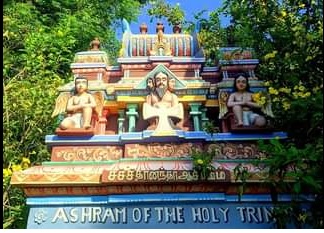
Fr. Bede Griffiths
Today many people's lives are highly influenced by religion. Many people's decisions are influenced and guided by their religious practices. Religion can frequently help people to improve themselves and improve the lives of others. Religion, on the other hand, appears to have the opposite effects, causing people to be violent. Religion is frequently blamed for violent acts such as suicide, martyrdom, and terrorism. Every religious tradition has either been victims of or sanctioned violence for millennia. How is it that religions, which intend to preach peace, love, and harmony, are so frequently associated with intolerance and violent aggression? Just in recent attacks people have been killed as tensions rise in Jerusalem! it is so important to understand today the core problem of religious violence and bring the true essence of religions and cultures.
Dialogue often is a casual matter, but the deeper, more substantial type is governed by an intrinsic commitment to finding the point of unity between the two traditions, finding the common ground that allows them to be related in a direct way. Fr. Bede Griffiths describes this deeper type of dialogue, which he refers to as existential dialogue: The primary goal of inter-religious dialogue is mutual understanding, but this needs to be understood from within, that is, by sharing the other person's religious experience. This is accomplished not only through shared conversation but also through participation in religious rituals and prayer.' Existential dialogue is characterized by an inner openness to the other built on mutual respect, dignity, and sympathy. However, existential convergence is more profound.
Fr. Bede Griffiths is convinced that a meeting must take place between the different religions of the world. Everywhere religions are a source of conflict and violence. The only way we can overcome this is when we go beyond the limits of each religion and realize the transcendent mystery which is manifest in all of them. It does not mean, of course, that we simply ignore the differences. Unfortunately, that is a danger in India, where they tend to say that all the religions are the same, that differences do not matter. [1]
Fr. Bede, says how to “transcend dualism … is our problem,” since “these religious divisions stem from the philosophy of dualism.” Yet Fr. Bede’s theological conclusion is not monistic Advaita so much as an integrative synthesis, accommodating for the distinctiveness of creation, the individual, and the Trinity. Instead of referring to religious plurality, Bede speaks of opposites which he seeks to reconcile through the notion of Advaita, which is conceived not as “non-dual,” but as complex. Hence the paradox: while Fr. Bede sees dualism as insufficient, the “non-dual” is perceived as important just because it allows for nuances—nuances that are often present in what Fr. Bede presented as “dual” to begin with. The notion that “all the religions are the same” is emphatically not valid in the Vedantic discourse, in which Bede seeks to engage, and which he identifies as “the orthodox tradition of Hinduism.”[2] Within the Vedantic discourse, it would be difficult to hold that religious “differences do not matter,” even if some Hindus may use such an expression. Sometimes Fr. Bede would be based on his notions of the perennial philosophy and “the cosmic revelation” see one single truth reflected in all religion, a truth which it is equally valid to describe in personal as impersonal terms, such differences do matter in the Vedantic discourse, just as they do in Christian theology. Fr. Bede so beautifully brings a path to unity and communion with God through nature as well as other people. This has been reflected in his writings on nature, love, Trinity and he says “We are made ‘partakers of the divine nature’ …. The world is not divided; there is no separation between God and world” Through this shared religious experience, a kind of osmosis occurs, and each person begins to see his or her own religion in a new light. A Christian, for example, may begin to see Christ in a new light after sharing with a Hindu or a Buddhist. In this way, one can bring true peace to the world.
Shanti Shanti Shanti
With love and prayers
Fr. Dorathick
[1] Bede Griffiths, Vedanta and Christian Faith, 92-93.
[2] Brockington, Hinduism and Christianity, 1.
Fr. Jules Monchanin (Swami Parama Arubi Ananda)
born 10th April 1895
Fr. Monchanin was a great gift for us all. Today as we commemorate his birth anniversary, we thank God for giving us a great Mystic and a great intellectual for all. One of his lovely understandings of Christian mysticism and Yoga is profound in his life particularly with the dark nights explained by John of the cross. Where Fr. Monchanin sees God as formless and transcends every concept, created intellect cannot reach Him except as in “a ray of darkness”. In this one goes into the emptiness or void, Indian sense fullness: Sat- Chit- Ananda – being, consciousnesses, joy. Buddhists would say the three-fold embodiment of transformation, beatitude, and essence. Katha Upanishad 6,12 would say Not by speech, not by mind, not by sight can He be apprehended; how can he be comprehended, otherwise than by one’s saying ‘He is? The mystical experience is prior to every theoretical explanation. So in true mysticism is the way where one loses his or her self with the Divine beyond names and forms.
Shanti Shanti Shanti
With prayers
Fr. Dorathick
Throughout Lenten season we may often hear about repentance. For many Christians, repentance means, like most of us, to understand, feeling that you are sorry for something bad or wrong that you have done. In the old testament, many times, the prophets preached about repentance for the Kingdom of God. This repentance is not the regret for our actions; it is more than that. If we want to understand the true meaning of repentance, we must understand the Greek word metanoia to ‘change of mind’. For what we need, the change of mind or change of oneself?
In old testaments, most of the time, the prophets preach about repentance. Repent and turn away from sins are the invitations of prophets. So first, we have to understand what sin is? Sin is the absence of goodness. CCC 1849 says Sin is an offence against reason, truth, and right conscience; it is a failure in genuine love for God and neighbour caused by a perverse attachment to certain goods. It wounds the nature of men and women and injures human solidarity. It has been defined as "an utterance, a deed, or a desire contrary to the eternal law." Krishna says sin is ignorance. When we live in ignorance, we can easily sin, bringing violence externally, hatred, hurting, anxiety, narrowness, lack of understanding, feeling imprisoned with emotions. Catechism of the catholic church beautifully says in 1431; Interior repentance is a radical reorientation of our whole life, a return, a conversion to God with all our heart, an end of sin, a turning away from evil. Repentance means the change of mind and heart ultimately. Repentance is an absolute joy, a refreshing return to life in its abundant fullness. To repent is to awaken from the sleep of ignorance and to rediscover the soul.
As we are in the holy week, it is the right time to repent from our sins. On the way to Calvary is a real journey to oneself, not simply we remember Jesus' passion. As Jesus said, "take up your cross and follow me." He did not say take up His cross. It is a great reminder the journey to Calvary is our journey of repentance, and we die with Christ and reborn with eternal life. Through the resurrection of Jesus, one finds the real meaning of repentance.
Shanti Shanti Shanti
with prayers
Fr. Dorathick
Lent: A Journey Inward, outward and Upward
We all know the season of Lent is a time of prayer, fasting, penance and almsgiving that leads us through the forty days to Jesus resurrection. Symbolically the forty days remind us of Jesus spending forty days within the desert fasting and praying. We imitate Jesus withdrawal into the wilderness for forty days a time contemplating his suffering, death, and resurrection. It’s a time for prayerful introspection, reflection, and meditation. This is a time for stillness within the presence of God as we contemplate the meaning and reality of Easter for us here and now. During this time of Lent, we too are called to look at our temptations, those things which separate us from God, and our true selves. We are called to rework and grow in response to God's loving compassion, which surrounds us all. This is often a time where we will grow fruitfully, but like all growth spurts, they're tiring and take emotional and physical energy. Lent isn't a time of self-criticism and self-hatred in an effort to emotionally hate ourselves, but a time for us to continue those things we discover about ourselves before God, prayerfully and openly, within the knowledge that of ourselves. And, being a part of ourselves, are forgiven, accepted, and are even beloved of God.
This Lenten season gives us an opportunity as a journey towards three different directions, namely, inward, outward, and upward. It’s a journey inward, that is, to the self, as we look and examine our selfishness and stubbornness of hearts and turn to selflessness and kindness like true children of God. It’s outwards because it should be a journey of our selves towards others also. The efforts that we exert shouldn't only be towards personal gains but also should have a fruit in helping others. Finally, it's an upward journey- a journey of the self towards God. In journeying towards God, Lent must be a chance to be reconciled with Him. Many spiritual writers will say that we don’t do the Lenten sacrifices in order that we'll have better come Easter time. Lent itself should be the very opportunity to repent and undergo the transformation and thus a time for us to be reconciled with the Lord here and now.
Shanti Shanti Shanti
Fr. Dorathick
Wishing you a Merry Christmas and a joy-filled Christmas season.
With love and prayers
Fr. Dorathick
Christmas Brings a New Light and New Hope
Peace and Joy to you all
Dear
Oblates and Friends of Shantivanam,
As we are preparing to celebrate the coming of Christ our Lord, we are reminded that Christmas is also a time for us to celebrate, to give thanks, and to prepare for the get-together with our families and loved ones. It is also a time to look back and remind ourselves about the many blessings we have received. This year most probably our Christmas will be very different. Lots of travel restrictions, lockdowns and quarantines, physical distance and wearing a mask etc... it will be quite harder and maybe impossible to get together with our family and loved ones. We miss all our Oblates and friends in Shantivanam this year. People have lost their jobs, Christmas without someone close to us - all these make us feel like losing hope! But this Christmas once again brings back hope to humanity. Indeed God has given us the greatest Christmas present we could ever hope for. The nativity is not simply just a symbol of the Christmas season, it represents God’s plan of redemption. In this apparently ordinary birth we find hope for the world. The gospel of Matthew says “God is with us” certainly; and it must be a faith-inspired, a faith-moved and faith-filled celebration.
Prophet Isaiah reminds us: “The people who are walking in darkness have seen a great light”. The light of God’s unconditional love- the very light of creation itself has come to walk midst us. To show us what it means to be loved as God loves. This love can never be taken away from the world. Through His incarnation God proved that God has brought divinity into humanity. Ultimately it is pure gift for us. For me the birth of Christ is one of the greatest messages for each one of us when we lose hope in our life to remember Christ promised I am the light and life too in spite of all our chaos. We have heard the words Christ, our Redeemer so repeatedly that we sometimes don’t really recognize the true significance. The problems of our lives can blind us to the reality of the true Christmas message. The fear and inhumanity of man can prevent us from experiencing the joy of the gift. Despite the human condition, here we are, once again this Christmas makes us recognize that God has become Man. The good news will never change. But our response to the message needs to be an essence of continuous change. Our continuous growth in holiness is the foundation to celebrate Christmas every day of our lives. Christmas brings us the greatest joy, a historical reminder for humanity that we are not far from God. We are close to God and God is close to us! We often fail to realize this truth because of our human tendencies. Christmas is certainly the great feast of Divine Mercy. Christmas says to each one of us today: God cares for us, loves us how ever even when we go away from God, God is always with us because He loves so unconditionally who we are. Often we judge ourselves and others that we are not worthy or not good enough, sometimes harder than even God judges! Pope Francis so beautifully says God’s joy is in forgiveness. God loves us despite of our weakness and fragility. Not even the fragility and the weakness separate us from the Divine union but rather the birth of Christ in our hearts brings a joy and hope today. Let us bring His light, and His mercy, and His peace to our world and to our sisters and brothers, our families, and where ever we live we bring a new hope to this Universe.
Though we are far, you are always in our thoughts and in our prayers which unite us this Christmas
Wishing you all a Merry Christmas!
With prayers
Fr. Dorathick
Dear Oblates and friends of Shantivanam,
Today we remember the birthday of Father Bede Griffiths.
As Christmas is approaching we are all busy with many preparations to receive Christ in our hearts.
Fr. Bede gives a different dimension to receive Christ - not only through the historical Christ but transcends us into the Cosmic Christ. The cosmic Christ that Christ himself goes beyond space and time is totally one with the Father, the creator-God, and so is also present in all creation. Fr. Bede elaborates in The New Creation in Christ, on some of St Paul’s most famous words: “‘In him and through him and for him all things are created and in him all things hold together.’ The whole universe holds together in Christ: that is the cosmic Christ. It needs to be said that Christ is present in all religion.” Fr. Bede Griffiths says the movement from a mythological to an historical understanding of the world is one of large significance. Because God acts in the history of his people, if children, widows, and the poor are rejected, God is rejected.
This start of history leads to a completely different conception of time. Time is linear, moving towards an end, the eschaton. The God of history involves himself in the history of his people in order to lead them to their final bliss. This understanding of God as the God of history breaks through the whole idea of samsara, which is death and rebirth to which life in the material world is bound. Time is not something from which humans have to escape; it is a means to salvation. The Lord is inspiring us and calls on us to respond to His call, every moment of our life. Let us all respond completely and enthusiastically to this call. This makes a profound difference in our understanding of life.
We are moving towards the final fulfilment. With the coming of Christ we encounter this finality.
Shanti Shanti Shanti
Fr. Dorathick
We live in a world of diversity with disunity and as a result we often end with war and violence with nations, religions, and in our own families.
There is a unity too in this Universe which connects diversity and if we are able to discover this unity we can really bring harmony to this universe. We can easily accept the differences and admire the differences too.
One of the essential methods we can practice is dialogue. Abhishiktananda wonderfully says in the introduction to the English edition of Saccidananda : Dialogue may begin simply with relations of mutual sympathy. It only becomes worthwhile when it is accompanied by full openness . . . not merely at the intellectual level, but with regard to the inner life of the Spirit. Dialogue about doctrines will be more fruitful when it is rooted in a real spiritual experience at depth and when each one understands that diversity does not mean disunity, once the Center of all has been reached.[1]
As we celebrate the death anniversary of Swami Abhishiktananda let us ponder on dialogue is the tool which can bring us unity to God and creation.
Shanti Shanti Shanti
With prayers
Fr. Dorathick
________________________________________
[1] Abhishiktananda, Saccidananda A Christian Approach to AdvaiticExperience,iii
HAPPY DIWALI
MESSAGE FROM FR. DORATHICK
14TH NOVEMBER 2020
Dear Brothers and sisters,
Today we in India celebrate Diwali. Diwali is also known as Deepavali, the largest festival in India. Millions of Hindus, Jains and Sikhs celebrate it all over the world. Diwali is a happy time, sharing sweets, lights, crackers, with one of its main themes being of course, the triumph of light over darkness, and good over bad. The word Diwali is a two-word mix. Deep, means light, and Awali, means line. Lights in a row. Light represents the vulnerability of power and darkness. This year gives us hope, particularly during the dark season, and that’s when we really need light. There are many stories of Diwali. The most popular in the Hindu belief is the story of the return of Rama, the king of Ayodhya with his wife Sita and brother Lakshmana to his capital city after a fourteen year of exile and a war in which he defeated the demon king Ravana, a story recorded in the Ramanyana. It recalls the people of Ayodhya, who lit oil lamps along the streets to light the returning king’s path in the darkness of a new moon night, and welcome them back, finally to their home. Another story regarding Diwali in South India: A giant called Naragashur once lived there. Narag stands for hell, and Ashur for giant. So he was a horrifying giant. He caused a lot of damage, to both the nation and the sages. They all cried out to the Lord for redemption. The Lord was incarnate and the Lord killed the giant one fine evening. With happiness holding light in their hands, people came out of their homes. So it became a tradition and the generations followed it and that’s why the generations followed each year.
If people decided to celebrate a day because of the death of a giant, then the whole life would not be enough for a person to celebrate because there are so many similar stories in the Puranas. So what do people feel today? There are lights around us, but we are engulfed in darkness inwardly. We think the giant (Satan or demons) has been destroyed, but we don’t realize that the giant or demons still live in us and hold us under slavery like sorrow, illness, hate, hunger, etc., Purenic tales have been written to make us understand that God has to come in flesh to save people from the slavery of this giant, who is called devil. Who’s the demon? Who is the incarnation of God embodied in flesh? The Giant is sexual immorality, impureness, idolatry, hate, conflict, envy, evil thoughts, stealing, murder, greed, malice, deception, pride, slander, vanity, etc. Such a giant still lives in the minds of people and spoils everyone? His life, and also the lives of others. The giant is called the darkness of the universe too. He darkened the eyes of us so that we could not see the light.
Light is a symbol of God. For God, who said, “Let light shine out of darkness”(made his light shine in our hearts to give us the light of the knowledge of god’s glory displayed in the face of Christ (2 Cor 4:6,7) The light of God, which is the true knowledge should shine in the minds and hearts of us. Jesus says “I am the light of the world. Whoever follows me will never walk in darkness, but will have the light of life.”(John 12:46) In truth, God is invoked and worshiped as light in all religious traditions. For God is light not only because He is the source of light, but because the entire universe is illumined by His own light. Chandogya Upanishad so beautifully says “There is light that shines beyond all things on earth” “This is the light that shines in our hearts (Ch. Up. 3,13.7)
As we light the lamps today, we remember the light of the world, the evil of the world. And we light them as lights, an invitation to the Spirit of God to come into our hearts, and to bring about the triumph of good over evil, of light over darkness in our life. All the lights of the universe cannot be compared to a ray of the inner light of the self. Merge our self in this light and rejoice in the festival of lights. May this Diwali bring joy and Peace.
Happy Diwali.
Fr. Dorathick.
(Mahasamadhi - 10 October 1957)
Today we celebrate the death anniversary of our beloved founder Swami Parama Arubi Ananda (Jules Monchanin). Swami Parama Arubi Ananda, the founder of the Shantivanam ashram, came to India in 1939 as a French Catholic priest. His life in India was dedicated to integrating the Hindu tradition, particularly its sannyasi contemplative practice, into the life of the Christian Church.
Swami Parama Arubi Ananda tried at a deep and total adaptation of the contemplative life of sannyasi who dedicated himself to the Quest of the Absolute and hence opened the way to the inmost form of spiritual union between Christianity and Hinduism. He was convinced that the best means of meeting the Hindus is by the life or sannyasa dedicated to the adoration of the Trinity. Convinced of contemplative life as the best Hindu-Christian meeting point Monchanin says, "It is in the inviolable sanctuary of the contemplating mind that the encounter between India and Christianity will occur". He saw contemplation as the supreme need of the Church in India. Monchanin was an adorer of the Trinity and he called India "The Land of the Trinity".
Monchanin affirms that Christian mysticism is Trinitarian or else it is nothing. His sannyasi life was centred on the Trinity. "Monchanin was a magnetic personality who could radiate God and attract people. People could feel God's presence in him and he led many to God although at times his bold steps to integrate Christianity with Hinduism by living a life of sannyasa in an Ashram were criticized. No one ever dared to doubt the depth of his religious life"[1] Monchanin was one of the pioneers of ecumenism first with Christians, Jews and Muslims in France and then with the Hindus in India. He was not only a scholar and a theologian of exceptional insight, but also a very holy man, who sought to encounter Hinduism at the deepest level in the sphere of prayer and contemplation. Monchanin in his last letter to his Bishop he wrote:” I offer my life to God on behalf of Shantivanam and my death also if it be His will”. The Lord had already made His choice. “Unless the seed fall and rot within the earth it shall not germinate and bear fruit”. Today as we commemorate the death anniversary of Swami Parama Arubi Ananda. Let us remember the great witness to India.
Shanti Shanti Shanti
With prayers
Fr. Dorathick
[1] Jesu Rajan, Bede Griffiths and Sannyasa, Bangalore, Asian Trading Corporation, 1997,90.
SEPTEMBER 2020
Greetings and peace from Shantivanam
Dear
oblates and friends of Shantivanam,
MYSTICAL CONTEMPLATION THROUGH THEOLOGICAL VIRTUES
Mystical contemplation is filled with spiritual interior
experience of union with the mystery of God. Normally It
cannot be grasped with our faculties. We use a lot of
means to understand but often we stop at our
intellectual level, which does not satisfy ourselves!
What we need is knowledge through experience, through
realizing and assimilating it into our very being.
Contemplation is fundamentally an exclusive as well as
an inclusive progress, in which one withdraws one's own
mind and senses from the disturbances of the world and
contemplates upon individual will and transcends to Gods
will in which the mind and the body is brought together
to a harmonious whole.
In Christianity we are familiar with theological virtues
of faith, hope and charity. We need to have a deeper
understanding of these virtues in contemplation. A
virtue is a habitual and firm disposition to do the
good. It allows the person not only to perform good
acts, but to give the best of himself. The virtuous
person tends toward the good with all his sensory and
spiritual powers; he pursues the good and chooses it in
concrete actions. The goal of a virtuous life is to
become like God.[1]
Every believer is given the gift of faith but every
believer is not mystically enlightened by faith. Faith
is a passive theological virtue infused in us. It
Implies revelation from God and the response of
obedience from us. We can express this faith response
through our faculties especially the intellect or rising
above the capacity of the intellect. In the first case
we have the ordinary response of faith. But we need a
mystical enlightenment of faith because contemplation is
enlightenment in faith.
Theological virtue of hope brings fulfillment to our
possessive desire. The possessive instinct operates
from our childhood till death giving us semblance of
strength and security in the midst of our imperfections,
limitations and insecurity. Usually we hope to be
happier when we gain possession of the object. This
happiness does not last long. We desire to possess
beyond our needs, even our possessions become a problem
and a threat. Yet we do not stop possessing. On the
contrary, mystical experience of hope gives us in
anticipation a direct experience of the infinite divine
mystery. But since in our possessive faculties we do not
have the capacity for infinite possession, we may feel
empty and void. Our empirical joy in possession is
always related to creatures. When we are given the
possession of the mystery of God, we may feel empty and
void in our faculties yet have the joy of possessing
everything. Having nothing yet possessing everything.
Like faith and hope, the theological virtue of charity
also can be practiced at two levels, ordinary and
mystical. At the ordinary level, we love God and our
neighbour. This love is imperfect, because often it is
measured by the capacity of our faculties. It is often
self-centred and calculated, seeking our own benefit.
Love is the most sublime power in us and when it is
perfect, it should make us really blissful. Since this
love is now measured by our power, it is imperfect and
cannot make us fully happy. In contrast, mystical love
is a blissful passion for the Divine Beloved and creates
in us a feeling of self-annihilation and a complete
self-surrender to God. In Bhagavat gita 18:62 so
beautifully says “Surrender exclusively unto him with
your whole being, O Bharat. By his grace, you will
attain perfect peace and the eternal abode”. The more
the love the more we forget ourselves, in giving
ourselves to God this in turn invites divine self-
giving. On the part of God and the mystics there results
a total mutual self- surrender, possession and joy. Here
the mystics who are created in the image and likeness of
God look God- like through participation. Here one
realizes the original plan of God and we become
blissful.
Shanti Shanti Shanti
With prayers
Fr. Dorathick
[1] THE VIRTUES1803 https://www.vatican.va/archive/ccc_css/archive/catechism/p3s1c1a7.htm
Greetings and peace from Shantivanam
As we commemorate the 110th Birthday of Swami Abishiktananda we reflect on
Dear Oblates and friends of Shantivanam
God Speaks through Nature
God has surrounded
us with wonderful things of nature to keep us busy and
interested in life. Gods wish would be that we should
connect the beauty of nature with His goodness. God uses
many ways to make Himself known to us and bring us into
fellowship [closeness] with Him. Nature speaks to our
senses about God without stopping. Our attitude to
nature has varied in the course of history. Some of us
see God as the creator who stands apart from the
Universe. It is like a clock maker and the clock. The
Universe may have had an origin and an originator. But
now it is on its own. It is a secular reality. Others
identify the universe with God. They see nature itself
as divine. They divine natural forces like the sun and
the moon, the wind and the rain. The advatic tradition
in India asserts that God and the Universe are neither
one nor two, not one - but also not two. Nature is not
God, but it is dependent on God. Ramanuja a great Indian
philosopher saw nature as the body of God: dead by
itself, but animated by God. Nature is neither secular
nor divine, but dependent on God.
If we say that nature speaks to us about God, we somehow
reduce God to the dimensions of nature, even if we keep
asserting that God is infinitely more than our
affirmations. The truth is that God speaks through
nature. But then God speaks, not about God self, but
about us and about our life in the world, about our
relationship to nature and through it to God. We look at
nature, not to know more about God, but to listen to God
speaking to us through nature which God is present. God
teaches us through nature about life. What could be the
lessons?
The first lesson is that life is dynamic. It is moving
towards a consummation which we are not too clear about.
We do not know what form it will take. Scientists say
that the Universe started with a big bang and the
scattered parts are racing outward in space at
unimaginable speeds. What we call space is being
constantly extended. Energy is being transformed in
various ways continuously. Within the Universe and in
its solar system the earth has moved in a different
direction. Its climatic conditions changed in such a way
as to make possible the emergence and evolution of
life. Life has evolved to the level of the humans.
While the evolution of the body seems to have reached a
level, it is now the turn of knowledge and
communications. We are able to do things now that we
did not dream of twenty years ago. We do not know where
this evolution is taking us. But we can understand that
the world is moving, humanity is moving, and life is
moving.
The second lesson that God is teaching us through nature
is that life is always inter dependent. The more the
scientific discoveries and what the scientist says about
the law of nature, we see how everything is dependent on
everything else. The whole universe is a network. The
world has existed without life. It may still do so if we
succeed in annihilating life by our destructive
activities. But we cannot survive for a moment without
the world: The air, the heat, water etc… At the same
time, we can destroy nature by the way of exploitation
and consume it. We do not realize that by destroying
nature we are destroying life and also our own.
Ecologists are trying to be today sensitive to this
dependence. The inter dependence between nature and
humans. We often think of ourselves as individuals. We
look on the human community as a collection of
individuals. But history has been a story of mutual
influences, taking, sometimes, conflictual forms. It is
time to realize that human destiny is one and inter
related. The plan of God is to gather all things into
unity. But often our spirituality and rationality
promote individualism and do not dwell on the
implications of this inter dependence. God also reminds
us that life is not smooth through nature - many times
we feel that nothing is in our hands like the present
pandemic - scientific knowledge and technologies become
powerless. God keeps upsetting our plans, reminding us
of our dependence, not only on God, but on the broader
unity of both at the human and at the cosmic levels. The
more we come to know God the more there is a joy within
us an adoration and appreciation for His creation. Romas
1;20 would say “For since the creation of the world
God’s invisible qualities his eternal power and divine
nature have been clearly seen, being understood from
what has been made, so that people are without excuse”.
So may we continue to take care and love Gods creation.
May we take care of His direction in our lives in the
ways He teaches us through the nature around us. So
constantly try to listen to nature with mind and heart
so we can see miracles happen in every moment of life.
Ultimately we become instruments of God.
Shanti Shanti Shanti...
With prayers
Fr. Dorathick
JUNE 2020
Greeting and peace from
Shantivanam
Dear Oblates and Friends of Shantivanam
Resting in God
Rest is a fundamental human need. It is as important as
air, food and drink a basic for living healthy. Not only
our bodies but also our minds and souls need rest. Today
we live in a world where everything is rapid, busy and
unfortunately many of us today can’t rest a while.
Illness and pain caused by lack of rest in modern men
and women more than ever before, caused by a lack of
sufficient and regular bodily and mental rest. Today
often people suffer a lot due to the lack of mental and
spiritual rest than physical rest. Rest for the body,
mind and soul is essential because all human activities
make us tired. So our bodies and minds need to be
constantly revitalised for healthy living. Morden
psychologists of behavioural science tell us that mental
exhaustion and psychological depression precede even
cause physical tiredness. More than physical exhaustion,
it is mental stress that leads us into restlessness. Our
mind needs more rest than the body. Today it is
challenging by our technology controlled world. Our
minds are often under greater strain than our bodies. So
we need mental rest more than ever before. In many ways,
we do rest today like listening to music,
yoga,relaxation, Meditation, going out etc...
Rest is equivalent to peace. Naturally, we associate
rest with sleep. When we are so tired, we think of sleep
and rest. After that, we are renewed and energized to
move out again. We feel sound and happy. In the Biblical
tradition to rest is rest in God Ex 33:14 will tell us”
My presence will go with you, and I will give you rest”.
Psalmist says “Fresh and green are the pastures where he
gives me repose” (Ps 23:2). Jesus invites us with most
consoling words: “come to me, all who labour and are
heavy laden, and I will give you rest” (Mt 11:28). In
the letter to the Hebrews 4:4 we can read “God rested on
the seventh day from all his works.” What is God's rest?
The rest God is expressing about is not resting from
your daily work or physically wearied when we have
worked hard. It is that profound peace that God gives to
all of us regardless of circumstances. It is a
fathomless peace that does not affect whether you are
wealthy or poor, intelligent or unintelligent, black or
white. It is a rest that restores and makes you whole.
Rest and peace are equal. I will use both terms here. It
is a rest that calms your fears and gives you a sense of
confidence to face the future with conviction,
regardless of what is happening around you. In the Gita
Shree Krishna so beautifully says the necessity for
surrendering to God to receive his grace. Know that as
the mighty wind blowing everywhere rests always in the
sky, similarly all living beings rest always in Me BG
9:6.
The spiritual discipline of rest in God is a
focused time to enjoy and invest in our relationship
with God. The world offers endless distractions,
temptations, and challenges. God offers Himself. Make
your time concerning rest time for the Lord. Authentic
and fruitful prayer, meditation is transforming rest in
God. When we rest in God we are radically purified and
fundamentally transformed. Many of us are frightened by
this possibility because to surrender and change is a
very risky process. That is why people are afraid to
rest in God. To rest in God is to admit our
insufficiency, our limitations, and our weakness.
Committing oneself to deep authentic prayer or
contemplation calls for the courage to look deeper into
oneself. This allows the unconscious to rise to the
surface so that the Lord can heal us. Rest is healing
par excellence. Rest in God, we become total oneness
with Him. And this oneness will make us a profound joy
to God. At present COVID-19, has become the central
focus of the whole world, making so much fear the
uncertainty of what’s ahead. Everything feels chaotic
and uncertain. When life feels out of control and fear
and anxiety seems to overwhelm you, where do you find
your hope, peace, joy? Remember where you find your
strength during times of uncertainty is when you truly
rest in God.
Shanti Shanti Shanti.....
with prayers
Fr. Dorathick
THEME OF GATHERING-
27th death Anniversary - Mahasamadhi of Fr. Bede Griffiths.
Dear Oblates and
friends of Shantivanam,
On May 13th 2020 we celebrate the
27th death anniversary of Fr. Bede Griffiths.
Today as we are experiencing - COVID-19 cases
continuing to rise across the globe, stress and
fear around us, attention about the virus and its
risks is becoming palpable in many workplaces. Between event cancellations, travel
limitations, personal concern about infection, and
more, almost every business will undergo the
effects of this public health crisis in some way.
We are in lockdown, we become more anxious of
self-quarantine at home, during such an
unprecedented time, stress on the body and mind is
inevitable. It is very important to keep good
physical, mental, and spiritual wellbeing and keep
positive during this COVID-19 pandemic.
So we can be generous, compassionate and show love
in various ways. Today people are in need.
In this challenging time Fr. Bede
Griffiths' thoughts on meditation are so consoling
for us and a great inspiration for practicing
meditation.
Fr. Bede Griffiths says “to enter deeply into
meditation is to enter into the mystery of
suffering love. It is to encounter the
woundedness of our human nature. We are all
deeply wounded from our infancy and bear these
wounds in the unconscious. The repetition of the
mantra is a way of opening these depths of the
unconsciousness and exposing them to light. It
is first of all to accept our woundedness and
thus to realize that this is part of the wound
of humanity. All the weaknesses we find in
ourselves and all the things that upset us, we
tend to try to push aside and get rid of. But we
cannot do this. We have to accept that “this is
me” and allow grace to come and heal it all.
That is the great secret of suffering, not to
push it back but to open the depths of the
unconscious and to realize that we are not
isolated individuals when we meditate, but are
entering into the whole inheritance of the human
family.”- Father Bede Griffiths, The NewCreation
in Christ.
Shanti Shanti Shanti
WithPrayers
Fr.Dorathick
125th birth anniversary of Fr. Jules Monchanin
Dear Oblates and Friends of Shantivanam
On this April 10th 2020 we commemorated the 125th
birth anniversary of Fr. Jules Monchanin. Jules
Monchanin was born on 10 April 1895 in France. He
became a Catholic priest and was ordained on 6
February 1922. He was attracted by India. In May
1939, he came to India as a missionary. Monchanin
was engaged in pastoral work in India. These were
years of social deprivation, physical hardship, and
acute loneliness, preparatory to the contemplative
life for which he craved. At last, In March 1950, he
co-founded, along with Fr. Henri Le Saux the
Saccidananda ashram Shantivanam. Fr. Jules
Monchanins quality of humility, gentleness, peace,
and poverty of spirit, these saintly qualities were
recognized and attested to by Christians, as well as
Hindus. In the letter of Bishop Mendonca he
beautifully says the ashram planned by Fr. Mochanin,
was to be but the beginning of a new era in the
history of the religious orders in India. Fr.
Mochanin writes in one of his letters “A Christian
India, completely Indian and completely Christian,
may be and and will be something so wonderful. To
prepare it from afar, the sacrifice of our lives is
not too much task”. Fr. Monchanin is a great
Intellectual. To compare Christian and Hindu
mysticism for him the challenge in India was when he
discovered that Hinduism was not what he believed it
was. Hindu Thought so deeply focused on the Oneness
of the One. In the quest of the absolute one of his
lectures he concludes so wonderfully giving us all
hope to continue the dialogue with India “meanwhile,
our task is to keep all doors open, to wait with
patience and theological hope for the hour of the
advent of India into the church and the fullness of
India. In this age long Vigil, Let us remember that
very often Love alone enters where the intellect
must stand at the door.
Shanti Shanti Shanti....
With prayers
Fr. Dorathick
Easter 2020 Message from Fr. Dorathick
Easter which gives us
hope and encouragement in this world of pain,
sorrows, and tears.
This year Easter is very unusual for most of us. The
whole world has been affected by the COVID 19
pandemic.
Today many of us are experiencing fear and
uncertainty, as well as trauma, separation,
isolation, loss of members or even death in their
families or their church communities.
Many of you are celebrating, in your homes by a
virtual way, behind closed doors, with people
present by, television, smartphones and social
media.
But the message of Easter is the same as from the
beginning, Christ is Risen, Alleluia.
If we look back from the time of Jesus’ betrayal,
suffering, death, and burial, his disciples
quarantined themselves and locked themselves away,
“social distancing” from other believers gathered in
Jerusalem at that time.
The one they had imagined to be Messiah and saviour
of the world had been arrested, punished, crucified,
and was buried.They were shocked. Their hopes were
smashed and they were afraid they could suffer a
similar way. So, the disciples were hiding and
quarantining themselves.
This year is a great opportunity for everyone of us
to meditate more on these great mysteries of Christ.
He remains a mystery. The scripture says that Christ
is the mystery of God (Col. 2:2). If you know
Christ, you will know God, but if you do not know
Christ, you do not have the key to understand God.
Moreover, if you do not know Christ, you do not know
yourself, for Christ is the key both to you and to
the universe.
In these days it is a proclamation of hope amid
restrictions, hope amid fear and hope during illness
and death. Today we have great hope in the risen
Jesus Christ, He is with us, to encourage, to
strengthen and to be with us in all our difficult
times.
Today, the suffering of the cross gives way to the
glory of the Resurrection. Just as we share in the
cross of Christ in this life, we hope to one day
share in Christ's glory. Without cross and death
there is no resurrection. On the third day of his
death, Jesus was raised to a new life.. As St. Paul
says in 1 Corinthians, if Christ has not been
raised, then your faith is futile (1 Cor 15:1”).
Our faith in Jesus Christ on this Easter is our
resurrection too! But often we miss to understand
the true resurrection and the deep meaning of
Easter. If we want to understand Easter we must
understand passion, death and resurrection. Without
cross and death, the resurrection will not happen.
Jesus guaranteed Martha at the tomb of Lazarus: “I
am the Resurrection and the Life; whoever believes
in Me will live even though he dies” (Jn 11:25-26) .
There is a saying you may be familiar with that,
everyone wants to go to heaven but no one wants to
die. Similarly, we all have a thirst to have a
resurrected life but we don’t want to die. Because
the physical death is often understood as the
separation of physical body and soul. This
separation causes great distress in us because our
physical body becomes lifeless. Now coming to the
psychological death, it is more to experience in our
present life and a very practical way. We may even
have to die to our desires and selfishness. It is
the hardest part of our life once we surrender our
will to God’s will, this is the death we can
experience in everyday life. When we die this way we
become truly free and joyful so that our lives
become fully lived.
Resurrection is all about seeing our world in a new
way. Each time we reveal our love of others, we
share in the Resurrection. Each moment we face a
betrayal of trust and, with God’s grace, forgive the
betrayer we share in the Resurrection of Jesus.
Whenever we fail in our attempts to turn away
temptations–but when we keep on trying to overcome
them, we share in the Resurrection. Each time we
continue to hope, even when our hope seems to be
unanswered, we share in the strength of Jesus’
Resurrection. The message of Easter for us is that
nothing can destroy us. Not the pain, sin,
rejection, betrayal or death because Christ has
conquered all these, and we, too, can conquer them
if we put our Faith and trust in Him. Our faith in
Jesus Christ on this Easter is our resurrection. Our
COVID-19 distress brings us daily news of suffering,
pain, and death; Easter reminds us that love and
life are greater than pain and death.
May the Risen Lord bring each of us abundant
blessings of new life.
Christ is Risen, Alleluia
Shanti Shanti Shanti…
With prayers
Fr. Dorathick
21ST MARCH 2020
70TH ANNIVERSARY OF SACCIDANANDA ASHRAM - SHANTIVANAM
Dear
Brothers and Sisters,
Today we are celebrating The 70th Anniversary of
Saccidanda ashram, Shantivam.
Remembering with a thankful heart to all our
founders the great vision of this ashram and all
who supported the ashram.
Our ashram is always a place of meeting point
between God and people;
Shantivanam is a unique place where two
traditions, eastern and western bring spiritual
life together in our own experience of prayer and
contemplation.
Contemplative life does not mean sitting around
and thinking about God all day long. Rather,
contemplative life for us, is the Ashram life of a
monk joyfully lived in silence, prayer, work and
contemplation. It is the challenge of remembering
God in all that we do and say during the whole
day.
Shantivanam Ashram is a lighthouse for those who
truly seek God. The atmosphere of the Ashram gives
inner peace and harmony enabling everyone who
visits this Ashram to find joy and love. Today in
a special way, we thank and pray for all the
oblates, friends and well wishes of shantivanam
ashram for the kind support for the growth of the
Ashram.
In a special way at this moment, we pray for also
those who are affected by Coroa virus and the fear
of this illness. Our prayers to the whole world.
May God protect and heal us.
Shanti Shanti Shanti
Fr. Dorathick
Prayer for all affected by the Coronavirus
My prayer for all who are affected by the
Coronavirus.
I request all our Oblates and friends to pray for
all who need our prayers in this time of
suffering, fear and pain;
Lord, sustain us by your grace, give us Lord
strength and courage. It is very stressful for
people and communities. In addition to fear the
risk of the disease itself, voluntary social
isolation, churches, temples, mosques and schools
closing, and shifts in working situations.
At this time, Let us draw closer to one another in
our love, and rediscover the things that truly
matter in our lives. It is time to be looking In
and slowdown our life rather than looking at our
life with busy and hectic days earning and
spending and at the end we are more anxious and
stressful and create violence and disharmony
within us and out. Within a few days, the
advancement of science, wealth, medicine, culture,
caste, creed, business, economy, religion, all
challenged by invisible Viruses. It is a great
lesson for us today - all these walls are broken
down to this Coronavirus -here we humans feel one
humanity exist. Despite the loss of beloved
people, economy and the normal life something good
happens, mother nature is restored by less
pollution and people have time to spend with
family etc… social isolation, churches, temples,
mosque and school closings, and workplaces are
closed. However, it gives time to open our hearts
to love of God and to Love of neighbour and
surrender our self to almighty God.
Almighty loving God, you are the only source of
health and healing. In You, there is calm, and the
only true peace in the universe. Grant to each one
of us your children an awareness of your presence,
and give us perfect confidence in you. In all
pain, fear, and anxiety your love and power
surround us, trusting in your wisdom and love to
give us health, strength, and peace.
With prayers,
Fr. Dorathick
FEBRUARY 2020
The Joy of
Reconciliation On the Season of Lent
Greetings and peace from Shantivanam
Dear Oblates and friends,
Lent begins on ash Wednesday and continues until Holy
Thursday afternoon when we begin the great triduum.
the “40 days” (not including Sundays) of fasting,
prayer, and penitence before Easter reflect Jesus’
forty days in the wilderness. the historical roots of
lent also included the reconciliation of penitents:
individuals dressed in sackcloth and sprinkled with
ashes who dedicated themselves to penance for the
season, a practice that was constant, severe and
public. interior life through spiritual exercises and
practices. in the early church, new believers were
baptized into its fellowship once a year on Easter.
leading up to their baptism a period was set aside for
their formation in the faith. in their baptism, it
would signify their death to the power of evil and
their call to rise into the new life in Christ, who
overcame the power of death on the first Easter. today
rather than being seen as a forty-day endurance test,
or a miserable and restricted time, lent is a quality
season. it is a time of rediscovery, a golden chance
to open ourselves more deeply to the beauty and power
of the dying and rising to a new life in Jesus. it is
a time to ponder the reality of the death and
resurrection and to allow it to soak into our deepest
parts.
During this season of lent, we have the joy, once
again, to open ourselves to God for forgiveness and
healing for his light to shine through us. it is a
time to reflect on the darkness and uncertainties
within and seek forgiveness, understanding and mercy.
Christianity many times emphasize sin and that we are
sinners so we need forgiveness. often when we hear
this we are sinners, we need forgiveness from god this
makes it very difficult to understand and hard to
accept the concept of sin and forgiveness. the
traditional way of understanding sin and forgiveness
does not satisfy ourselves much today. as the result
today even many Christians are turning away from
church and they have a bitterness towards the church
and Christianity. today we need a different
perspective to understand forgiveness and sin. The
catechism of the catholic church gives us the
definition of sin. sin is an offence against reason,
truth, and right conscience; it is a failure in
genuine love for God and neighbour caused by a
perverse attachment to certain goods. it wounds the
nature of man and injures human solidarity. it has
been defined as "an utterance, a deed, or a desire
contrary to the eternal law. For me, sin is the total
denial of one’s own being and denying the truth that
God created us in His own image and likeness male and
female. This truth can be denied easily in our own
life. The second one is when we try to see bad in
God’s creation. Where God sees all of His creation is
good. But humans see good and bad - when our reason is
limited in a certain way this will happen, we make an
offence against reason, truth, and right conscience;
it is a failure in genuine love for God and neighbour
- this is sin. So we need forgiveness to reconcile.
forgiveness is nothing but when we look at the root of
the word we can understand better. Forgive is the
Latin word that gives us a beautiful understanding of
forgiveness “perdonare” meaning “to give completely,
without reservation". This is pure God’s grace which
given through Christ to us to forgive our sins means
Gods invitation to eternal life. Forgiveness is the
bridge which links between us and God. Whenever we
stop with our self-centeredness. God intervenes with
humankind with love and forgiveness. “If you do not
forgive others their sins, your Father will not
forgive your sins”. Matthew” 6:14-15. It is so
important to forgive others too. Reconciliation is a
joy because as we forgive others God forgives our sin.
again sin is just the state of Ignorance of oneself
and others. Forgiveness helps us to transcend
self-centeredness to God-centeredness.
As we reflect, we may find many areas in our life
where we have not been faithful, honest, loving,
self-less or generous in relationships with God,
family and others. we can see where we have avoided
responsibilities as citizens, neighbours, employees,
parents, partners, sons or daughters. when we
genuinely ask for forgiveness on these, God in his
mercy provides forgiveness and healing. God pours out
his healing love when we take the time to reflect and
repent. 1 John 4:9-10. The season of Lent is a time of
spiritual renewal. lent is the time for new life and
hope. In the Lenten season, self-examination is
crucial. An individual's response to the call for
purposeful reflection on one's need for God. Lent
became characterized by practices which symbolize the
meaning of this season. One of these is prayer. Lent
invites us to step aside from the busyness of our
daily life, the many things that mess and crowd our
life in order to get in touch with the self and at a
deeper level, with the Spirit of God within.
Essentially, prayer is attention to God; it places us
in a posture of listening. Amidst all the noise and
turmoil of our daily life, Lent encourages us to
experience a new depth of prayer, an authentic
attentiveness to God through which we learn to be
strong in the Lord and in the power of his might. the
second practice associated with this season is
fasting. Fasting signifies a willingness to free
ourselves from the desires, ambitions and pursuits
that centre on the demands of the self. It points to a
willingness to be freed from the self-centeredness
that drives so much of our life in order to experience
more fully the liberating power of Christ. Fasting
reminds us of the truth that the deepest hunger in our
lives must be the hunger for God. third practice is
almsgiving. True hunger for God leads to the giving of
ourselves to others. Lent calls us to greater
compassion for others, especially the poor and needy.
It invites us to examine ourselves honestly on how
subtly we have accepted society’s addiction to
possessions, to material comfort.
In the Gospel of St. Mark, Jesus calls: “Turn to God
and believe in the gospel.” Yes, during Lent we would
like to turn to God for his forgiveness. By his
constant forgiveness, God allows us to renew an inner
life. It is to a conversion that we are invited: not
to turn towards ourselves in introspection, but to
seek communion with God as well as communion with
others. And the conversion to which we are invited
also concerns the link that unites us to all creation.
Wonder at creation leads us to more respectful
behaviour towards our environment.
Shanti Shanti Shanti...
with prayers
Fr.Dorathick
JANUARY 2020
Dear Oblates and friends of Shantivanam
How Important Silence and solitude in Today's life!
When we hear the term Silence and solitude we may think
that it is only for monks or nuns. Today we live in a
world full of a busy and hectic life. Silence and
solitude seem to be irrelevant in today’s life. Thomas
Merton so wonderfully says that not all men are called
to be hermits, but all men need enough silence and
solitude in their lives to enable the deep inner voice
of their own true self to be heard at least
occasionally. When that inner voice is not heard, when a
man cannot attain to the spiritual peace that comes from
being perfectly at one with his true self, his life is
always miserable and exhausting. For he cannot go on
happily for long unless he is in contact with the
springs of spiritual life which are hidden in the depths
of his own soul. If a man is constantly exiled from his
own home, locked out of his own spiritual solitude, he
ceases to be a true person. He no longer lives as a man.
This is so true because somehow we at a point of life
search for this silence and solitude in different new
ways today.
Many of us think of silence simply, as just an absence
of noise, or not speaking words. But silence, like life
itself, is more complex and subtle than that. We all
seek silent moments, islands in the sea of sound, to
reflect upon and gather the lessons from life's
experiences. Usually, our quest for peacefulness is an
outer search. We go on vacation to hike into the hills
to escape the daily activities etc... While Hindu saints
and scriptures do emphasize the importance of serene
surroundings as an aid to introspection, they stress
more the cultivation of silence within. Outer peace is
simply a means to help us find inner silence.
Ultimately, we learn to maintain and enjoy innate
serenity regardless of the disharmony that surrounds us.
This is the basis of the Hindu practice of mauna, the
vow to remain silent, and it is why some subdue speech
altogether. According to the Bhagavad Gita, mauna is
about training our minds, not just our mouths, to be
silent. It is deeply transformative because it helps us
silence our thoughts and, more significantly,
acknowledge the background of Stillness that is our Real
Nature.
The monastic teaching on prayer is without images or
thoughts, prayer as pure silence before God. Silence is,
first of all, help to be able to pray at all, to lift
one’s spirit to God. To listen to God. The highest
degree of prayer for monastics is contemplation- gazing
on God, being seized by God. Here images, thoughts and
imaginations vanish. Here, God is encountered directly
in pure silence. Swami Abhishiktananda’s emphasis on
the value of silence is vital; He tells us that it is
from ‘eternal India’ that the West can learn the value
of the apophatic way, the way of emptiness and quietude:
India has taken with utter seriousness this word that
tradition has adopted from Psalm 64: Thy praise is
silence. The Christian of the West and of the East, whom
temporary acculturation has all too often cut off from
the well-springs of his prayer, must re-learn the
silence of the soul before God from eternal India …[1]
Only when the soul has undergone the experience that the
Name beyond all names can be pronounced only in the
silence of the Spirit, does one become capable of this
total openness which permits one to perceive the Mystery
in its sign. In Silence and solitude we no longer hold
on to our thoughts, but relinquish ourselves completely,
we plunge into the mystery of God which sustains us. We
do not prescribe to God how God is to meet us but become
open to God. Today let us not forget this beauty of
silence and solitude which will make our life more
beautiful and make openness to God. So even in our
hectic life if we can make some space for solitude where
we can simply remain silent before God. We hold up our
empty hearts to God’s presence to be filled with God’s
unspeakable and inexpressible love.
Shanti Shanti Shanti….
With prayers
Fr. Dorathick
[1] https://www.researchgate.net/publication/328771515_Abhishiktananda_Henri_le_Saux_OSB_1910-1973_Pioneer_of_interspiritual_mysticism
Greeting and joyful wishes from Saccidanda ashram,
Shantivanam
Dear Oblates and Friends,
Merry Christmas, dear brothers and sisters, what a
joyful day of celebration of the gift of love, the gift
of peace and the gift of light and life for us.
Christmas always reminds us about light, Christ is the
Light of the world. When Christ said "I am the light of
the world," possibly the first that flashes through our
mind are that God is the creator of light. Genesis 1
tells us that, in the beginning, "God said, 'Let there
be light,' and there was light . . . God separated the
light from the darkness" When Jesus said, "I am the
light of the world," Jesus also wanted to convey the
idea that God and Christ themselves are the light. We
can see this metaphor in 1 John 1:5--"God is light; in
God, there is no darkness at all." In the book of Isaiah
chapter 60, we can see another description of God as
light. Giving hope to a nation that had suffered
horribly from war, destruction, and exile, the prophet
Isaiah told his people that the day was coming when
their mourning would be over. "The sun will no longer be
your light by day, nor will the moon shine for
illumination by night." Instead, "the Lord will be your
everlasting light."
On the night of His birth, the choirs of angels sang
“Glory to God in the Highest and on earth peace to men
of God will”. This gift of peace is a part of the
Christmas story. The Lord desires to give us His peace.
This peace is not the same as the world gives peace. For
Christ, peace is not merely the absence of war or
violence but rather a profound sense of well-being that
comes from knowing that we are loved unconditionally by
the God who created us and called us to live. It is a
peace that is experienced when we realize that God is
holding us close to Himself and that He will not abandon
us even in the most challenging moments in our life.
Another gift that we obtain from the Lord at Christmas
is the gift of joy. During the season of Christmas, we
are called to reflect on this most wondrous gift. The
Lord points out that we will receive this gift if we
abide in His love. To do so, He asks us to keep His
commandments and the most important commandment He gives
us is that we love one another. He has told us this
according to His words so that “My joy may be in you and
your joy may be complete. “ (John 15:11). Jesus, the
visible manifestation of God’s love. Christ’s birth is
the concrete expression of God’s love. God came to us.
This love joins the two extremes of divinity and
humanity.
One of the significant aspects of Christ’s birth into
the world was to share the joy of God’s forgiveness and
love. Christmas is not only a season of rejoicing, we no
longer have to walk in spiritual darkness. God has
provided us with Light through Christ. Immanuel "God is
with us"; during this Christmas season, we can rejoice
like the Magi, opening their hearts and see the light
from far and begin their journey. We should also open
our hearts to Christ to Christ the Lord who is born to
one another in genuine love, every time we forgive, it’s
a real Christmas. Loving others is what Christmas is all
about.
May the light of Christ radiate our heart to see God is
love and "God is with us". May the love of our Lord,
Jesus Christ, surround you all the days in your life
Merry Christmas to you and your family.
With love and Prayers
Fr. Dorathick
On 113th Birth Anniversary of
Fr. Bede Griffiths
Dear
Oblates and friends of Shantivanam,
Today we remember the birth anniversary of Fr.
Bede Griffiths. On this day we reflect on his
vision towards All-Embracing, Generative Love in
contemplation. Fr. Bede Griffiths considered
contemplative experience is a necessary
dimension of Christian life, and, indeed, all
human life. Contemplation, he understands to be
a non-rational means of acquiring knowledge,
equally authentic as rational thought. His
approach had a special urgency in that he
considered the great religions of the world to
be in a state of stagnation, and in urgent need
of renewal. A prime source of renewal would be
through the cross-fertilization on the level of
contemplative dialogue. In fact, he considered
interreligious dialogue in our era to be a vital
duty, not an option. Christianity as a religion,
he says, “cannot grow today . . . unless it is
willing to abandon its Western culture and its
rational masculine bias and learn again the
feminine intuitive understanding that is
characteristic of the East.” [1]
He would go on to insist that all religions need
to return to their originating experience if
they are to contribute to a common contemplative
journey. There are then three aspects of the fr.
Bede’s “complementary theology.” The images he
employs are directed not only to serve a
contemplative awareness of God but also
presuppose an appropriate community experience
while asserting fidelity to a particular
historical religious experience — Christian and
monastic in his own case. These three aspects
illumine the different phases of his journey as
it moves forward in an awareness of the acute
spiritual crisis experienced in the present
global era. Contemplative experience in
Christian tradition Griffiths sees as evidence
of unique insights into the Triune God informing
the kind of holistic grasp of cosmic unity that
balances disintegrative or deviant tendencies
due to fear of or focuses on surface
differences. The divine generativity of the
Triune One brings forth in lavish, infinitely
creative love, the difference that is yet
profoundly connected through its one
birth-source. Fr.Bede describes the current of
mystical theology that had remained constant
throughout the history of the Church. His
primary source is John 17:21-23: That they may
all be one. As you, Father, are in me and I am
in you, may they also be in us, so that the
world may believe that you have sent me.
The apophatic darkness of Gregory of Nyssa, Fr.
Bede Griffiths compares with death. Which is
“the process” of the Resurrection. “Resurrection
is, precisely going through death.”[2]Jesus went
through the darkness into total love. At that
moment he became total love because he
surrendered everything. Body and soul have been
totally surrendered in love. Then he is taken up
in the life of the Spirit. This experience of
death is wholly purifying because it is none
other than “the darkness of love.” Jesus didn’t
say ‘I am the Father’, but rather ‘I am in the
Father and the Father is in me, who sees me,
sees the Father, but I am not the Father.’” This
is not an identity, but a communion in love
which is communicated in the Holy Spirit. This
“Christian calling . . . into the intimacy of
love” in the Godhead is the basis for the image
of the divine Host. All are called to share in
the banquet, the communion of love. The mystical
Body of Christ “embraces all humanity in the
unity of the One Person of Christ.”[3]
On this advent season let us close the door of
hate and open the door of love all over the
world.
Shanti Shanti Shanti...
with prayers
Fr. Dorathick
[1] Bede
Griffiths, The Marriage of East and West: A Sequel
to The Golden String, 2nd ed. (London:
Fount Paperbacks, 1983), 198, 199.
[2] Bede Griffiths, “Cosmic Person and Cosmic
Lord,” Human Potential, 8.
[3] Bede Griffiths, The Marriage of East and
West,93.
Dear oblates and friends of Shantivanam
In the quest of God, we can no longer exclusively follow either the Western or the Eastern philosophical tradition alone. Humans always change the understanding of God. Swami Abhishiktananda One could call it an experiment. Swami Abhishiktananda remains as a dialogue between two traditions in his life. One cannot ignore an approach of this type in the Hindu-Christian encounter. Such experiments cannot be measured in terms of success or failure. Swami Abhishiktananda was “one of the most authentic witnesses of our times of the encounter in depth between Christian and Eastern spiritualities.”[1] swami Abhishiktananda himself came to embody and to live this ideal. There can be no more fitting epitaph for Swamiji than one of his favourite Upanishadic verses, to which he returned again and again: I know him, that great Puruṣa Of the colour of the sun, Beyond all darkness. He who has known him goes beyond death. There is no other way. (Śvetāśvatara Upanishad, III.8.).
Swami Abhishiktananda was absolutely convinced that the advaitic experience is ineffable and he often speaks of this difficulty of expressing the ineffable. For him, any description of the ineffable is in the realm of namarupa [names and forms]. Going ‘beyond’ concepts, myths and archetypes was, for him, the same as a return to the original intuition of ‘Immediate Experience’. Swami Abhishiktananda emphasised that Advaita should not be seen as an idea, for advaitic experience goes beyond all ideas: Advaita is not an idea. It is! The lightning flashes, the eye blinks, as says the Kena [Upanishad]. Then? You have either understood, or you have not understood … If you have not understood, too bad! says the same Upanishad. If you have understood, you keep quiet, says the Mundaka [Upanishad].[2]
Swami Abhishiktananda insists that beyond Advaita there is a further experience, which he called ati-Advaita, or Advaitatita. In this state, one experiences the mystery of the Three in One and the One in Three (Unity and Trinity). This is a trans-advaitin mystery of the Father, Son, and Spirit, the mystery of God in Godself, of the Self of God and of Being which is supra-personal and tri-personal. But Abhishiktananda also says that to speak of any numbers such as ‘three’ or ‘one’ is not possible when we go beyond Advaita. The sages of India were correct to say neither one nor many, but just to say, not-two, Advaita, and not-one, aneka. He says that beyond Advaita, the mystery of the Trinity is revealed.[3]
When we celebrate this 46th Death Anniversary of Swami Abhishiktananda let us contemplate more on his vision on Christian advitic experience not with our intellectual understanding alone but with the more contemplative experience we can discover the real experience which Swami Abhishiktananda had.
Shanti Shanti Shanti
With prayers
Fr. Dorathick
[1] Panikkar quoted in J.E. Royster, “Abhishiktananda: Hindu-Christian Monk,” 308.
NOVEMBER 2019
Dear Oblates and Friends of Shantivanam
"Human life is sacred because from its beginning it
involves the creative action of God and it remains for
ever in a special relationship with the Creator, who is
its sole end. God alone is the Lord of life from its
beginning until its end: no one can under any
circumstance claim for himself the right directly to
destroy an innocent human being." Ccc- 2258. The fifth
commandment says “you shall not kill”. A positive way of
saying this will be “Respect life” To this duty
corresponds a right life. The Christians take for
granted that this refers to human life. Hindus and
Buddhist, especially in Jain traditions would tell us
animals and plants also have life. Even we accept the
cosmic law that life feeds on life we can make two
observations. Ecological reflection discourages
malicious destruction of life systems in the cosmos. It
would affect unfavourably the quality of life for
everyone. Secondly, non-vegetarians would not today
approve cannibalism. Human life is considered something
special. The reason is humans can live with freedom and
consciousness. The Bible tells us; every human being is
created in the image of God Gen 1: 27. We humans have
intelligence we learn and develop our personality. We
search for and find meaning in our lives. We try to make
our life worth living. This may involve struggles and
sacrifice. Humans do not live alone but in community. We
are born in a family, shaped in society with culture,
languages etc... Human life is not a mere individual,
but social. This also means that we are responsible for
each other. We cannot be selfish. Thich Nhat Hanh
beautifully says “interbeing” to ‘be’ is to inter- ‘be’.
Human life is not easy. We have to overcome obstacles
that come to us from cosmos, like diseases and natural
calamities of all kinds. Then there are difficulties
caused by other people, like social oppression, war,
violence. We can group them under the rubric, the
problem of evil and suffering. Most of Indians would say
as karma or fate but to understand life and suffering
even karma or fate is not something to suffer, but to be
overcome. All the religions and great people will teach
us how to overcome and live and see the sacredness in
life. When we discover that our life is sacred. Life
becomes cosmic and divine. This is the vision of
Advaita. St. Paul says “But you are not in the flesh;
you are in the Spirit since the Spirit of God dwells in
you”. Romans 8:9.
To respect human life is not merely to refrain from
killing and to tolerate it or to live it egoistically,
but to promote it as a meaningful, cosmic,
communitarian, free, active and divine project. Martin
Luther King so wonderfully says in a sermon titled,
“Loving Your Enemies.” “Darkness cannot drive out
darkness; only light can do that. Hate cannot drive out
hate; only love can do that.” Jesus told the disciples:
"Love one another; as I have loved you". Love one
another the commandment of Jesus which help us to see
the sacredness within us and in all human beings.
Shant Shanti Shanti...
With love and prayers
Fr. Dorathick
Death anniversary of our beloved founder Swami Jules Monchanin
10th October 1957
10th October 2019
Dear Oblates and Friends of Shantivanam ashram,
Today we commemorate the death anniversary of our beloved founder Swami Jules Monchanin, who took the name of Parama Arubi Ananda (the bliss of the Supreme Spirit) Jules Monchanin (1895-1957), the founder of the Shantivanam ashram, came to India in 1939 as a French Catholic priest. His life in India was devoted to integrating the Hindu tradition, especially its sannyasi contemplative practice, into the life of the Christian Church. Bede Griffiths comments about Monchanin that "His knowledge of Indian culture and philosophy was profound, but at the same time, he sought to embody his ideal of a meeting between the Hindu philosophical tradition and the Christian faith in a community which would be rooted in the culture of India.[1] The goal of the ashram for Monchanin and Abhishiktananda: We would like to crystallize and transubstantiate the search of the Hindu sannyāsī. Advaita and the praise of the Trinity are our only aim. This means we must grasp the authentic Hindu search for God in order to Christianize it, starting with ourselves first of all, from within.[2]
Monchanin explored the mystery of the Trinity as Saccidananda for he believed that in it the monism and pluralism, personal and impersonal, are reconciled. He felt that India was specially destined by God to contemplate the mystery of the Trinity.[3] He proposes that Christian mysticism can only be Trinitarian. The personal union that we seek in Christian mysticism must always share in the tri-personal inner colloquy of Saccidananda. Monchanin was guided by an intense theological vision of a world already being understood, purified and transformed by the Spirit of Christ. This seems to be the key to his thought. He was not interested in making converts, nor was he concerned with what we have become accustomed to calling dialogue. He wanted to evangelize the religious culture of India, to change it from within through the witness of personal holiness. He was not, therefore, trying to Christianize Hinduism but to develop a more deep awareness of himself as Christian and to make present that personal witness to Hindus. He led a contemplative life of prayer and study, sharing the customs and culture of local people in the manner of an Indian ascetic. Monchanin was a pioneer in the Catholic Church of an inclusive view of the relation between Christianity and Hinduism, Monchanin Bede Griffiths said, "he has left behind him the witness to an ideal, like that of de Nobili and Brahmabandhav Upadhyaya, which it seems to me can only grow in its significance as the years go by." The Indian tradition should not be rejected but integrated into the Church.[4] Something of Monchanin's contribution may be seen in the fact that after his death this view became the official position of the Catholic Church at the Second Vatican Council. Monchanin Bede Griffiths said, "He has left behind him the witness to an ideal, like that of de Nobili and Brahmabandhav Upadhyaya, which it seems to me can only grow in its significance as the years go by."[5] The ashram which he founded remains as a witness to the ideal of a contemplative life which he had set before him, and his life and writings remain to inspire others with the vision of a Christian contemplation which shall have assimilated the wisdom of India, and a theology in which the genius of India shall find expression in Christian terms.[6]
Shanti Shanti Shanti
With prayers
Fr. Dorathick
[2] In J.G. Weber, In Quest of the Absolute, 73.
[3] Abhishiktananda, Swami Parama Arubi Anandam, 1033.
[4] Jules Monchanin, Pioneer in Hindu-Christian Dialogue, 73.
[5] Jules Monchanin, Pioneer in Hindu-Christian Dialogue,64.
[6] Quoted in J.G. Weber, In Quest of the Absolute, 3.
September 2019
Climate Change: A call to Protect and
Promote Peace throughout the World.
Dear Oblates and friends of Shantivanam,
Today we often see
and hear about
two things that are threatening us all - War and climate
change. The UN Secretary-General António Guterres says
“Today peace faces a new danger: the climate emergency,
which threatens our security, our livelihoods, and our
lives. That is why it is the focus of this year’s
International Day of Peace.” Human beings are blessed with
peace and protected by nature and that is why we call
Mother Nature. Mother of all living beings which exist on
this planet. Now Mother Nature is in such grave danger
that it threatens us in many ways in our life. The human
and health influences of climate change are becoming
increasingly hard to ignore. Extreme weather events are
disrupting more and more lives. Nature and natural
resources are much in trade, for instance, we can see the
5 elements (Pancha Mahabhuta) are in the trade as well as
in crisis, Water: We are in crisis, Air: we are in a
condition by pollution and we need to get an Air
conditioner, Fire: The natural gas, Earth: sand and soil,
Space: Aurora Station, the world's first space hotel will
be soon. All this makes us reflect whether it is connected
to spirituality or any individuals? Yes definitely to
spirituality and each individual is affected by this
environmental crisis and climate change. Spirituality
means the way we think in order for us to function fully;
all aspects of ourselves must be balanced. Our mind, body,
and spirit have to be in harmony with each other. It is so
important always and that is why all the religions will
emphasize the spiritual life. We have a gift of life when
we live spiritually, that means beyond religion our life
becomes spiritual life, that is the response to our life
and our existence in this Universe. It is time to reflect
on climate change and take action to bring harmony. “The
urgent challenge to protect our common home includes a
concern to bring the whole human family together to seek
sustainable and integral development, for we know that
things can change.”- Pope Frances in Laudato si. How do
we act towards this threat? not with fear and anger
because fear and anger are always destructive. We only
react to this problem but start with the present - that is
with intelligence - then we will respond to the problem
and it will always be productive. To take action does not
mean that you have to join in some organization to protect
nature or should plant many trees etc… if you do, it is
well, but rather we can all start with something very
practical - things we consume in day to day life that we
use. What is needed is not more than that and makes a lot
of difference! Start with a simple life. In Genesis
1:28 we see: And God blessed them. And God said to them,
“Be fruitful and multiply and fill the earth and subdue it
and have dominion over the fish of the sea and over the
birds of the heavens and over every living thing that
moves on the earth.” Many times we misunderstand that and
we think we have all the control over the world dominion
and with this selfishness we act. Dominion also means that
we human beings are responsible to protect mother earth
and promote peace and harmony to all. Remember Peace is
our natural state. Men and women are essentially soul or
Atma which has three essential qualities which are SAT,
CHIT, ANANDA or Truth, knowledge, and Bliss. When we
realize this we go beyond all the turmoil humankind has
created and we protect nature and promote Peace in the
whole universe. It is time to unite together with all the
nations, religions, Cultures together to Protect and
Promote Peace throughout the World.
Shanti Shanti Shanti…
With love and prayers
Fr. Dorathick
AUGUST 2019
Sannyasa beyond Religion
Today, 30th August, we commemorate the birthday of Swami Abishiktananda. We reflect on Swamis vision of sannyasa beyond religion. In one of his last writings on sannyasa, an article published as a series in the divine life, the journal of Shivananda ashram Rishikesh, Swami Abishiktananda offers a more radical vision of sannyasa.
In every religion and in every religious experience, he says, there is a ‘beyond’ and in sannyasa is the acknowledgement of such a beyond of all symbols, all possibility of being adequately signified by rites, creeds and all signs. It is paradoxically the sign of what is beyond institutions. Expression like Christian sannyasa or Hindu sannyasa has value on the phenomenological level. The call of complete renunciation cuts across all dharmas and does not mind any frontier. It is therefore normal, affirms swamiji from his own experience, that the monks of all dharmas discover themselves as brothers across the frontier of their respective dharmas in that very transcendence of all signs to which all of them bear witness. A true sannyasi is “the man beyond the realms of signs whose function here below is to remind everyone that the ‘eschaton’ is already present”.[1] One might wonder whether there could be a rite to go beyond rites? And whether there could be a sign to realize what is beyond signs? It is in answering these questions that swamiji shows his deep understanding of the ideal and the real in sannyasa.
The sannyasi, says he, live in the world of signs; and this world of manifestation is in need of him, the ‘beyond – sign to realize the impossible bridging between the two worlds keeping them apart and yet linking one with the other. Besides, there is also the need for society itself of the presence of formal sannyasis in the midst of it. Now, with regard to the type of diksha, he believes that it is normal that the official initiation be done within the religious tradition in which each individual is born and has grown in spirit. For, as long as we remain at the level of signs, the best signs are generally those amidst which we woke up as men and as men devoted to God, even if later on those signs have to be purified and freed from limitations and particularism. Integrating deeply his experience as a Christian monk with his experience of sannyasa with its upanishadic insights, swamiji presents a kind of ecumenical diksha- a monastic profession of which both a Hindu sannyasin and a Christian monk would be witnesses. The first would transmit to the candidate the initiation he himself received and co-opt him into that mystery of sannyasa which manifested itself all along the centuries by the numerous mahatmas and sadus; the other will initiate him to that no less numerous mass of witnesses who heard the invitation of Christ to leave everything for the kingdom. Then,” beyond the double vamsa, both of them, indivisibly, in advaita, will lead him to the spirit, the unique things which calls that inner light which shines in the heart of all those who are called.”[2]
Shanti shanti shanti..
With prayers
Fr. Dorathick
JULY 2019
Dear Oblates and Friends of Shantivanam
Greetings and Peace to all
Prana is a Sanskrit word constructed of the syllables praandan.
'An' means movement and 'pra' is a prefix meaning constant.
Therefore, prana means constant motion. This constant motion
begins in the human being as soon as he is conceived in his
mother's womb. Prana is therefore energy responsible for the
human life. Prana in a simple term we can understand our
breath. In the Christian tradition Breath of God, revealing God
to the world and giving life, not only to humans, but also to
the whole of creation. The very first verse of the Bible speaks
of the Spirit as a mighty wind which moves over the face of the
deep, drawing aside, as it were, the veils of darkness to allow
the beautiful earth to emerge (Gen 1:1). Human beings were not a
"living being" until God breathed into Humans. The word for
breath in Hebrew is ruach which also means Spirit, so man or
women only becomes a "living being" when God gives him His
Spirit . When God takes back the breath, life disappears: ‘When
you take away their breath they die and return to the dust’ (Ps.
104:29).
In Upanishads we can see Prana next to the Self and the
Supreme-Self, the most important entity which is frequently
mentioned in the Upanishads is prana. The Chandogya Upanishad
compares the pranic energy in the body with the energy of the
sun. It declares that what is in the sun is the same as what is
in prana. The sun is the sustainer of all. The energy in the
body is actually similar to the energy present in the sun. Hence
in the austerities (tapas), the body is able to generate heat.
According to the Brihadaranyaka Upanishad, the breath not only
protects the organs in the body, but also keeps them free from
evil. In the past, it carried all the organs to the ends of the
quarters and freed them from the impurities of evil. Thus, as
long as prana is present in the body, the organs are safe and
the body remains pure. prana keeps the body alive and free from
evil. While the body can survive without the presence of other
organs, although it may lose some functionality in the process,
without the breath it dies. Like the Self, prana is also
invisible and subtle. It remains veiled behind names and forms.
While the Self is indivisible, the breath is divisible. It
divides itself into various kinds and flows in the body in
various directions. prana is superior to the organs in the body,
including the senses, the mind and the limbs, it has a great
significance in the practice of yoga, in the purification of the
mind and body and in stabilizing them.
The most ancient spiritual text of India, the Rig Veda, says
about the breath. In the great Hymn of Creation (10:129:2) it
says of the Absolute: “That One Thing, breathless, breathed by
its own nature.” Before creation the Cosmic Breath was fully
internal, becoming external at the advent of the universe. It is
the same way with us. In the depths of meditation the breath
becomes internal so that we, too, breathe inwardly and perceive
that inward movement which is a manifestation of our own
essential nature. This is why Breath is so important in our life
we can see in many religious traditions and meditation
techniques are based on awareness of breath because essentially
you know when you are aware of your prana (breath) then you will
know how the life is happening in you. Unless we do not know
what is our life? We may not know how to respond to our life. So
for me it is so important to know the basic what is life then it
is easy to respond to life. Brihadaranyaka Upanishad 1.4.7 says
beautifully “When one breathes, one knows him as breath”. This
implies that through breathing specifically through observing
the breath – God can be known. Two things happen when you know
about Prana first you know yourself second you come to know God.
As a Christian we can even understand well the prana in John
20:22 Jesus again reminded all his disciples “When he had said
this, he breathed on them and said to them, “Receive the Holy
Spirit”. The Prana which we share is the same, so the importance
of the prana is to be cared for in our life. When we are
constantly aware of the prana, we will be connected with the
creator - this is the link and key for your life. Let us feel
that every moment and every breath we take is a Gift of life and
feel that it is God who works evidently within us throughout our
life.
Shanti Shanti Shanti
With love and prayers
Fr. Dorathick
Dear Oblates and Friends of Shantivanam,
As we celebrate the Solemnity of St. Romuald on 19 th June, his beautiful little rule comes to my mind. The beginning of Romuald’s brief rule “Sit In your cell as in paradise”, touched me a lot when I read it for the first time. This is the advice normally given to Hesychast. Hesychast is one who lives in golden solitude. Abba Moses gives a similar command “Go, sit in your cell, and your cell will teach you everything”. In the scripture we read “The Kingdom of God is within you” Luke 17:21. “You are the Temple of the living God” II Corinthians 6:16. One of the fundamental truths emphasized by Jesus is the immanence of the Kingdom of God, the fact that it is within each and every human being. The Adi Grantha beautifully says “The temple of God is the body, from which comes out the rubies of knowledge” When we sit in the cell as in paradise in solitude and silence, cast all our thoughts of the world behind. This is fundamental for meditation, then observe within. Then we discover the inner dynamism of love in the depth of our heart. This Divine mystery represents a dynamic unity in relationship. The Christian revelation evokes, according to Fr. Bede Griffiths, a unique awareness of the correspondence between the life of the Divine Mystery and of human consciousness. Specially, the movement of human consciousness in returning to a non-dual union with its source, is seen in the person of Jesus Christ and in its symbolic re–enactment through liturgy and theology in the church. Thus, following Christ, the individual and human consciousness itself, may undergo incarnation, death (self- transcendence) and resurrection through its participation in the life of Christ. This process of self-realization culminates, for a Christian, in the experience of the Kingdom of God in which all the created reality serves as reflection of the divine reality. To identify the inner dynamism and power, within the Divine mystery, as Love. It is this love which moves the human consciousness towards full integration and full fulfillment. Realizing this Love within us helps us to empty ourselves completely as a brief rule of St.Romuald ends:” Empty yourself completely and waiting content with the grace of God …”. This emptiness frees the mind and allows Gods grace within us. Thus we experience here and now Gods love within us.
Shanti Shanti Shanti
With Love
Fr. Dorathick
MESSAGE FOR THE 26TH DEATH ANNIVERSARY OF FR BEDE GRIFFITHS 13TH MAY
Greetings and peace from Shantivanam
Dear Oblates and Friends of Shantivanam
Today we commemorate the 26th death anniversary of Fr. Bede
Griffiths. We give thanks for the great gift of God to us. Last week
a sister from FMM congregation visited our Ashram after many years.
She shared her experience with Fr.Bede Griffiths - after meeting him
her life was transformed. She was there at the time of Fr. Bede’s
funeral - she witnessed the change of nature as she was telling me
how much Fr. Bede is connected with nature. This reminded me of the
first time I read The Golden String before coming to Shantivanam:
When he was in his last year at Oxford, Griffiths had a powerful
experience of the numinous, which is often quoted in the secondary
literature as pivotal in Griffiths’ spiritual journey:
A lark rose suddenly from the ground … and poured out its song over
my head, and then sank still singing to rest. Everything then drew
still as the sunset faded and the veil of dusk began to cover the
earth. I remember now the feeling of awe which came over me. I
felt inclined to kneel on the ground, as though I had been standing
in the presence of an angel; and I hardly dared to look on the face
of the sky, because it seemed as though it was but a veil before the
face of God.[1]
These mystical experiences in his early years are crucial as we can
see them retrospectively as pre-figurations of his later engagements
with Eastern Spirituality. Later Fr.Bede Griffiths came to the
realization that a relationship with God is a two way process; that
God was searching for him, just as he was searching for God. He saw
that Christianity ‘was not just a doctrine to be preached but a life
to be lived.’[2] God had brought me to my knees and made me
acknowledge my own nothingness, and out of that knowledge I had been
reborn. I was no longer the centre of my life and therefore I could
see God in everything - Bede Griffiths.
Shanti Shanti Shanti
With prayers
Fr. Dorathick
[1] Bede Griffiths, The Golden String (London: Harvill Press 1954),
9.
[2] Bede Griffiths, The Golden String, 119.
EASTER MESSAGE FROM FR. DORATHICK
Dear Oblates and friends of Shantivanam…. A warm greeting to you all. Let His joy, peace, and love ascend into your home this Easter and through the years. Truly, He has risen!
On Holy Saturday one of the workers went to clean the chapel. Soon she rushed to me with tears in her eyes. I just asked her what happened. She with tears in her eyes in a feeble voice said that God is not there and there is no light in the lamp! She is a Hindu lady but she did not know that we empty the tabernacle and no light will be there until Easter. But I could see that her belief in God and her feeling towards God is something very profound and meaningful. It is almost the same as when Mary Magdalene went to the tomb. Early on the first day of the week, while it was still dark, Mary Magdalene went to the tomb and saw that the stone had been removed from the entrance. So she came running to Simon Peter and the other disciple, the one Jesus loved, and said, “They have taken the Lord out of the tomb, and we don’t know where they have put him!” John 20:1-3. When friends and loved ones die, when we are broken, and when God seems so far away and it seems as though we are left with nothing but to sit in silence and contemplate that brokenness - Do we do as Judas, who killed himself in great sorrow and despair, or do we do as Mary Magdalen who set out in her great sorrow to visit the grave of Jesus and witness the Resurrection?
The extract below from an Easter homily by Fr Eugene Lobo, SJ is taken from the following website:-https://indiancatholicmatters.org/easter-homily-today-is-a-fulfilment-of-his-fathers-will/
… Mary Magdalene went in search of Jesus even after the disciples went away. She loved her master and was much devoted to him and wanted to remain close the tomb. She was upset with the events that the stone was removed, the body was missing and she thought that someone had deliberately stolen it. She wept at the loss and with the inner burning desire to be near him, to follow Him, to hear Him, to feel loved, to be understood and to be forgiven of sins. In the tomb she sees two angels who ask her the reason for her crying. At that very moment Jesus too is present and he too asks her the reason for her crying. She thinks that he is gardener and looks for his help but Jesus presents himself to her and calls her by name. Only then she understands who he was and worships him. Jesus indeed accepts her presence but gives her the mission. She was asked to go and tell all, starting from the disciples that Jesus is raised from the dead and she has seen him and he has the good news for everyone. He also tells her that he has to ascend to the Father but she has her task to fulfill here and now, namely to be his messenger.
For Peter and other disciples this was the moment of growth in their faith in the resurrection of Jesus. Immediately after the visit to the empty tomb they may have been shocked. This will soon be clarified to them about the resurrection of Jesus perhaps through Mary Magdalene. Later it is further clarified as he encountered the disciples on the way to Emmaus where he explained the positive meaning of the sufferings of the messiah as found in the Old Testament.
The resurrection of Jesus brought a new hope in the disciples and transformed their emptiness into a fullness of light. The word, “Jesus is alive!” or “I have seen the Lord!” were enough to instantly create a great spiritual hunger in their soul the worldly minds of the disciples suddenly became alerted to the truth. Faith was being reinstated in the Words that Jesus had spoken while He lived on earth. They could now understand what it really means to be raised from the dead. In this resurrection is the new creation by the Father. In the book of Genesis we hear of God creating the Universe. Now in the new creation God creates something more than that. He raises his own Son from the dead and gives him to the Humanity as a new gift and commissions him to remain with human kind forever.
To the Disciples the Resurrection was a new experience. It was something totally unexpected and new. It gave them a new vision of life. They were persons totally transformed with the presence of the Resurrected Jesus. They had seen his suffering and during that time most of them had remained hidden out of fear. For them as it is for us the celebration of Easter Sunday totally reverses the image of Good Friday. It tell us what Good Friday is about; It tells us that what took place on the cross on Good Friday was not just a simple death but a real sacrifice, it was not a defeat but a triumph over sin and death, and it was not an end but a great beginning.
Jesus accepted death in total obedience to his Father. He tells the Father that he is ready to do his will and sacrificed himself for the salvation of the world. His death was not a defeat but a triumph over sin and death. His death in reality was a passage to new life and hence it is no end in itself. Ultimately the Easter is the celebration of the total unending love of the Father for the sake of Humanity. He gave back his son to us for human kind with greater love and with the resurrection Jesus will stay with us forever. The resurrection of Jesus, and later the Pentecost brings change in the disciples. They knew of his presence and Jesus worked many miracles through them. People in Jerusalem too once they saw their work held them in high esteem. The result of their work was that the community increased in numbers.
Today on Easter Sunday the celebration of the resurrection of Jesus reminds us that we have the same mission as Peter and Mary Magdalene and the other disciples of Jesus. This requires as the first reading of today tells us that we need a radical conversion, a radical change on our part.
In the celebration of the Pasch, the Jews used to throw out all the leavened bread they had and replace it with freshly baked unleavened bread. Because of the fermentation process that leavened bread undergoes, yeast was regarded as a corrupting agent. So Paul tells us that we, too, as we celebrate our Christian Passover, are to become “a completely new batch of bread, unleavened as you are meant to be…having only the unleavened bread of integrity and truth.”Further, Peter emphasizes the importance of Jesus’ disciples not only experiencing and enjoying the joy of their Risen Master and Lord but also of sharing that experience and joy with as many people as possible. It is something we must do also to live joyfully in the close company of the Risen Lord. For the true Christian, in fact, every day is an Easter Day lived joyfully in the close company of the Risen Lord. “He has ordered us to proclaim this to his people and to tell them that God has appointed Jesus to judge everyone, alive or dead, that all who believe in Jesus will have their sins forgiven through his name…”
On this day Jesus calls us to be his messengers of peace. We pray that this peace will remain in our hearts always to make us his messengers in the world of today. The celebration of Easter is a call for us to change – and perhaps change radically – as Jesus’ own disciples changed. I wish you all to celebrate this day with peace, love and bliss. Have a blessed and holy Easter.
Shanti Shanti Shanti…..
With Love
Fr. Dorathick
MESSAGE FOR THE BIRTH ANNIVERSARY OF FR. JULES MONCHANIN Born10th April 1895
Greetings and peace from Shantivanam
Dear Oblates and friends of Shantivanam
Today we remember the birth anniversary of Swami Parama Arubi Ananda ( Jules Monchanin).
The Call of Swami Parama Arubi Ananda is so beautiful to reflect on in this lenten season as we are close to Easter.
He became fully aware of his vocation to India during his serious illness on 26 march 1932 on Passion Sunday. His condition of health was so bad just near to death. He promised God that if he recovers, he would dedicate himself to the salvation of India. When his health was restored he just dedicates himself to learn Indian philosophy, culture etc... Swami once wrote “I had always been drawn by India. If you look at the development of a vocation, you will find its roots in the earliest years of childhood. You discern signs which were found in mysticism. As in Heidegger’s concept of time in future which draws the present and the past so there was always within me this attraction of India. At first it was primary intellectual, and it had not yet taken shape in a definite vocation… The working out of a person’s destiny is always a great mystery. The graces received are bound to many others. There are incarnate graces which make you go from intellectual level to level of life.” In him the intellect found redoubtable strength in the extraordinary strength of his spirit. Right up to the end, with calm, humble, simplicity, he followed the call, so hard, so gentle, which resounded in him. More precisely, his call was inseparably a call to the mission to communicate the vision of the Holy Trinity , Of Christ and of the church a call to the monastic life and a call to India. An Ashram (monastic order) dedicated to contemplation is needed in India. It is needed as Swami Parama Arubi Ananda often said,” that Christianity be rethought as Indian, and Indian as a Christian.” Today Swami Parama Arubi Ananda‘s call gives us a great inspiration to move from the intellectual level to a life level experience in our Spiritual journey.
Shanti Shanti Shanti
With love and Prayers
Fr. Dorathick
MESSAGE FOR THE 69TH ANNIVERSARY OF SACCIDANANDA ASHRAM SHANTIVANAM 21ST MARCH 2019
Greetings and peace from Shantivanam
Dear Oblates and Friends …
Today we celebrate our 69 th anniversary of our Ashram. On the feast of St. Benedict in the holy Year 1950, the mass was celebrated for the first time in a hermitage, Shantivanam, newly erected on the bank of river Cauvary, near the small town of Kulittalai . Two priests Parama Arupi Ananda and Abhishiktananda were then permitted by his Excellency the Rt. Rev. Dr. Mendonca, Bishop of Tiruchirapalli, to enter that hermitage and, dressed in the traditional garb of Indian ascetics, to dedicate themselves to the quest of God and salvation through a life of solitude, prayer and silence, after the manner of so many Indian pioneers – but in the light of the teaching of Christ and the examples of Christian monks. Anticipating the second Vatican council and the all Indian seminar – to show that they sought to identify themselves with the “Hindu search for God” the quest of the absolute, which inspired monastic life in India from the earliest times; they also intended to relate this quest to their own experience of God in Christ in the mystery of The Holy Trinity. The ashram is dedicated to the Holy Trinity.
The aim of the ashram is to establish a way of contemplative life, based on the traditions of Christian monasticism and Hindu sannyasa, renunciation of the world in order to seek God or in Hindu Terms - liberation which goes back many centuries before the birth of Christ and continues to the present day. Our aim at Shativanam is to unite ourselves with this tradition as Christian Sannyasis. Fr. Bede Griffiths led the development of dialogue between Christianity and Hinduism as part of the Christian Ashram Movement. His belief in the brotherhood of all mankind and his attempt to bridge religious differences with interfaith dialogue. His spiritual understanding transcended many people. The ashram is attentive not only to spiritual seekers but is also conscious of the poor and the needy neighbors in the surrounding villages. Though the ashram’s primary call is to discover “the kingdom of God within,” it is also deeply proactive to the cry of the poor in their milieu through the words of Jesus “whatever you do to the least of my brothers and sisters that you do unto me.”
Shantivanam Ashram is a mother of all other catholic ashrams. Today we must ponder the vision of our founders for ashram . Ashram must above all be a place of prayer and contemplation, where those who feel a call to a life of seclusion from the world and total commitment to a life of prayer in poverty, chastity and obedience may find the opportunity which they seek. But at the same time we want this spirit of prayer to radiate outwards, so that those who are engaged in the world may be able to come here and discover something of the reality of the presence of God in their lives. It is our belief that no economic or social development can be of any lasting value, unless it is based on a deep awareness of the reality of God, of that infinite transcendence which is known in prayer and meditation, which alone gives any ultimate meaning to human life. We believe that it is such centres of prayer and meditation, which are the greatest need of the Church and the world today.
Shanti Shanti ShantiWith Prayers
Fr. Dorathick
Message from Fr. Dorathick February 2019
Blessed are the Peace makers
Dear Oblates and friends of Shantivanam,
Our world today is not a place of peace and tranquility. Evil in the world is becoming increasingly aggressive and hostile like recent Pulwama terror attack and in many other attacks in other parts of the world. The result is hate and violence exists in our world. In John 15:18 Jesus warns us about this, If the world hates you, know that it hated me before it hated you. The greatest challenge for the peacemaker is to reflect the nature of God in an environment dominated by evil. If we ask What is the purpose of this Universe? What is the goal of life? The Indians suggest peace- Shanti. The Chinese evoke harmony. The Christans dream of fullness- pleroma, the terms may be different, but the vision is the same. We can think of other terms like communion, advaitic or non- dual oneness, “ God , All in all”(1 Cor 15:28), “ That they may be all one”(Jn 17:21) Jesus’ proclamation is set in the horizon of peace. At the very beginning of his life he proclaims: “Blessed are the peacemakers”( mt 5:9).
There are 3 steps towards true and lasting peace:
1. Peace with God – peace I leave with you. In Greek the word for peace is the word EIRENE and comes from the root verb EIRO which means to join together. In this context, peace is not the absence of something but the joining together of something. Peace is not the absence of conflict but the presence of grace. Peace is not the absence of trouble, but the presence of God. Before Jesus went away he comforted His disciples by promising that His peace would remain – “Peace I leave with you”. He was leaving them in right relationship with himself. This relationship would last beyond the cross to eternity. When we ask Jesus to come into our hearts He gives the same promise to us – that through justification the relationship which we began will continue. Rom 5:1 Therefore, since we have been justified through faith, we have peace with God through our Lord Jesus Christ. Through ignorance we were separated from God. That separation leads to a longing in the human heart. People try to fill that God shaped void with many things, but nothing will satisfy. Without justification it is impossible to have real peace. Conscience forbids it. Ignorance is a mountain between a man and God, and must be taken away. The sense of guilt lies heavy on the heart and must be removed. Unpardoned sin will murder peace. The true Christian knows all this well. His peace arises from a consciousness of his sins being forgiven, and his guilt being put away. ... He has peace with God, because he is justified. Gen 3:9 says But the LORD God called to the man, "Where are you?" He answered, "I heard you in the garden, and I was afraid because I was naked; so I hid." And he said, "Who told you that you were naked? Have you eaten from the tree that I commanded you not to eat from?" The man said, "The woman you put here with me -- she gave me some fruit from the tree, and I ate it. Sin severed our relationship with God. The result was shame. Sin caused Adam to try to hide from God, and sin has been causing mankind to run from God ever since. The results of this broken relationship with God lead to fear (feeling naked) and blame (the woman YOU put here…) It all started with a broken relationship with God, so peace must begin with a restored relationship with God.
2. Peace with ourselves – my peace I give you When we have peace with God then we are able to make peace with ourselves. Feelings of insecurity, guilt and unforgiveness are all dealt with in the cross. It is only when we see ourselves through the eyes of God that we can truly understand who we really are. Paul understood the inner war of the soul that we all have within us: Rom 7:22 For in my inner being I delight in God's law; but I see another law at work in the members of my body, waging war against the law of my mind and making me a prisoner of the law of sin at work within my members. Jesus gives us His sense of inner peace – “my peace I give you”. As people we are not “good nothings” but “fallen somethings”. We need to understand that God made us good and that He loves us despite our wrong choices. Peace rules the day when Christ rules the heart and mind. If there is righteousness in the heart, there will be beauty in the character. If there is beauty in the character, there will be harmony in the home. If there is harmony in the home, there will be order in the nation. If there is order in the nation, there will be peace in the world. -- Chinese Proverb First put yourself at peace, and then you may the better make others be at peace. A peaceful and patient man is of more profit to himself and to others, too, than a learned man who has no peace.
3. Peace with others – I do not give to you as the world gives There are so many people today that are talking about peace, but the problem is that peace with others is impossible until you have peace with God and peace with self. Peace is not the absence of conflict, it is the presence of grace in conflict. Peace does not mean or avoiding all differences and ideals. It is not appeasement, or pretending conflict does not exist. It is not religious tolerance in saying “you believe what you want and I’ll believe what I want”.
John Stott writes in The Message of the Sermon on the Mount, Peacemaking is a divine work. For peace means reconciliation and God is the author of peace and of reconciliation… It is hardly surprising, therefore, that the particular blessing which attaches to peacemakers is that "they shall be called sons of God." For they are seeking to do what their Father has done, loving people with his love. Making peace makes us God's children— which means we are related to each other as family. Peacemakers actively work to bring about a spiritual wholeness and healing between those who are away from God by their ignorance. Peacemaking requires time and effort. We must pursue and produce it. God approves and blesses the peacemakers. Paul concludes his letter to the Thessalonians by saying, ―Now may the Lord of peace himself give you peace at all times in all ways.‖ That is the very best blessing for those who want to be called the children of God.
Shanti Shanti Shanti
With prayers
Fr. Dorathick
Message from Fr. Dorathick January 2019
God revealed in Creation
Peace and Joy be with you all
Dear Oblates and Friends of Shantivanam
How do I know God? This is a quest we can see from long ago in the history and traditions until today. Obviously there are many different traditions, cultures, religions languages, art, etc.. that God has revealed to us. Creation is one of the best and easiest ways to know God. The scriptures are clear that God’s presence can be found in Creation. This in fact, seems to be one of God’s best dwelling places. Psalm 19 testifies to the revelation of God through His creation: The heavens declare the glory of God; the skies proclaim the work of his hands. Day after day they pour forth speech; night after night they display knowledge. There is no speech or language where their voice is not heard. Their voice goes out into all the earth, their words to the ends of the world. In the heavens he has pitched a tent for the sun, which is like a bridegroom coming forth from his pavilion, like a champion rejoicing to run his course. It rises at one end of the heavens and makes its circuit to the other; nothing is hidden from its heat. Bhagavad-Gita 9.19 says I radiate heat as the sun, and I withhold, as well as send forth rain. I am immortality as well as death personified, O Arjun. I am the spirit as well as matter. The Puranas describe that when God first created the universe, He manifested the first-born Brahma and entrusted him with the work of further creation. Brahma was bewildered by the task of creating the materials and the life-forms in the universe from the subtle material energy. Then God revealed knowledge unto him. There is nothing apart from Me. Shree Krishna reveals that He is the Vedas, the sacrificial fire, the syllable “Om,” the clarified butter, and the act of offering. No matter what the form and sentiment of our devotion, there is nothing apart from God that we can offer to Him. Nevertheless, it is the sentiment of love that pleases God, not the material of the offering. God, therefore, reveals Himself to us in the natural world of creation and through the use of our natural reason. We can observe the world around us and draw a logical conclusion that God exists. This is called natural revelation because we are using our native power of reasoning about creatures to "perceive from them how much more powerful is he who formed them" (Wis 13:4).
The creation itself tells us about the existence of God the Creator just as the human person reveals to us God’s existence through the human soul, that “seed of eternity” that can originate only in God (CCC 33). When we look at the created world around us, we have the natural ability to learn about God. As St. Paul tells us, "Ever since the creation of the world his invisible nature, namely, his eternal power and deity, has been clearly perceived in the things that have been made" (Rom 1:20). When he listens to the message of creation and to the voice of conscience, man can arrive at certainty about the existence of God, the cause and the end of everything. No amount of unaided thinking or observation could lead to comprehension of God CCC 52 …By revealing himself God wishes to make them capable of responding to him, and of knowing him, and of loving him far beyond their own natural capacity. The Nature is God's gift to everyone. There are people who see and love God’s wonders in creation, but some stop seeing God in it. There are also people who worship the created world and serve creature rather than transcending from the creation to the creator. God made his Creation in such a way that we could see Him reflected in its beauties, and He wants us to find Him there. This is how Solomon put it “For from the greatness and beauty of created things comes a corresponding perception of their Creator”(Wis 13:5). The first revelation of God is in the creation it is clear for us.
Today it is a great challenge for us to preserve nature and to keep it alive. Because it has been polluted and maltreated in different ways out of our ignorance. Let us be aware that it is our own responsibility to keep nature safe and clean. Nature will always be a part of our lives . It's up to us to make the environment clean and safe for future generation. Imagine a world without Nature . Without trees. Clouds . Season . Snow . Green grass . Beautiful flowers and everything that nature is. What would the meaning of life be? Nature is very important for us because humans have needed to survive and thrive, was provided by the natural world around us: food, water, medicine, materials, for shelter, and even natural cycles such us climate and nutrients etc. We have to use this wonderful gift of God to unveil the revelation of God in nature. When we love nature we come to know that we are the co creators who have to keep nature safe and make this nature a place for others to see God’s revelation here and now in this world. As we participate in the creation let us rejoice at every moment of our life, manifesting Gods love for us in nature.
Shanti Shanti Shanti
With Prayers
Fr. Dorathick
REMEMBERING FR BEDE GRIFFITHS
ON THE 112th ANNIVERSARY
OF HIS BIRTH 17TH DECEMBER 2018
Peace and Joy to all
Today we remember the birth anniversary of Fr. Bede.
As we are preparing our hearts to celebrate Christmas we reflect on one of his letters on Renunciation which began the night of his conversion, before his monastic commitment.
He wrote: I have been telling Mary that my prayer has undergone a revolution through my discovery of the meaning of sin. Of course, I have known it in general before, but this has been a deep, interior experience renewed from day to day. It will take a long time for it to sink in, but I do believe it is what I have been seeking. I have always felt an obstacle between myself and my deepest being, and I am sure that the obstacle is pride. I feel that Jung’s psychology and oriental methods of prayer tend to make me overlook this fundamental matter of personal sin. This seems to be the essential work of Christian prayer. For sin is the offence against God in the sense that it is an offence against the ultimate law of being. It seems to me that it touches the depths of one’s soul. Only when we have realized this deep, interior sin and repented of it with all our will, can our interior being be open to God. Then God is experienced as love, reaching down into the depths of our being and drawing us to itself. This again seems to be a peculiarly Christian experience - God is known as absolutely other than ourselves, giving himself gratuitously to us, more deeply present to us than we are to ourselves, but still absolutely other. It is a union of love - two really distinct beings united in one. But one must keep one’s mind on the reality of one’s personal sin. One must recall the incidents of rebellion, selfassertion, self-will etc. which have occurred in the past and recognize one’s sin and repent. It must be a completely personal act of acknowledgement and reparation. One must realize that pride, anger, hatred, jealousy, lust and sloth are perpetually active in us and only the grace of God can save us at any moment. This may not mean as much to you as it does to me, but it has to become an interior experience, a grace which needs to be renewed day by day, until the hard shell of pride begins to be worn through. I feel sure that this is the obstruction which keeps one back all the time. Isn’t your desire to be above everything all the time probably due to this? The way lies in exactly the opposite direction. One has to learn to place oneself below everyone and everything. The inmost centre of the soul is the lowest point of our being: it is where we become nothing and God everything. But to reach it one has to go back and back, beyond each point of self-assertion by which the wall of pride has been built up, until one reaches childhood, - then beyond that, because there is sin latent in childhood, until one realizes that there is no good in oneself, and that every particle of good comes not from ourselves but from God, and that it is only by grace that we do not pervert every good thing we find in ourselves.B.G letter to Mary Allen 11/1/53.
Let us take up the inspiration of fr. Bede’s life and his message on this day and make our Christmas very special.
Om Shanti ShantiShanti
With prayers
Fr. Dorathick
CHRISTMAS MESSAGE FROM FR DORATHICK
Dear Oblates and friends of Shantivanam
A Happy and blessed Christmas to each one of you. My prayer for
each of you this year is that you may be touched and renewed by
the message of joy and hope which this special season brings.
Christmas is a joyous season for all. The very word ‘Christmas’
brings joy and brings out real goodness, in our hearts. It is the
feast which touches the hearts like no other feasts. To live
Christ is a celebration of God’s regard for this world and our
flesh. God became so close to each of us by taking the form of a
simple human child in flesh and blood. When the fullness of time
came, God sent forth his son, born of a woman, born under the law,
in order to redeem those who were under the law, so that we might
receive adoption as children (Gal 4: 4-5). We all become the
children of God. God became human. The greatest moment of human
history is when God became man. Incarnation is when divinity bent
low over us in love to lift us up Himself. The mystery of the
Incarnation empowers us. It teaches us the virtues that generate
life and compassionate love. God in Jesus becomes a servant God
who washes the feet of his disciples. He identifies himself with
every human suffering and complete self gifting love for us.
Christmas is the bridging of two realities reminding us that God
is not just the God of heaven but Lord and Creator of the
universe. The Incarnation is not just to save the world, but to
bless the world, to bless being human, to sanction being human, to
join us in our humanness. Jesus invites us to come to him as a
child. When we look around, and see the children in their many
Christmas presentations, that excitement and thrill goes a long
way in helping to lay aside, even for a moment, the realities of
daily struggle. For children, all the experiences of life are new
and thrilling adventures. They take them in and take them on
willingly and eagerly. Adults will do well to adopt this attitude
of childlike innocence at Christmas, and allow the gift of this
sacred birth we celebrate a chance to fill us with peace! joy! and
love!
In this Christmas, we open the door of our heart to receive Christ
in us. It is the result of an encounter between two hearts: the
heart of God who comes to meet us and a human heart. Our hearts of
stone become hearts of flesh capable of love despite our weakness.
I come to realize that I am truly a new creation: I am loved,
therefore I exist; I am forgiven, therefore I am reborn; I have
been shown mercy, therefore I have become a vessel of mercy.
Jesus’ coming made it possible to reconnect ourselves with God and
with each other. He gave us the tools to break the barriers of
separation and division. He wants us to be one family living as
brothers and sisters. Obviously, we have a long way to go. There
is still division, hatred and discrimination. We are called to
overcome the temptation of isolating ourselves from our families
or fostering division among God’s people. We are more alike than
we are different. We must find and affirm what we have in common
rather than what is different. Christ is our peace. He broke the
barriers of hostility that kept us apart. “The pleasure of
belonging to one another leads to seeing life as a common project,
putting the other’s happiness ahead of my own” (Amoris Laetitia
#220). May the New-born Lord touch the heart of every one and
abide in the soul of every human being, so that He blesses and
enlightens all of us together with the radiance of the Star of
Bethlehem. May He grant us a blessed New Year of salvation
illumined by the light of the knowledge of God. Such that the
forthcoming Year 2019 may be filled with mutual love, peace and
harmony, we invoke upon all of you the blessing and grace of the
Holy Night of Christmas, joyfully exclaiming from our heart: GOD'S
PEACE – CHRIST IS BORN! INDEED HE IS BORN!
Christmas celebrations are often full of sound. It would be good
for us to make room for silence at this time, to hear the voice of
Love.” Pope Francis
Shanti Shanti Shanti…..
With love and prayers
Fr. Dorathick
45th death Anniversary of Swami Abhishiktananda
Dear Oblates and friends of Shantivanam ,
Peace and Joy to all
As we are in the advent season, preparing our self joyfully to celebrate Christmas in a meaningful way. Today we remember the death anniversary of Swami Abhishiktananda. Swami Abhishitanada immersed himself into God experience in himself and He gives us a better understanding to know Christ on this day to prepare our hearts to receive Christ.
In his final illness he had experienced “an inner apocalypse”, “an awakening beyond all myths and symbols” (Baumer-Despeigne, 1983, 327-328), returning him to one of his favourite Upanishadic verses (of which we can find echoes in many mystical works of both East and West): I know him, that great Purusha, Of the colour of the sun, Beyond all darkness. He who has known him goes beyond death. There is no other way. (Svetasvatara Upanishad, III.8.) The knowledge (vidya) of Christ is identical with what the Upanishads call divine knowledge (brahmavidya). It comprises the whole of God’s self manifestation in time, and is one with his eternal self-manifestation. Step by step I descended into what seemed to me to be successive depths of my true self—my being (sat), my awareness of being (cit), and my joy in being (ananda). Finally nothing was left but he himself, the Only One, infinitely alone, Being, Awareness and Bliss, Saccidananda (Abhishiktananda, 1984: 172).
On this day we contemplate and let’s all be inspired by his life and total dedication for the love of God!
Let Swami Abhishiktanda’s Spirit and his wisdom live forever and ever in us.
Om Shanti Shanti Shanti….
Fr. Dorathick
MESSAGE FROM FR. DORATHICK RAJAN FOR THE
61ST DEATH ANNIVERSARY OF FR. JULES MONCHANIN
10TH OCTOBER 2018
Dear Oblates and friends of Shantivanam,
Peace and joy be with you all
Today
as we are celebrating the 61 death anniversary of our beloved Fr. Jules
Monchanin. On this day we contemplate on his own words, a strong
conviction and faith in God which made a great transformation in his
life. He is a great inspiration for us today.
He
wrote to his mother "… God has transplanted me… I want to sink myself
into this silence, to be only adoration and praise. I have said goodbye
to the west and I have come to an unknown land. I am filled with praise
for this land that God has chosen for me. I don’t have any idea what I
will do, but I have faith in Spirit. How I wish that from my life and
from my death, a contemplative life in the Trinity might be born which
will assume, purify and transfigure all the thought, all the art and all
the millennia of India’s experience!.... I know, I feel, that nothing
must be rushed, and I am waiting in patience, for my thought lives
almost always in the future."
Om Shanti Shanti Shanti…..
With prayers
Fr.Dorathick
Dear Oblates and Friends of Shantivanam,
As we are celebrating the 108th birth anniversary of Swami Abhishiktananda - The number 108 is a very important number in Indian culture, Hindu and Buddhist traditions too give it great importance. The number 108 is 1+0+8 =9, and number 9 is related with God. That is why, traditionally, malas, or garlands of prayer beads, come as a string of 108 beads always leading towards a God experience or union with God.
Today we are called to remember Swami Abhishikananda's life and vision and the God experience in our life today “…To realize the mystery of God in the deepest recesses of our heart, beyond all thought, all imagination, beyond every possible manifestation of His glory. God is indeed present in every one of His signs, and yet He remains for ever beyond all signs, beyond everything through which He manifests His Presence, beyond everything in the mental or material world….Everything through which God reveals Himself to us is a summons to go further, to go beyond.”*(Prayer, pp.50-51) "All that we know or think we know of God is false. There is only one thing to know of God—and that transcends the understanding, it takes place at the sources of being—namely, that this knowledge is a total commitment. It is in the abandonment of reliance on yourself that you know God, existentially. That is faith and brahmavidya (the knowledge of Brahman)."*(Ascent to the Depth of the Heart p.500)
To have a deeper understanding and to grow towards God is a call on this beautiful occasion and gives us an invitation to be in union with God in our own life.
Om Shanti Shanti Shanti…
With love and prayers
Fr. Dorathick
* "The Message of Swami Abhishiktananda - Selected Quotations" http://www.abhishiktananda.org.in/html/message-of-swami-abhishiktananda.php
The Vocation of Being an Oblate is a Call to Holiness in Today’s World
Peace and Joy be with you all
Dear Oblates and friends of Saccidananda Ashram, Shantivanam
Today we live in a world which is rapidly changing and we are busy with lots of
work, busy schedules etc. Despite all our busy schedules we have to remember
that we are all spiritual beings as well as social beings and are called to
grow in holiness and share our love towards God and our neighbor. Holiness is a
gift that is offered to everyone, no one is excluded; it constitutes the
distinctive character of every Christian. To be saints, Pope Francis said, “we
do not necessarily have to be bishops, priests or Religious”, or like those who
are able to “detach themselves from ordinary matters, to dedicate themselves
exclusively to prayer”.
In today’s World the Oblate ship will help us to remind and help us to grow towards holiness. Are you called to the consecrated life? Be holy by living out your commitment with joy. Are you married? Be holy by loving and caring for your husband or wife, as Christ does for the Church. Do you work for a living? Be holy by laboring with integrity and skill in the service of your brothers and sisters. Are you a parent or grandparent? Be holy by patiently teaching the little ones how to follow Jesus. Are you in a position of authority? Be holy by working for the common good and renouncing personal gain. You will find everything you need to grow towards holiness. The very meaning of the word oblate is for the service of God and neighbor by our life. Oblates are not vowed members of the Benedictine Order. But they are committed by their oblation to a community and seek to adopt its spirit and share its charism. Benedictine Oblate life is primarily a spiritual life. The key to this life is found in the Rule of St. Benedict: "That God may be glorified in all things" (RB 57:9). For the oblate, "all things" encompasses prayer, work, studies, recreation, family, friends and even enemies.
The Oblates of Shantivanam build on the foundation of prayer, study, work that characterizes Shantivanam in its Benedictine Camaldolese tradition as their way of realizing the Divine Mystery as love uniting the world. The oblate truly seeks God in every aspect of life. Oblates of Shantivanam have to know and revere traditions other than their own and respect all who seek God. Work for the Unity of mankind, promoting inter- religious dialogue and inter religious harmony and to know the Spiritual Vision and mission of Shantivanam is to live a life of the fullness of the love of God and fullness of the love of neighbor. It is also a call to be a peace maker following the exhortation of Jesus, “Blessed are the peacemakers, for they shall be called the Children of God.”
Pope Francis
beautifully ends his apostolic exhortation on holiness document proposing five
great expressions of love for God and neighbor: Perseverance, patience and
meekness. For example, he laments that Christians use verbal violence on the
internet, or that media is an outlet for defaming and slandering others. Joy
and a sense of humor. Boldness and passion to encounter others in community. In
constant prayers. It is precisely by living with love and by offering our
Christian witness in the daily occupations that we are called to become the
children of God. It is an invitation to share his joy, to live and to offer
joyfully every moment of our life, making it become at the same time a gift of
love for the people around us.
"I extend my warm greeting and wishes to all the Oblates and friends. I
look forward to meeting them in Shantivanam soon."
Om Shanti Shanti Shanti
God Bless you with love and prayers
Fr. Dorathick