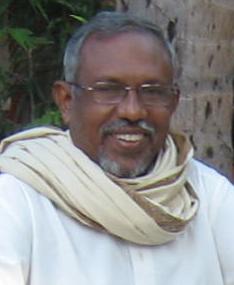
MESSAGES FROM BROTHER MARTIN
(PRIOR ADMINISTRATOR OF SACCIDANANDA ASHRAM SHANTIVANAM - 2014 - 2018)
scroll down to read earlier messages
As people grow in this awareness, they may express it in different ways. Some may say, “I am in God and God is in me.” Others speak of a deeper unity with the Divine. Yet authentic spiritual experience usually leads us back into loving relationship with others, becoming instruments through which the presence of God can touch the world.
In everyday language, however, religion usually refers to particular traditions and belief systems. There are many religions, and each has helped countless people find meaning, moral guidance, and community. At the same time, history shows that when religious identities become rigid or exclusive, they can sometimes lead to division.
We might imagine religions as tents along a sacred journey. They provide shelter, wisdom, and strength for pilgrims traveling toward the Divine. Their purpose is to support the journey.
But when the tents are treated as permanent settlements, pilgrims may forget the journey itself. Instead of walking together toward the same horizon, people may begin defending their own settlements.
Pilgrims, however, recognize that they share a common destination. Because of this, they are able to respect one another, learn from one another, and help one another along the way.
In this sense, every religion can participate in a deeper RELIGION—the universal human movement toward God, truth, unity, and love. When religions nurture this deeper spirit, they become powerful sources of peace, harmony, and the well-being of the whole human family.
Human beings naturally create names, forms, concepts, beliefs, and doctrines in order to relate to the Divine. These are necessary steps on the spiritual journey. However, when we mistake these limited expressions for God Himself, they become idols.
An idol can be a physical image. It can also be a mental image. A religious ideal, a doctrine, a scripture, a tradition, a prophet, a guru, or even a particular understanding of God can become an idol if it is treated as absolute and final.
For example, a scripture is a pointer to God. If it is used as a guide toward the Divine, it serves its purpose. But if it is worshipped as an end in itself, it can become an idol. Likewise, a sacred image can inspire devotion and lead the heart toward God. But if one becomes attached to the image itself rather than to the Reality it represents, the image becomes an idol. Idols divide human beings.
The difference lies not in the object but in our relationship to it.
When we worship forms, concepts, scriptures, or persons as ultimate realities, we become idol worshippers. When we use them as channels, symbols, and guides leading us toward the infinite mystery of God, they become valuable aids on the spiritual path.
A map is useful for reaching a destination, but no one mistakes the map for the destination itself. In the same way, images, ideals, doctrines, and scriptures are maps. God is the destination. Spiritual maturity consists in using the map without becoming imprisoned by it.
Therefore, the real question is not whether a person uses images, symbols, scriptures, or doctrines. The real question is whether these are being worshipped as ends in themselves or used as means to enter into the living reality of God.
True spirituality does not destroy forms; it transcends them. It uses every form as a doorway to the Formless, every name as a doorway to the Nameless, and every symbol as a doorway to the Infinite.
Taken from Br. Martin's Facebook page
MAY 2026
Is following Jesus meant to be more of a journey toward transformation,
or is it the ultimate goal for Christians?
Following Jesus is not simply about imitating him externally, as though one were merely walking behind a teacher. For Christians, the ultimate goal is the Kingdom of God — the fulfillment of human life in union with God.
The Kingdom of God is not merely a place to reach after death; it is the transformation of one’s entire being into the life of God. It means that one’s thoughts, actions, and relationships become transparent to the divine presence. This is what Jesus expressed when he said that the works he did were not his own, but the Father dwelling in him doing those works.
In this sense, following Jesus is a journey of inner transformation toward that destiny. It means growing into the deepest potential of human existence. Jesus did not call people simply to admire him or imitate external behaviors; he called them to “seek first the Kingdom of God” — to search for the divine life and live according to its values.
This transformation unfolds in three dimensions:
Vertical transformation: unity with God
The human person awakens to communion with the Divine. This is what Jesus reveals when he says, “The Father and I are one.” It points to the fulfillment of human consciousness in union with its source.
Horizontal transformation: unity with humanity
The individual grows beyond separateness and discovers oneness with all people. This is why Jesus says, “Whatever you do to others, you do to me.” Love of neighbor becomes participation in the divine life.
Cosmic transformation: unity with creation
The Kingdom of God extends beyond the human community to the whole creation. The person realizes their interconnectedness with all beings and begins to live for the welfare of the entire cosmos.
A helpful image is that of a leaf on a tree. A leaf may appear separate, but its true life comes from its unity with the whole tree. When it realizes this, it no longer lives for itself alone, but for the flourishing of the entire tree. In the same way, human beings find their true destiny when they awaken to their unity with God, humanity, and all creation.
So, for Christians, following Jesus is both the path and the revelation of the goal. The path is discipleship; the goal is participation in the Kingdom of God — becoming fully human and fully alive in God.
Prayer and Meditation: Two Paths Toward Unity and Transformation
Prayer and meditation are among the most universal spiritual practices in human history. Both arise from the human longing to transcend fragmentation, suffering, and isolation, and to enter into a deeper unity with ultimate reality. Though they may appear similar outwardly—silence, recollection, inwardness—they are rooted in distinct spiritual visions. Each can be understood in three stages: as a practice, as a state of being, and as a manifestation in life.
Prayer: Three Dimensions
1. Prayer as a Method
Prayer begins as a method: a conscious act by which a person turns toward God. It may take the form of spoken words, liturgical recitation, petition, praise, thanksgiving, or silent contemplation. In the biblical and Christian tradition, prayer is not merely a mental exercise but a relationship initiated by the human person toward a personal God.
At this stage, prayer involves discipline. One sets aside time, uses words or silence, and directs attention toward the divine. It may include traditional prayers such as the The Lord's Prayer, the Psalms, or spontaneous personal prayer. The person is still active; prayer is something one does.
As a method, prayer shapes the heart, opens the inner person, and teaches attentiveness to God.
2. Prayer as a State of Unity
As prayer deepens, it moves beyond words and techniques into a state of communion. The person no longer simply prays to God but abides in God. Prayer becomes an interior state of union, where silence itself becomes dialogue.
Mystics such as Teresa of Ávila and John of the Cross describe this as contemplative union. The mind becomes quiet, the heart rests, and the soul experiences a profound awareness of divine presence.
This unity is not self-generated; it is received. It arises through surrender, trust, and grace. The person does not “achieve” God but allows God to dwell within.
3. Prayer as Manifestation
The fullest realization of prayer is not the experience itself but the life that flows from it. Prayer becomes manifestation: living every moment from the state of communion.
The person who lives in prayer becomes a sign of divine love in the world. Compassion, forgiveness, patience, and service arise naturally. The whole life becomes prayer.
This is perfectly embodied in Jesus Christ. His nights of solitude in prayer were inseparable from his days of healing, teaching, and giving himself for others. In him, prayer is not a separate activity but the source of all action.
Meditation: Three Dimensions
1. Meditation as a Technique
Meditation begins as a technique. It may involve concentration on breath, repetition of a mantra, mindfulness of thoughts, or silent observation. In traditions such as Hinduism and Buddhism, meditation is often a disciplined path for training awareness.
Unlike prayer, meditation does not necessarily presuppose a personal God. The focus may be on consciousness itself, on the present moment, or on realizing ultimate reality.
As a technique, meditation teaches one to detach from mental noise, emotions, and ego-identification. It is a way of becoming inwardly still.
2. Meditation as a State
As meditation matures, it ceases to be a practice limited to a session and becomes a state of consciousness. The meditator enters silence, awareness, emptiness, or non-dual presence.
In the Upanishadic tradition, this state is awakening to the identity of Atman and Brahman. In Buddhist insight, it may be the realization of emptiness or non-self.
At this level, meditation is no longer something one performs. One simply abides in awakened awareness. The duality between subject and object, observer and observed, begins to disappear.
3. Meditation as Manifestation
The culmination of meditation is the embodiment of awakened consciousness in daily life. The person acts without attachment, without egoic compulsion, and with spontaneous compassion.
The sage, monk, or enlightened person manifests peace, equanimity, and freedom. Every action becomes an extension of inner stillness.
Thus meditation, like prayer, finds its completion in life itself. The awakened state is expressed in relationships, work, and service.
Similarities Between Prayer and Meditation
Prayer and meditation share important common ground:
Both begin as intentional disciplines.
Both can lead to inner silence and transformation.
Both move from practice to a stable state of being.
Both culminate in a life transformed by that inner unity.
Both aim to liberate the person from fragmentation and ego-centered existence.
In both cases, the goal is not merely an experience but a transformed mode of living.
Key Differences
Despite these similarities, significant differences remain.
1. Personal God vs Ultimate Reality
The central distinction lies in their orientation.
Prayer is fundamentally relational. It is directed toward a personal God — one who speaks, loves, calls, and responds. The person remains in communion with a divine Other.
Meditation often seeks direct realization of ultimate reality, which may be understood as impersonal consciousness, emptiness, or absolute being. The emphasis is not relationship but awareness.
Thus:
Prayer addresses Thou.
Meditation awakens to That.
2. Surrender and Grace vs Technique and Discipline
Prayer places great emphasis on surrender. One opens oneself to God’s action and receives grace. The initiative ultimately belongs to God.
Meditation emphasizes disciplined practice. Through attention, concentration, and insight, the practitioner awakens to truth.
Thus:
Prayer emphasizes receptivity.
Meditation emphasizes realization through practice.
3. Love vs Awareness
Prayer is centered on love, trust, and communion.
Meditation is centered on awareness, insight, and presence.
Prayer says: “Into your hands I surrender.”
Meditation says: “Be aware of what is.”
4. Personhood vs Non-Dual Dissolution
In prayer, especially Christian prayer, union with God fulfills personhood. The self is transformed but not erased. Love requires relationship.
In some forms of meditation, individuality may dissolve into non-dual awareness, where personal identity is seen as transient or illusory.
Christ as Fulfilment of Both
Jesus Christ brings to completion what both prayer and meditation seek.
He prayed in intimate communion with the Father, revealing prayer as relationship and surrender. Yet he also lived in a constant interior stillness, free from fear, ego, and division — embodying the silence sought in meditation.
But Christ transcends both paths.
He does not merely teach a technique for inner peace. He reveals participation in divine life. His union with the Father is not simply an inner state but a living communion that overflows into love for the world.
In him:
prayer becomes union,
union becomes mission,
and mission becomes manifestation of divine love.
He unites the silence of meditation with the personal communion of prayer, while adding a unique dimension: grace. The union is not only achieved but given.
Conclusion
Prayer and meditation are two profound ways of spiritual transformation.
Prayer begins as speaking to God, deepens into communion, and culminates in a life shaped by divine love.
Meditation begins as a technique of awareness, deepens into awakened consciousness, and culminates in a life lived from inner stillness.
The difference lies in their center:
Prayer is rooted in a personal relationship with God.
Meditation is rooted in awakening to ultimate reality.
Yet both point toward the same human longing: to move beyond separation into unity.
In Jesus Christ, this longing reaches its fullest expression. He reveals that the final goal is not merely awareness or silence, but loving communion — a life where union with God becomes love for all
Taken from Br. Martin's Facebook page https://www.facebook.com/johnmartinsahajananda.kuvarapu
·
FROM THE RESURRECTION AFTER DEATH TO THE RESURRECTION BEFORE
DEATH
For centuries, Christians have celebrated Easter as the
resurrection of Jesus after his crucifixion and death.
Yet Jesus began his mission by proclaiming a different and deeper
reality: “I am the resurrection and the life.” Resurrection, for
him, was not only something that happens after death; it was a
transformation that begins now, in this life.
Resurrection before death has many dimensions.
It is an awakening from time to eternity.
It is realizing our unity with God.
It is seeing people and the world with the eyes of God.
It is transforming ordinary human life into divine life.
And it is sharing that divine life in loving relationships.
All these are expressions of what Jesus called the Kingdom of God.
He invited people to enter into this reality and grow in it during
this life.
The resurrection of Jesus after his crucifixion was a unique and
powerful event. It transformed his frightened and discouraged
disciples, giving them courage to proclaim Jesus as Lord and
Savior.
Over time, however, Christian emphasis shifted from resurrection
before death to resurrection after death. This shift was
understandable in a world where many doubted life after death; the
resurrection of Jesus became a sign of hope for the future.
Yet this emphasis also had an unintended effect. The focus on
resurrection after death sometimes overshadowed the call to
experience resurrection here and now. The present life was often
seen mainly as a preparation for the future rather than a place
where divine life can already be lived.
Perhaps today Christianity is called to rediscover the balance—to
move again from an exclusive focus on resurrection after death
toward resurrection before death: transforming the present into a
living expression of eternity. It is to be done without limiting
the resurrection after death.
When this happens, the present moment regains its freedom,
dignity, and divine meaning.
Believing in one God or in the Trinity can be an important starting point in a person’s spiritual journey. However, spiritual life does not end with belief alone. True spirituality invites a person to grow beyond intellectual belief into a living and direct experience of God.
The doctrine of the Trinity reveals something profound about the nature of God. It presents God not as isolation, but as relationship—a communion of love. This implies that reality itself is relational. Human life, therefore, finds its meaning in relationships.
When we live in genuine relationships—with God, with other people, with nature, and with the whole of creation—we encounter the presence of God. In such relationships we begin to reflect and share God’s own qualities: love, truth, compassion, forgiveness, and unity.
Thus, whether one begins with belief in one God or in the Trinity, the deeper call of spiritual life is the same:
to move from belief to experience, and from isolated individuality to loving relationship, where the divine life becomes visible in the way we live with one another
Truth that unites
Truth is like the Sun reflecting in mirrors of different colours held by people. People identify the Sun with the reflection in the mirror and compare with other reflections. They argue that their colour is true and other colours are false. They are divided regarding the true colour of the Sun and argue among themselves.
A sage comes and tells them not to look at the reflections in mirrors but to look at the Sun directly. They all look at the Sun and see only one colour. They stopped arguing and found unity and peace.
Yet history shows that laws alone do not transform the human heart. They can be ignored, or even manipulated for selfish ends. For this reason, the prophets arose. They did not abolish the Law; rather, they called people back to its deeper intention—faithfulness, mercy, and integrity. At the same time, the prophets also pointed beyond external observance toward a future in which God would establish a new covenant: not merely a law written on tablets, but a law written in the human heart (Jeremiah 31:33).
To “fulfil the Law and the Prophets,” then, is not simply to obey external commandments, nor to discard them. It is to bring them to their intended completion. Fulfilment occurs when the values the Law seeks to protect—love of God, love of neighbor, and care for creation—become interiorized and lived freely from within. What was once an external guide becomes an inner orientation of the heart.
In this sense, one may speak of a movement from individual consciousness (concerned primarily with oneself), to collective consciousness (shaped by shared laws and prophetic guidance), and finally to a universal or transformed consciousness. This mature consciousness is united with God, attentive to the dignity of every human being, and responsible toward the whole of creation. When a person lives from this inner union and love, the purpose of the Law and the call of the prophets are realized in their life.
External laws remain valuable as teachers and guides, especially in the early stages of moral and spiritual growth—much like supports that help a child learn to walk. But the goal is that, through grace and transformation, a person comes to walk freely and responsibly, guided by an awakened heart. The New Covenant, written within, does not abolish the Law; it fulfills it by embodying its deepest intention.
Thus, to fulfil the Law and the Prophets is to live in such communion with God and such love for others that the spirit behind every commandment becomes a living reality.
Br. Martin Sahajananda
Taken from:- Brother Martin's Facebook.
Today (Sunday) we celebrate the resurrection of Jesus Christ. He was crucified and on the third day he rose. It was the victory of Life over death. Easter has many messages to communicate. One message, that is relevant for our present situation, is to transform a tragedy into victory. Our life in this world is not always a smooth journey. It also involves tragedies: personal failures, collective failures, sicknesses, accidents, wars and death. When tragedies happen, either for us or to others, we need to find meaning in and through them. If we do not find meaning then we may fall into despair, depression and even end our lives.
The miserable death of Jesus Christ on the cross was a tragedy to his disciples. They did not expect it. Probably Jesus himself did not expect such a miserable death. His disciples were completely demoralised. They thought that everything they believed about Jesus Christ was an illusion. They decided to go back to their former way of living that was fishing. It was to this disappointed disciples that Jesus appeared and that changed their lives. It gave them new hope. The tragedy became a victory. They realised that life does not end with death but there is life after death, a life that is transformed, a life that is free from sickness, free from time and free from death. This new vision gave them the courage and strength and accept death joyfully. Death had no power over them. They saw death as a door to eternal life. To die on the cross was seen as a curse, a tragedy. Now the cross becomes a sign of salvation, sign of victory. Christians glorify the cross of Christ as the cross of salvation, a cross of victory. A tragedy became a victory.
In the Katha Upanishad of Indian scriptures a young man called Nachikethas goes to Yama, the God of death, and asks him to reveal the mystery of death. Yama, the God of death, does not speak of death but speaks of that eternal reality, OM or Brahman or God, through which we overcome the fear of death. The problem of death cannot be resolved at the same level. Death is inevitable either now or later. It is just a matter of time. But the meaning of death can only be resolved by understanding eternity. Only in the discover of eternity we find the meaning of death and so the meaning of life. The art of living consists in the art of dying. If we do not know how to die( psychologically) then we do not know how to live.
Today we are confronted with the pandemic of Corona Virus. Millions of people all over the world are infected with it and thousands of dear ones have left this world and thousands of people are under treatment. Right now we do not have an effective medicine to deal with this virus. We have an extraordinary situation of lock down of entire countries. Life has come to a standstill. We live in the fear of death. We see death everywhere. We cannot even meet our family members. We cannot shake hands. We need to stand meters away from one another. We try to escape from death. At the moment our main focus, justly, is to survive and the rest falls into second category. It is possible that we may discover a medicine and the crisis will be blown over, even though we may lose many lives, and we come back to our normal lives and everything will be forgotten.
The question is: what have we learned from this crisis? It seems to me that one important aspect that this crisis should help us to reflect on is: what does it mean to live? Living is not necessarily existing, the continuity of our physical bodies. This life of existing will one day come to an end. We have no choice.
It is the vocation of human beings, as conscious beings, to manifest eternity, to allow God to live in and through them. If this is not happening then human beings are dead even though they may exist. It is like dead people walking. When we are spiritually dead physical death frightens us. When we are spiritually alive we will have the strength to handle physical death.
In order to live really we need to discover our eternity, our eternal identity, God. Then our identities of Time and space become vehicles of our eternal identity. Our life is transformed into the life of God, our actions are transformed into the actions of God. We understand what life is, what death is. In this sense death is dying to our ego and surrendering it to God. It is by dying that we live. This death happens before we die physically. Jesus Christ said: the works which I do are not mine but the Father who dwells in me does his works. This is the true meaning of living. It is God who lives in us and it is the manifestation of God that dies in and through our physical body. Repentance is the process through which we discover our eternal identity.
The resurrection of Jesus is the state of awakening to our eternity that is within us. It happens when we are still alive. For this awakening we do not need to wait until we die physically. If the phenomenon of death that we see around us helps us to awaken to our eternity then the tragedy becomes victory. We find meaning in our tragedies. Eternity is Life. LIFE has no death. Physical life and death are two sides of the same coin. When we discover LIFE we become free from the power of physical death. We know how to accept it when it is inevitable.
We all belong to the same tree of LIFE. We, as individuals, are like the leaves on this tree of LIFE. No new leaf comes without the knowledge of the whole tree and no leaf falls without the knowledge of the whole tree. Some times heavy winds come and some leaves fall down prematurely. It is because of the sacrifice of the fallen leaves that other leaves on the tree are surviving. The surviving leaves have to be grateful to the fallen leaves. The fall of every leaf is for the whole tree. No birth is insignificant and no death is insignificant. We are born for the whole of creation and we die for the whole of creation, whether we know it or do not know it. If the death or fall of some leaves helps us to understand the true meaning of our life then their death was not a waste. By their death we have found life, not only for us but also for those who have died for us. Though they are dead they live in and though us. If we do not understand the true meaning of our life by seeing death of others then their death becomes a waste and our life becomes a waste.
Hence the feast of Easter, the resurrection of Christ, reveals to us:
That our physical death is inevitable but it is not an end but it opens the door to eternity. We are not just our physical bodies but eternal beings. Our physical body is the temple of eternity.
That the vocation of our life in this world is to be vehicles of God, vehicles of eternity. Then only we can say we are living; otherwise we are like dead people walking. Jesus Christ described it as a barren fig tree. We may live thirty, fifty, seventy and hundred years but it is mere a waste in the sight of God, seeds that are sown but not germinated. If we really live then even one second of our life is eternal life. It does not matter how long we live but how we live. Our life yields hundred fold.
That we need to awaken to our eternity. Resurrection is awakening to eternity in this life. Repentance is awakening to our eternal identity.
The pandemic of Corona virus has stopped our normal lives, normal activities and confined us into silence and solitude. If our focus is only to exist without any deeper meaning to our lives then Corona Virus can appear like a curse that has imprisoned our lives. If we can make use of this silence and solitude to ask fundamental questions of our existence and find the real meaning of our life then Corona virus can appear as a blessing for our lives. Jesus might say: blessed are you when you are confined to silence and solitude, if you can make use of it, it will help you to find the true meaning of your life, the eternal identity, the kingdom of God.
The lock down in India has put many people, especially the poor, the working class, migrate workers and unorganised workers in a precarious situation of sickness, hunger and death. It is the responsibility of the governments and well to do sections of the country to come to their help and give them the message of hope, just as Jesus Christ gave the message of hope to his distraught disciples.
Brother Martin
MESSAGE FROM BR. MARTIN FOR FR. BEDE'S 25TH MAHASAMADHI ANNIVERSARY
Dear Oblates and Friends of Shantivanam,
Today, 13th. May we remember the 25th. Death Anniversary of our
beloved master, late Fr.Bede Griffiths.
One important thing I remember from his life was his passion for
learning. One evening after supper I was passing his room. I saw
him through his window and saw that he was reading the
periodical the Tablet. He was reading it in such way as if he
was eating a delicious dish. I felt jealous. Look at this old
man of 82 years who has such a desire to read and I am not even
35 and I have no desire to read. I went to his window and wished
him. Come along, his usual expression, invited into his room.
After sitting at his feet, he was on his chair, I said, father,
I feel jealous of you. He felt uncomfortable and said, why? I
replied, you see father, you are 82 years old and you have such
a desire to read and I am not even 35 and I have no desire to
read. He felt uncomfortable because I told him he was 82. He
said, I do not feel that I am 82 but only 18. We just fell into
laughter. It was true at 82 he was only 18 and at 35 I was 82. I
always remember his passion to learn and to be young always.
May we all be inspired by his passion for learning to be always
young. Unless you become like little children you cannot enter
into the kingdom of God, said Jesus. Fr.Bede was always like a
child. May we all become children of the kingdom of God.
Br. Martin Sahajananda
Message from Br. Martin on the 123rd Anniversary of Fr Jules Monchanin's birth 10th April
"Unless a grain of wheat falls into the ground and dies it remains alone. But when it dies it gives a mighty harvest. Jules Monchanin is this grain of wheat whose death bore fruit. A seed does not see its fruits. It has to die. Jules Monchanin did not see his fruits but he died with the hope that the fruits come. The community of Shantivanam, the oblates, the friends and sannyasis all bear witness to the sacrifice of Monchanin. May this spirit of Jules Monchanin continuously guide our spiritual path."
20th March 2018
Dear Oblates and friends,
Peace of Christ is with you. I hope you are all fine.
I am pleased to say that my request for a sabbatical year has been
granted. Thanks be to God and to all your prayers.
Br.Dorathick RAJAN will be the new Prior. He will take the charge
on 9th.April, after his priestly ordination on 6th.April.
I probably leave the ashram after 9th.
Br.John Martin Sahajananda
Dear Oblates, friends, Benefactors and well wishers,
The community of Shantivanam wishes you a happy and Merry Christmas.
May the day of Christmas be a day where we say 'yes' to life, 'yes' to growth and ' yes' to love and sharing.
May our life be the life of incarnation, which is manifesting eternity in the present.
May this life of incarnation bring peace and joy within and in the world outside.
Our 'yes' to incarnation will make the angels to appear and sing, ' glory to God in the highest and peace to the people of good will on the earth'.
Happy and Merry Christmas
Brother Martin
And the community of Shantivanam.
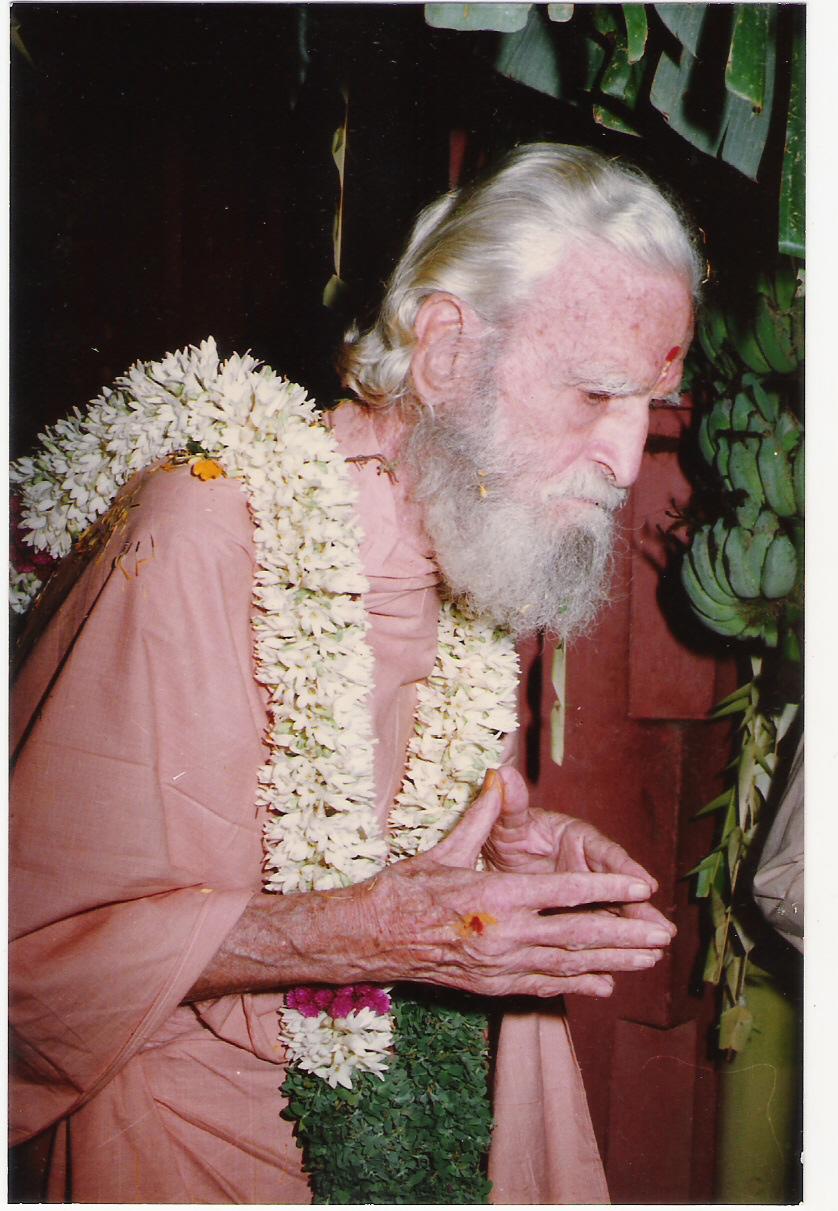
REMEMBERING FR BEDE GRIFFITHS
ON THE 111th ANNIVERSARY OF HIS BIRTH 17TH DECEMBER 2017
Dear Oblates and Friends
Today 17th December we remember the birth anniversary of our beloved Guruji Bede Griffiths.
He was touched by the grace of God at the beginning of his life and he passionately searched to make that seed of grace into a full blossomed flower.
We all have experienced that seed of grace in our lives and may the life of Fr. Bede inspire us so that we also search passionately to make that seed of grace into a full blossomed flower.
We ask the intercession of Fr. Bede
Br. Martin
Shantivanam
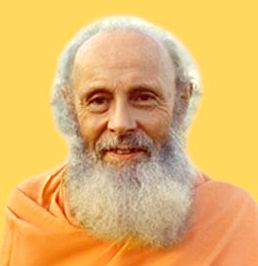
MESSAGE FOR THE 44TH MAHASAMADHI ANNIVERSARYOF SWAMI ABHISHIKTANANDA (FR. HENRI LE SAUX)
7TH DECEMBER 2017
Dear Oblates and Friends of Shantivanam,
On the 7th December, we remember the 44th Death anniversary of Swami
Abhishkthananda. Swami Abhishikthananda together with Fr. Jules
Monchanin responded to the call of God for the special need of the
time, the inter-religious dialogue.
Their call gave birth to the ashram and their generous and
courageous response has given reason for our life and mission in the
ashram. They passionately searched for Truth that can give birth to
unity and peace in the world.
In this sense they were like Virgin Mary who responded to the call
of God to give birth to the Truth that can break down the wall of
division and bring peace in the world.
May we all have the same generosity and courage to respond to the
call of God for the specific needs of our time.
With much affection and love
Br. Martin
10TH OCTOBER 2017

Today 10th.October 2017, we commemorate the 60th death anniversary of Father Jules Monchanin.
We are all very grateful to his sacrifice for which we have found reason for our life.
His sacrifice was great because he died without seeing his future. Abraham did not want to die without seeing his future, Isaac, but Monchanin did not ask for a son, for a future. He lived for eternity. He accepted what is given for the moment. Christ also went to his death without seeing his future but God raised him. He lived for eternity. By living for eternity he chose everyone for eternity.
This is the great gift we can give to our brothers and sisters, living for eternity, willing to die without seeing our future, not to burden the future with our desires and ambitions.
Jules Monchanin's witness is a great inspiration for us.
May he continue to inspire us and bless our path.
Br.martin

SWAMI ABHISHIKTANANDA - 107TH BIRTH ANNIVERSARY
Today we remember the 107th birth Anniversary of Fr. Henri Le Saux, swami Abhishikthananda.
One aspect of his life that inspires me was his passion for Truth, for God and for the experience of oneness with God, the non-dual experience.
We ask Swamiji to pray for us so that we may have the same passion for God, for Truth.
I am now in France leading three days of retreat to a group of Christian meditation.
Br. Martin
On the 11th July Feast of Saint Benedict I received some new from Brother Martin who wrote:-
"I am now in Avila, Spain, the place of St. Teresa ofAvila. I shall leave to Germany, Ulm, on 14th. From there I shall leave to India on 20th. July.
With best wishes and prayers"
Message from Br. Martin on the 24th death Anniversary of Fr. Bede Griffiths
Dear Oblates and Friends,
Tomorrow 13th May we remember the 24th death Anniversary of Fr. Bede
Griffiths. This is the day to thank God for the gift of Fr.Bede and the
witness of his life.
His passion for God or Truth was remarkable. He was interested in every
field, philosophy, theology and science. His openness and simplicity
of life were inspiring.
He had a special Mission in his life. It was to unite the Christian
faith with the perennial wisdom of Indian sages and science. He did this
in a remarkable way.
He was a real peace maker who worked hard to break down the barriers and
bring unity.
May his life inspire in us the passion for Truth, the passion for unity
and the passion to become peace makers.
Br. Martin
Easter Message from Br. Martin
Happy and joyful Easter to all the oblates and friends of Shantivanam
Easter
Tomorrow (16th April 2017) we celebrate the feast of Easter-Resurrection of Jesus. This mystery has to be understood in two phases: Resurrection before physical death and Resurrection after physical death.
Resurrection before death:
1 It is awakening to the infinite or eternity within us. This happened
to Jesus at the moment of his baptism. He transcended the horizontal
moment of time and entered into the realm of infinity and eternity.
2 it is realising our oneness with the infinite. Jesus said, the Father and I are one.
3. It is the transformation of our body into the body of God, into the
vehicle of God. We see this in Jesus at his transfiguration.
4. It is to see the whole of creation as the manifestation of God. Wherever Jesus saw he saw the kingdom of God.
5. It is the transformation of our ordinary life into the divine life.
These are all the experiences of resurrection before physical death.
Resurrection after death:
It is the sharing of our physical body in the life of God. Our body has the seed of eternity in it and finally it returns to eternity. This can be said as the salvation of the body. The resurrection after death is fulfillment of the resurrection before death.
Unfortunately Christianity focused too much on the resurrection after
death and completely neglected the Resurrection before death.
The message of Crucifixion and Resurrection of Truth or Christ
Just as the crucifixion is a cosmic phenomenon Resurrection is also a
cosmic phenomenon. It is the resurrection of the Truth. The Resurrection
of Truth was there before Jesus Christ and it is there after Jesus
Christ.
Resurrection of Christ is the Resurrection of the fullness of Truth.
It is the victory of Infinite over finite. It is the victory of fullness of Truth over relative truths. It is the victory of unity over divisions. It is the victory of peace over violence. It is the ultimate victory of wisdom over ignorance. The Resurrection of Jesus is the sign of infinite hope that one-day all divisions, all violence and all ignorance will come to an end. Unity, peace and wisdom will be ultimately victorious. satyameva jayate nanrtam, ultimately truth (unity) will be victorious, not untruth (divisions), declared the Upanishads sages. Only those who had the experience of Resurrection before death can declare this truth. Jesus Christ had this experience of Resurrection before death that gave him the strength to go through the darkness of suffering and death of his physical body. He is risen. This is also our infinite hope.
Happy Easter. Let us have this infinite hope in spite of dark clouds
surrounding us. The infinite is more powerful than the finite. The
finite has a beginning and will come to an end. The infinite
has no beginning and so has no end. The Resurrection of Jesus is an
invitation to us to awaken to the eternity within. Let us awaken to the
infinite life within.
Those who build their houses on the finite are like those who build their houses on the sand. Those who build their houses on the infinite are like those who build their houses on the rock. The houses built on the sand/finite cannot withstand the storms of life. Only those who build their houses on a rock/ the infinite can withstand the storms of life. Easter is an invitation to build our houses on a rock, on the infinite.
May you have a happy and joyful Easter. May the risen Jesus give you the joy of infinite hope in a troubled world
____________________________________________________________________________________________________________________________________________
click on messages below:
Message from Brother Martin for the Birth Anniversary of Fr. Jules Monchanin
Swami Parama Arubiananda (the Bliss of the Supreme Spirit)
10th. April 2017
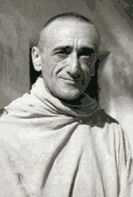
Dear Oblates and Friends,
Today we commemorate the 122nd birth Anniversary of Fr. Jules Monchanin,
one of the founders of Shantivanam. This is the day to thank God for
the gift of Fr. Jules Monchanin. It is his vision and sacrifice that has
given us the reason for our call and vision.
Just like a seed dies to give birth to a tree without seeing it's fruits so also Fr. Jules Monchanin died without seeing the fruits. This is real sacrifice. A death that gives life. This sacrifice and death is the reflection of Jesus' sacrifice and death, who gave life by his death.
May the life of Fr. Jules Monchanin inspire us to look into the future and offer our life for the future, for the unity of mankind. It signifies a lonely path and courageous path. May we have this courage to follow the path led by Fr. Jules Monchanin.
His case for canonization is in the process and we seek his intercession for the ashram, and for all the oblates and friends.
Fr. Jules Monchanin, pray for us.
_________________________________________________________________________________________________________
MESSAGE FROM BROTHER MARTIN ON THE BIRTH ANNIVERSARY OF FR. BEDE GRIFFITHS
17TH DECEMBER 2016
AND GOOD WISHES FOR CHRISTMAS FROM BR. MARTIN AND THE COMMUNITY OF SHANTIVANAM
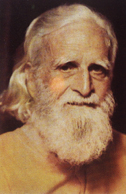
Dear Oblates and friends,
Tomorrow we remember the birth anniversary of our beloved master Fr.Bede. We are very greatfull to God for the gift of Fr.Bede. Whenever Fr.Bede celebrated his birthday he always spoke of the founders of the ashram, Fr.Jules Monchanin and Fr.Le Saux. For me these three are the symbols of three wise men who came to see the child Jesus, the eternal truth, manifesting in the flesh. It is said that these three wise men came from the East. Now the reverse happened, three wise men came from the west, to find the eternal truth, the Child Jesus. They needed to travel to the East to rediscover Christ, the peace maker. East is the symbol of the origin, the source, the eternal. Blessed are the peace makers, for they shall be called the children of God. The three founders of the ashram were peace makers. They tried to break down the barriers and create one God, one creation and one humanity and thus they became the followers of Christ. May we also follow their path and make journey to the spiritual East, not geographical East, to encounter Jesus, the prince of peace.
The message of Christmas is the message of peace. May this Christmas help us to encounter Jesus, the peace maker, so that we also become instruments of peace in this troubled world.
Happy and merry Christmas.
Br.martin and the community of Shantivanam
MAHASAMADHI ANNIVERSARY OF SWAMI ABHISHIKTANANDA
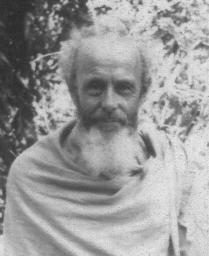
Today we
remember the 42nd death anniversary of Swami
Abhishikthananda.
We express our
gratitude to him for responding to the call of God
generously and sacrificing everything for it.
He manifests the
spirit of Abraham, when asked by God to leave everything and
go to the place which he will show him, who left
everything with infinite faith and trust and followed the
voice of God. Just as Abraham lived in tents ( a temporary
settlement) so also Swami Abhishikthananda lived in tents.
May we all have
the same spirit of generosity and courage to respond to the
call of God, at least internally if not externally.
May Swami Abhishikthananda bless us from above and guide our path.
Br. John Martin
Sahajananda
From Br. John Martin Sahajananda <brothermartin111@outlook.com>
23/11/2016
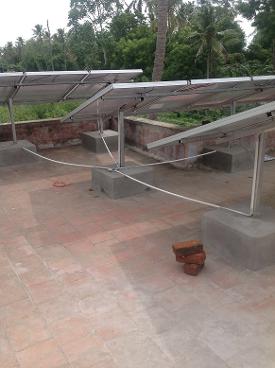
SOLAR PANELS AND GOOD NEWS FOR ELECTRICITY BILLS

REPORT FROM BROTHER MARTIN
"We have received this month our electricity bills and we can say that 70% of our charges have come down. The rest is for motors we use, to cut fodder for the cows, to pump biogas waste and to cut agricultural waste, which runs on three phase current. We are very pleased with the results and hope some more comes down in the next bills as we are still learning to work on it.
In July our bills were: 18,036 rupees( solar panel was not installed).
In September the bills were: 10,892 rupees
In November the bills are. : 7,860 rupees."
Message from Brother Martin 30th October 2016
Today is Diwali or Deepavali, the festival of light. There are many interpretations given to this festival,
the predominant one is killing of the demon, Narakasura, that rules hell.
People celebrate this event by placing lamps in lines in their houses.

Deepavali means lamps in line. People burst crackers to celebrate this festival.

People celebrate this as the victory of Light over darkness, ignorance or evil.
For Christians it is the victory of Life over Death. It is the victory of Christ the light
over the forces of darkness and ignorance.

Let us join with our Hindu brothers and sisters to celebrate this universal festival.

May the light of truth dispel our ignorance which is the cause of divisions and violence
in the world and bring unity and peace in the world.
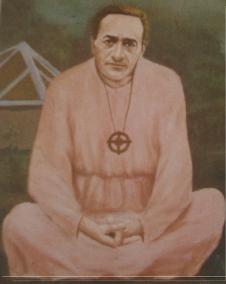
Fr. Jules Monchanin's
death anniversary
Born 10th April 1895 - Mahasamadhi 10th
October 1957
Unless a grain of wheat falls to the ground and dies it remains alone but when it dies it gives a mighty harvest.
A seed does not see its fruits. It sacrifices its future completely so that the future lives for eternity.
The life of Monchanin is life of sacrifice. A sacrifice that does not see its fruits.
The community of Shantivanam is the fruit of Monchanin's sacrifice. I am sure he is looking at it from heaven.
The community of Shantivanam is very greatful to God for the gift of Monchanin.
We ask the intercession of Monchanin to ask God to bless our community, our oblates and friends.
May the spirit of Monchanin guide our path to God.

Br.Martin and the community of Shantivanam
Update on Solar Panels
9th October 2016
Peace be with you. I hope you are fine. We have received electricity bills. Usually the bills are given for two months.
We have used solar energy only for a month. Only in the next bills we will have clear picture.
If we take months average our expenses have come down 80%. The other 20% we can not reduce because we do not use solar
energy for them: for example motor to pump water, motor to cut grass, need regular electricity.
But 80% is a great success. After two months we will get a clear picture.
With best wishes
Br.martin
latest project put forward by Br. Martin
click pdf file below

|
Letter for Houses med.pdf Size : 1645.067 Kb Type : pdf |
19th September 2016
Peace be with you. I am in Netherlands now. I go to France on 21st.
From there I go Germany on 26th.
On 29th. I go to Luxemburg
On 4th. 0ctober I go To Paris and take the flight to India on
5th.

With best wishes and prayers
Br.Martin
20th August 2016
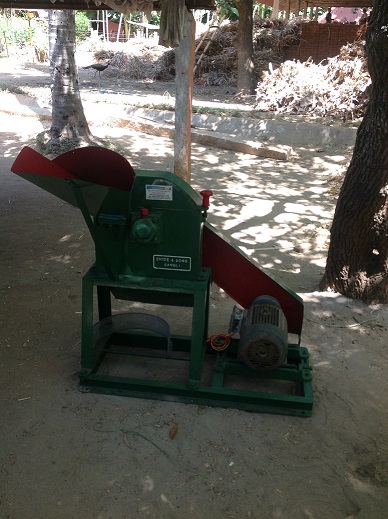
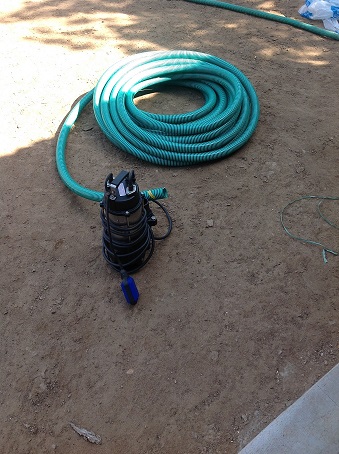
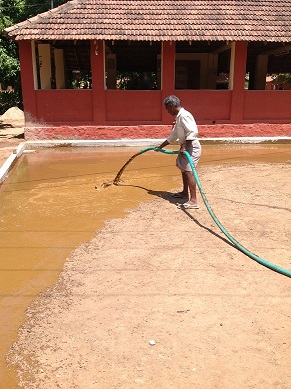
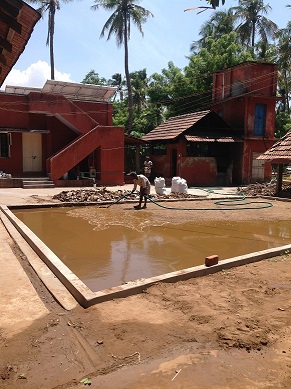
We have more good news from Shantivanam - Brother Martin has shared some photos of a gift offered by Michael Giddings of a chaff cutter and submersible pump.
4th August 2016
From: Br.John Martin Sahajananda
I have just returned from France. Solar panel work is almost finished.
Today they are testing. Here I send you some photos.





BROTHER MARTIN IN FRANCE
29th July 2016
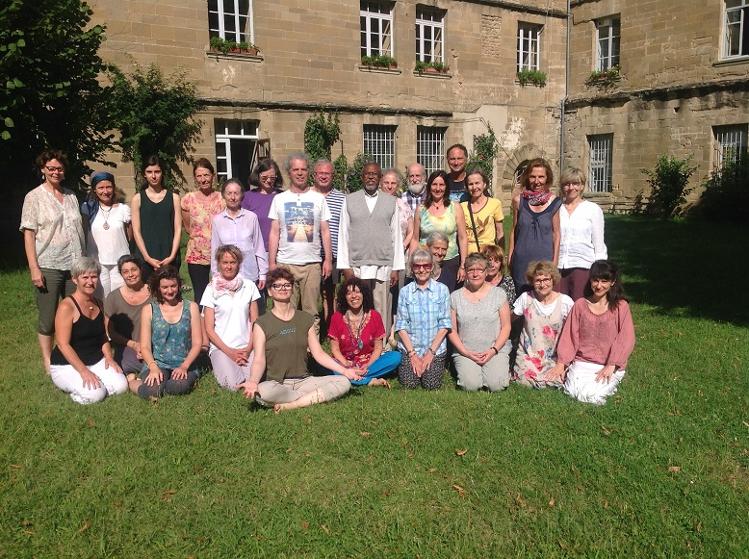
I send you the photo of the first session in St.Antione L'abbey, France. The second session begins tomorrow.
After this I return to India.
Best wishes
Br.martin
30th June 2016
Dear Oblate and friends,
peace be with you. We had presented the solar project for the ashram requesting generous contributions. A miracle happened before it started. Mrs. Aruna from Madhyapradesh, India, has offered to fund the entire project which would come around 15,000 US$. She is in touch with the project executors and the work might begin around 10th of July. God's ways are marvellous.
Still we need to do some other improving works, like construction of the bath rooms to the old guest house. So anyone like to contribute for the ashram, we welcome wholeheartedly.
Tomorrow I am flying to France for a month program. I return on 2nd. August. keep me in your prayers
with best wishes and prayers
Br.Martin
Greetings on the feast of St.Romuald, the founder of our Camaldolese congregation.
We ask your prayers for the community of Shantivanam. Br.Dorothick will make his final commitment to the monastic life on 26th of this month and Br.Martin and Br.Sigo also make this simple profession on the same day. It is a blessing to the community and we ask you to share in our joy.
Br.Martin
UNDERSTANDING THE CONCEPT OF GOD AS TRINITY
by Br. Martin
How to explain the concept of God as Trinity to non-Christians? I do not wish to become a super God by defining what Trinity is but see it in a practical way. The Christian concept is that God is Love. Love is Unity. so God is Unity. This Unity unfolds the creation. The dualities that we see in the world are unfoldment of Unity. Another Christian concept is that Love is relationship. Human life is relationship. It is in relationships that we share God and we receive God. It means that we need to see God in the other. It is God in us loving God in the others. It is God in us giving to God in the others. It is God in us receiving God in the others. It means a husband sees God in his wife and a wife sees God in her husband (it may be the most difficult one).The parents see God in their children and the children see God in their parents. A student sees God in the teacher and the teacher sees God in the student. It means our relationships are not a business but become sacred. We do not use others as objects to satisfy us or enrich us materially. Everyone and everything is the manifestation of God. It is God loving God. We are all one in essence and three in appearance, in relationships. Unity and Trinity go together. In every relationship there are three: the husband-wife and the love between them which is the binding principle. The lover, the beloved and the love between them. The static, the dynamic and the link between them. This is the message I get when I meditate on the concept of Trinity. This is also the message I get from the Eucharist. It is seeing the finite bread and wine as the body and blood of God and sharing with each other in relationships. It is the love of God manifesting in relationships, in the love of neighbour. It is not theoretical Trinity but practical Trinity, living each moment of our life. This way of living I describe as 'unfolding', in opposition to becoming. In Unfolding every action comes from our unity with God and with one another. In becoming, our actions come from our fragmented identity or ego as a means of filling our emptiness. In unfolding, our actions come from our fullness, from our image and likeness of God. In becoming our life is like a barren fig tree. In unfolding our life is 'to be fruitful and multiply'. It is the fruitfulness and multiplication of divine attributes in relationships. Every encounter with the other is a Trinitarian experience.
The Feast of Corpus Christi
by Br. Martin
The Feast of Corpus Christi... The feast of the body and blood of Christ, the Eucharist. The last supper is the most profound and original ritual that Jesus had left. The Eucharistic celebration of Jesus reveals the essence of Jesus' life and teaching. Jesus proclaimed the good news of the kingdom of God. The kingdom of God reveals who we are and how we have to live our lives in this world of time and space. The essence of the kingdom of God is to transform our life into the life of God and transform our actions into actions of God, our children into the children of God. The kingdom of God is the fullness of the love of God and the fullness of the love of neighbour. When Jesus said, 'the Father and I are one' it is the fullness of the love of God. When Jesus said, 'whatever you do to the least of my brothers and sisters that you do unto me' is the fullness of the love of neighbour. The kingdom of God is the realization of oneness with God and oneness with the whole of humanity and creation and relating with God and with the creation with that awareness. Jesus Christ lived his life with that awareness. His life was the life of the kingdom of God.
When he realized that his death was near, he celebrated the last supper, the Eucharist with his disciples. The last supper was the ritualistic presentation of his life and his message and an invitation to live that life and that message. People might forget the words but if a ritual is done it is very difficult to forget.
The last supper of Jesus reveals that we need to elevate our consciousness to
the level of the divine. This elevation transforms our finite life into the
body and blood of God, into the manifestation of God. The whole of creation is
seen as the body and blood of God. Whatever we give to others will be the body
of God and whatever we receive from others will be the body and blood of God or
Christ. The bread and the wine are the symbols of finite reality. By elevating
them we transform them into the body and blood of Christ. The finite is seen as
the manifestation of the infinite. In reality it is the transformation of our
consciousness that sees the whole of creation as the body and blood of God, as
the manifestation of God. Jesus took the bread and wine and gave to his
disciples: this is my body and blood, take and eat. By transforming his life,
Jesus Christ has become the body and blood of God. The body of Christ is nothing
but the body of God, the blood of Christ is nothing but the blood of God, they
are the manifestations of God. This act of Jesus manifests the love of
neighbour. Hence the essence of the ritual of the last supper is nothing but
the fullness of the love of God and the fullness of the love of neighbour. The
love God needs to be manifested in the love of neighbour. In the fullness of
the love of God our relationships with our neighbours become sacred. Every
encounter with the other, every relationship with the other becomes an
Eucharistic celebration. Whatever we give to the other is the body of God or
Christ and whatever we receive from others is the body of God or Christ.
Jesus Christ said, unless you eat my body and drink my blood you will have no life in you. To eat the body of Christ and to drink the blood of Christ is to enter into the consciousness of Jesus. It is to enter into the fullness of the love of God and the fullness of the love neighbour. It is to transform our life into the life God of life, our actions into actions of God. The last supper is the audio-visual presentation of the life of Jesus, his message and his invitation. The whole life of Jesus was the continuous Eucharistic celebration, the fullness of the love of God manifesting in the fullness of the love of neighbour. He invited his disciples and thus the whole of humanity, to do the same thing: do this in memory of me. It is not meant to be a mechanical repetition but personal realization. It is an invitation to grow into the non-dualistic love of God and non-dualistic love of neighbour. It is to transform our life into the life of God, our actions into actions of God, into the body and blood of God and share that body and blood with others and receive the body and blood of God from others. It is to transform our life into sacred encounters with everyone and everything. It is to transform our life into a continuous Eucharistic celebration, twenty four hours of the day.
13th May 2016
MESSAGE FROM BR. MARTIN FOR THE 13TH MAY - THE 23RD DEATH ANNIVERSARY
OF FR. BEDE GRIFFITHS
Dear Oblates and Friends,
Today, 13th.May, we commemorate the 23rd.death anniversary of our
beloved Guruji Fr.Bede. His passion for Truth, his passion to build
bridges has been a great opening of the door for thousands of people to
go beyond the confines of belief systems and discover
the liberating truth in the cave of our hearts. It is deeply touching
to see how many people found solace in his vision.
As I was giving a talk in the Won Buddist centre, Philadelphia, a lady
came to me after the talk, showed the book of Fr.Bede, 'the return to
the centre' and told me 'this book has transformed my life. It brought
me out of my spiritual crisis'. As I was giving
a talk in New York city, a person who came to my talk, showed to all
the participants, the book of Fr.Bede 'the Marriage of East and West'
and said how it transfomed his life'. As I was in another
inter-religious meeting, two people spoke to me about the group
that wants to continue the tradition of sannyasa in the tradition
Fr.Bede. It shows how the seeds sown by Fr.Bede are bearing fruits.
Let us thank God for the gift of Fr.Bede and the witness he has given
us. May we share the inspiration we have received wherever it is
possible to make people free.
MESSAGE FROM BR. MARTIN FOR THE
ANNIVERSARY OF THE BIRTH OF FR JULES MONCHANIN 10TH APRIL
9th April 2016
Dear Oblates and Friends,
Peace to you all. Tomorrow we remember the birth anniversary of Fr.Jules
Monchanin. We thank God for the gift of Monchanin. He bore a great
witness to our spiritual path. His life reminds me of the Journey of
Abraham. God told Abraham to leave everything and
go to the place that God would show him. Abraham responded to the call
of God. Monchanin also had a similar call. God told him to leave his
land and go to the place that God would show him. He left his land in
faith. God brought him to Shantivanam. We also
must be ready to listen to the voice of God and make journey to the
place God would show us. May Monchanin's life inspire our spiritual
journey. Br.martin
From: Brother Martin
22nd March 2016
EASTER MESSAGE
Truth Will be Always Victorious
The Crucifixion, the Death and the Resurrection of Jesus Christ
We have entered into the Holy Week. We meditate deeply on the crucifixion, the death and the resurrection of Jesus Christ.
This historical event is also the cosmic event. It is the crucifixion of
Truth and the Resurrection of Truth. It was there before Jesus'
crucifixion and it continues to be after his crucifixion.
There are two ways we can crucify the Truth: one is thinking that our
relative truth is the fullness of Truth and refusing to grow into the
fullness of Truth. Second is reducing the fullness of Truth into the
tombs of relative systems of truth.
The reason for the crucifixion of Jesus was the refusal on the part of
the religious leaders of his tradition to grow into fullness of Truth.
On the part of Jesus it was refusal to bring down the fullness of Truth
into fragmented belief systems.But Truth cannot
be crucified. It cannot be placed into the tombs of belief structures.
It will rise. It will be always victorious.
The resurrection of Jesus is the testimony to the eternal victory of the
fullness of Truth over the tombs of relative truths. This should keep
us always alert so that we do not crucify the Truth. We do not refuse to
grow but willing to grow into the fullness
of Truth. We do not confine Truth into the fragmented tombs of relative
truths that divide humanity. The fullness of Truth is Unity. All the
artificial divisions in the name of relative truths will come to an end
and Unity will ultimately prevail. Satyameva
jayate, nanrtam; Truth or Unity will be always victorious, not
divisions, declared an Upanishads sage.
The Resurrection of Jesus is the testimony to the victory of Unity over
the Divisions. This is our infinite hope. Rejoice, Alleluia, for Truth
is risen and always will do so. Let us not imprison ourselves into the
tombs of relative truths. Let us also rise
from the tombs of divisions into the freedom of Unity.
JOHN MARTIN SAHAJANANDA
Mon, 9 Feb 2015
brothermartin111@outlook.com
Dear Friends
Greetings of peace and joy from Br.Martin, from Shantivanam. I hope you are fine, hale and healthy. The community of Shantivanam ashram comes to you with a request. The present need of the ashram necessitated us to initiate a project called ‘Friends of Shantivanam’. We are trying to gather some friends who commit to support the mission of the ashram spiritually and economically. Please read the following and see how you wish to respond. The ashram community will be grateful for your support.
With best wishes and prayers
Br.Martin and the Community of Shantivanam.
Saccidananda Ashram,
Shantivanam
BECOME A FRIEND OF SHANTIVANAM ASHRAM AND SUPPORT OUR MISSION
The community at Shantivanam would like to invite you to become a friend of the ashram. This is a friendship that will be cultivated around the spiritual vision and mission of the ashram with benefits extending to the many poor and needy associated with us directly or indirectly, whether working with us or simply because of living in the extended vicinity of our neighborhood. For our ashram’s mission is simultaneously spiritual and social, encompassing 100% love of God and 100% love of neighbor.
In addition to a deep contemplative life that we live daily ourselves, we are committed to providing a conducive atmosphere for anyone who wishes to deepen their spiritual journey, and, quite importantly, we are engaged in inter-religious dialog, a vocation that we inherited from our founders Jules Monchanin and Henri Le Saux and Bede Griffiths. And we, like them, are inspired by Jesus himself, who said, “Blessed are the peace makers for they shall be called the children of God”. Our world, as you know, is in conflict largely because of the lack of understanding and harmony between religions. Together, we can make a difference in our world today!
St. Paul said: “Christ came to proclaim peace. He himself is our peace.” In his time, Jesus did this by breaking down the walls of division between Jews and Gentiles. In our time, this playing field is much larger and more complicated. It is, however, our mission to foster harmony and understanding between religions. We, at Shantivanam, have been quietly and consistently engaged in inter-faith work from the very beginning of the inter-religious movement, and have contributed immensely to its development both here in India as well as throughout the world without much fanfare. We now need your support and friendship to continue this mission. Take a moment to consider the missions focused on by our founders:
Jules Monchanin’s mission was that the ashram be “fully Christian and fully Indian”. Since we cannot separate the spirituality from the culture of India, we are both Christian and Hindu in the deepest sense. This is no simple witness, but one that challenges us every day. Swami Abhishikthananda focused on us bearing witness to the “The Hindu -Christian Meeting Point”. This entails living the mystical depth of two traditions simultaneously. And our dear Fr. Bede Griffiths not only wrote extensively on “The Marriage of East and West”, he exemplified this harmony in every facet of his life urging us to follow suit.
Ours is a tall order following in the footsteps of three powerful founders. Additionally, we are grounded in the inspiration of the Gospel as well as the vision of the Upanishads. Our founders worked tirelessly to build bridges among the great world religions and we feel compelled to continue this mission. They were peace makers through which they became children of God, consciously. Their lives inspire us to pursue the path of peace makers and to consciously become children of God, too.
We want to invite you to join us in this mission, to be peacemakers in the world, fostering better understanding among the world’s religions while living out of our own mystical depth and peace.
However, we have always balanced our spiritual mission with a strong social dimension. We have never spoken publically of the many projects and people we have been supporting and continue to support over many, many decades. We support children, the elderly and infirm, labourers in debt, girls needing marriage, families needing homes. Over 500 homes have been built to date on the average of about 25 a year. We support thousands of children in the villages nearby with books and supplementary items so that they can study better. There are so many cases when people need medical help or help of one kind or another. We are always there for them. And we want to continue this in addition to sustaining our ashram. Our own needs are very simple but we are always seeking to try and improve the living conditions for guests who visit here, guests just like yourself. With this in mind, please consider the following request:
We are asking you to make a commitment unit of 30 Euros or US$40 or 25 Pounds a year (2.5 Euros,$3.5 a month and 2 pounds a month)!
Imagine your annual 30 Euros or US$40 or 25 Pounds a year supporting everything we’ve stated: our inter-religious mission, thousands of children, the infirm and elderly, building houses in the villages, and so much more!
The reason we solicit your friendship and support is because the cost of living here in India is escalating with inflation. The ashram’s budget for all its needs are about 30,000 Euros, US$40,000 25,000 Pounds a year which we can easily achieve with the support of 1000 friends such as yourself. This will give us the stability to focus on our mission 100% and you can be a vital part of it!
We have factored one unit of contribution as 30 Euros or $40 or 25 Pounds as the basic commitment. If someone likes to contribute more than one unit, it would be deeply appreciated.
2 Units is 60 Euros, or US$80 or 50 Pounds per year.
10 Units is 300 Euros or US$ 400 or 250 Pounds per year
20 Units is 600 Euros or US$800 or 500 Pounds per year
50 Units is 1500 Euros or US$2000 or 1250 Pounds per year.
Your commitment can be fulfilled at any time during the year, or distributed over the course of a year, or any time you feel inclined to do so.
It is best to wire transfer money into our account or send us a check in the mail. Wire transfers are preferred as it is the safest and fastest and easiest method for us. Checks take long to clear or get lost in the mail.
Those who belong to U.K. can donate To Bede Griffiths Charitable Trust in U.K.
Bank Details:
Bank HSBC, 1 Preston Street, Faversham, Kent, ME13 8NS, UK
IBAN number GB38MIDL40213540002798
BIC code MIDLGB2182H
Sort code 40-21-35
Account number 40002798.
You can also gift aid to the BGCT.
Those who live in Schengen states can donate to:-
ASSOCIATION “Les Amis de Frère John Martin”
16, Rue ROUMANILLE,
84110 VAISON-la-Romaine
France.
Bank details:
IBAN: FR76 3000 3002 2500 0372 8151 222
BIC: SOGEFRPP
They will transfer the money to the ashram account.
Please inform Br.Martin at brothermartin111@outlook.com and cc shantivanam3@gmail.com
Swift Code: SBININBB467
Name of Bank: State Bank of India
Account Holder: Saccidananda Ashram
Account Number: 10848480873
Address of Bank: State Bank of India
Main Branch, Tiruchirapalli 620001
Tamilnadu, India
For an Indian National to transfer from an Indian bank:-
Check mailing instructions:
Check should be made to Saccidananda Ashram.
Address:
Saccidananda Ashram,
Shantivanam,
Thanneerpalli, Via Marudur
Karur District
Kulithalai Taluk
Tamil Nadu, S. India
Pin Code : 639107
Please fill out the attached commitment form accordingly.
Thank you and God Bless you!
And welcome to a lifetime of spiritual friendship with the ashram.
Your friend in Christ,
John Martin
Brother K. John Martin and the Shantivanam Ashram Community
SACCIDANANDA ASHRAM, SHANTIVANAM: COMMITMENT PLEDGE FORM
First Name:
Surname:
Address:
Phone:
Email:
I want to be a friend of Shantivanam, and I pledge to contribute _____ Euros/Dollars/Pounds per month/ per year as part of the expression of that commitment, knowing that this money goes towards supporting the work and inter-faith mission of Shantivanam Ashram together with all of its varied social projects.
I also commit to living a deeply spiritual life, as best as I can, and to fostering better understanding and peace between spiritual traditions in whatever situation I find myself able to do so, serving as a conscious peacemaker in our divided world.
Signature: ____________________________ Date: __________________________
Place of Commitment: Shantivanam, India
Non-Profit Information:
To claim this contribution as a tax-deductible, here is our Indian non-profit information:
Saccidananda Ashram, Shantivanam, Register Number 86 of 74 Thanneerpalli, Kulithalai,
Tamilnadu, India 639107
IMPORTANT: When you make a wire transfer, please remember to send an e-mail to Brother Martin informing him of the amount that you have wire transferred and the date that you have effected the transfer. Please use the following e-mail address: brothermartin111@outlook.com

|
nsmail-1.doc Size : 26.5 Kb Type : doc |
MESSAGE FROM BROTHER MARTIN JANUARY 2015
FRIENDS OF SHANTIVANAM
Would you like to be a friend of Shantivanam? A friend of Shantivanam is one who feels at home with its spiritual vision and wants to keep in touch with the ashram and collaborate with the ashram’s mission. The ashram’s mission is two dimensional: spiritual and social, love of God and love of neighbor.
Its spiritual mission is to be a peacemaker:
Jesus Christ said 'blessed are the peace makers for they shall be called the children of God’. St. Paul said, 'Christ came to proclaim peace. He himself is our peace. How did he do that? It is by breaking down the walls of division and creating one human kind out of two (Jews and Gentiles at that time). Thus he brought peace. Shantivanam means forest of peace. The vocation of the founders of Shantivanam is to be peace makers. It is to break down the barriers of divisions and create one God, one creation and one human kind. ‘Fully Christian and fully Indian’ was the slogan of Jules Monchanin. ‘The Hindu -Christian Meeting Point’ was slogan of Swami Abhishikthananda. And ‘the Marriage of East and West’ was the slogan of Fr. Bede Griffiths. They worked very hard to build bridges among all the great world religions. They were the peace makers. They were the children of God. Their life inspires us to pursue the path of peace makers and thus become the children of God. The friends of Shantivanam are those who wish to be peace makers and thus the children of God. The friends of Shantivanam share about Shantivanam and its vision to their friends and encourage them to visit the ashram
Its social vision is to empower people:
The ashram employs around 25 persons in order to give them economic security for their daily living. They are our extended family members. Recently their wages have gone 100% high which we find very difficult to handle. The ashram runs a Home for the Destitute where 20 destitute are looked after. It helps a few thousands of children for education and constructs around 25 low cost houses for the poor every year. The ashram needs around 30,000 Euros for a year to maintain its ordinary day to day expenses. In order to continue this work the ashram needs a stable source of Income. The friends of Shantivanam help in whatever way possible to support this mission. The ashram hopes to gather around 1000 friends during the coming years and would like to suggest a commitment to contribute:
30 Euros per year/ 2.5 Euros a month: or
US $40 per year/ 3.5 dollars per a month
UK pounds 24 per year/ 2 pounds a month.
If someone likes to contribute less or more they are most welcome to do so. It can be paid once in 6 months or once a year.
Those who live in UK can donate to Bede Griffiths Charitable Trust. Those who are in Schengen countries can donate to Les Chemins de Shanti in France. We can suggest other possibilities also.
Information on Money Transfer
COMMITMENT FORM
Name: Surname:
Address:
Telephone /Mobile Number:
Email address:
I want to be a friend of Shantivanam and I commit to contribute ……. Euros /Pounds/ dollars per a month/ year as a token of my commitment.
Signature Date Place
NEW YEAR MESSAGE FROM BROTHER MARTIN
Dear Oblates and friends,
I wish you all happy new year 2015. Let us
thank the Infinite for the year 2014. Let us accept all the positive
and the negative aspects of the past year. Let us also forgive those who
have caused difficulties to us and also ask forgiveness if we have done
any harm to others. Let us pray to the almighty for a world where there
will be peace, equality, freedom and respect for the human dignity.
br.martin
A CHRISTMAS MESSAGE FROM BROTHER MARTIN FOR 2014
The meaning of Christmas:
The feast of Christmas reveals the ultimate destiny of our spiritual evolution. Our spiritual evolution can be described as a journey from mine to ours and from ours to God. It is to transform our life into the life of God, our actions into actions of God and our children into children of God. The birth of creation and our own individual birth is like a turtle that comes out of the infinite ocean and lays eggs on the beach. When the eggs are hatched the baby turtles rush towards the sea. God is like the mother turtle and primordial matter and individual souls are the beach on which God lays her eggs.
There are two important moments in the story of Christmas: conception and giving birth. In order to give birth to God we need to receive the seed of God. At the time of annunciation Mary received the seed of God and gave birth to the child of God. Mary and Joseph said, 'this child is not ours but God's'. With this a revolution began in this world. It is the beginning of new heaven and the new earth.
The first annunciation and conception took place at the time of Big Bang. The primordial matter which was a like a virgin, unconditioned by the past, received the seed of God and conception took place. This fertilized seed of God evolved until the birth of God took place in the enlightened people including Jesus. Jesus Christ, at the moment of his baptism, gave birth to God and finally realized being one with God. We can say that the period from the moment of big bang until the birth of God in the human consciousness is the period of advent. The farmer sows the seeds, nourishes them and waits for the harvest. From the time of sowing to the time harvest is the period of advent. We reap what we sow. If we sow the seed of God then we reap the fruits of God. The time of annunciation is the time of sowing. The moment of Christmas is the time of reaping. There are two parents who facilitate this birth of God: physical parents and religious parents. Physical parents become virgin parents if they have the wisdom to say that the child conceived does not belong to them but to God. They are only foster parents to God's children. Religious parents(religions) become virgin parents if they have the wisdom to say that their followers do not belong to them but to God. Religions are only foster parents to God 's children. If both physical parents and religious parents accept this vocation only then we can celebrate Christmas.Christmas also is not limited to children but it also extends to our actions. When we we have the wisdom to say that our actions are not our actions but God'd actions then every action of ours becomes God's action or God's child. Every action is the celebration of Christmas. Jesus Christ said' the works which I do are not my own but God who dwells in me does his works. He was celebrating Christmas each moment of his life. Jesus Christ invites every one to make each moment a moment of Christmas instead of commemorating once a year.
click on link below a parable on The Vigin Mothers of God
MESSAGE FROM BR. MARTIN ON THE 108TH BIRTH ANNIVERSARY OF
FR. BEDE GRIFFITHS - 17TH DECEMBER 2014
Dear Friends,
MESSAGE FROM BR. MARTIN ON THE 41ST DEATH ANNIVERSARY OF
SWAMI ABHISHIKTANANDA - 7TH DECEMBER 2014
6th December 2014
Dear friends,
Bro. John Martin Sahajananda
Message from Brother Martin
on the occasion of the 104th birth anniversary of Swami Abhishiktananda
30th August 2014
Message from Brother Martin on the occasion of the
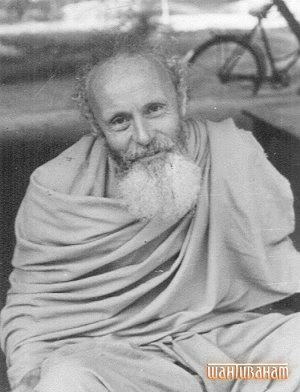
Tomorrow we commemorate the 104th birth anniversary of Swami Abhishikthanada. We thank God for the gift of his life to our ashram, to the Catholic Church, to Christianity and to the whole world. He had the courage to trod the untrodden path and to open a new vision to the Church, to Christianity and to the world. It was not an easy path. It required tremendous courage and sacrifice. His soul had to go through the pangs of a woman in travail and also the pangs of a child that is going to be born. He endured the process and gave birth to a new vision. He was a pioneer of Hindu-Christian Meeting point. We are still very far from the vision he inaugurated. It seems that his voice is like the voice of John the Baptist,crying in the wilderness. Neither the Church nor Christianity has taken his vision seriously. It still remains at the individual level. Only the individuals that go into the desert listen his voice and try to walk on the path he walked. We wish and pray that the Church and Christianity open their minds and hearts to hear his prophetic voice and contribute for a genuine inter-religious dialogue and work for unity and peace in the world. May the soul of Swami Abhishikthananda bless us from above and help us to be caught by the fire of his vision.
John Martin Sahajananda,
Saccidananda Ashram,
Shantivanam
29.8.2014